Archive for 15 October 2008
Today’s Bailout Links
| Peter Klein |
Ok, so let me get this straight. Credit got all constipated from banks’ misguided feast on crappy assets. My thought (see, especially, the most recent posts in this archive) was that maybe bank managers need better incentives.
I guess I must have been wrong, because the government is now putting a quarter trillion in non-voting stock. Well, that’s one way to fix the misalignment of manager-shareholder incentives — undermine the shareholders’ incentives too.
The Banks get below cost capital grants. Loans would cost 11 to 12 percent. The government gives them cash at 5 percent for five years and 10 percent thereafter with optional repayment; it is senior preferred stock. Large banks cumulate foregone dividends on the preferred; small banks do not. Existing shareholders still get dividends at past levels (no increases) and the government cannot vote any of its stock. Why ever pay it back? . . .
Lehman, J.P. Morgan and AIG look like AAA suckers. They paid dearly for their capital infusions. Greenberg, the ex-CEO of AIG and a major shareholder, is, sensibly, asking the government to renegotiate the AIG bailout package. The lesson for future crises? Stall, stall, stall.
Peter Schiff (via Karen):
After supposedly bailing out the fat cats on Wall Street, no politician wants to be accused of evicting struggling families. Once you understand this, all of your anxiety should melt away. Why pay your mortgage if foreclosure is off the table, and if you know that lower payments, and possibly a reduced loan amount, would result? A tarnished a credit rating is a small price to pay for such a benefit.
Unfortunately, this boon will not extend to those foolish individuals who either made large down payments or resisted the temptation of cashing out equity. The large amount of home equity built up by these suckers, I mean homeowners, means that in the case of default foreclosure remains a financially attractive option. As a result, these loans will be much less likely to be turned over to the government.
Searle Center Symposium on Property Rights and Innovation
| Peter Klein |
It’s next month in Chicago. The high-powered lineup includes Joel Mokyr, Avner Greif, Robert Merges, Lynne Kiesling, Stan Liebowitz, Scott Stern, my old classmates Emerson Tiller and Rich Brooks, and many more. Harold Demsetz gives the keynote. Wish I were going.
Saddlebags
| Peter Klein |
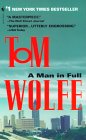 All this talk about bad loans reminds me of the famous “workout” scene from Tom Wolfe’s A Man in Full, better known as the “saddlebags” scene. It must be the most brilliant, accurate, and entertaining account of a bank calling a loan ever written. You can read most of the scene (from chapter 2) here; if you haven’t read it before, you’re in for a treat. (Unfortunately the excerpt ends before the climax of the scene in which Harry Zales, the bank’s workout specialist, ends his speech that reduces the hapless borrower, Atlanta real-estate mogul Charlie Croker, to a nervous, sweating wretch with his arm raised triumphantly, middle finger pointed to the skies.)
If that scene were to be written today, however, the ending would be different. Just before the workout is over the heroic central banker or Treasury secretary would bound into the room, explaining that the bank should restructure Croker’s loan after all (in the story, Croker has defaulted on a $515 million loan — a mere trifle), and that he will write the bank a check on the spot to cover Croker’s obligation. Gotta maintain adequate liquidity in the system, after all! Upon leaving the room, the central banker or Treasury secretary also extends his middle finger — this time in the direction of the taxpayer.





 Organizations and Markets
Recent Comments