Archive for 2007
Blogs versus Department Meetings
| Peter Klein |
A friend recently became economics department head at his university. He created a blog as a partial substitute for, and potential complement to, meetings.
I hate department meetings, which inevitably are scheduled at some time when most people are tired or distracted. Once there, much time is wasted by people who are slow in expressing themselves, or in discussing issues about which we haven’t had time to think or gather the information necessary to decide something. For any individual, some of the discussions are boring or irrelevant and a waste of time.
I have been trying to use the blog to handle most issues that do not require a quick decision or a real, face-to-face dialog. . . .
I am having at best moderate success because some of my colleagues refuse to visit the blog on anything like a regular basis. I am trying to make things easier for them. A successful change was to introduce a “recent posts” sidebar like you have on O&M, so my colleagues can quickly see what, if anything, is new since they last visited the blog.
I suggested setting up a “favorite posts” or “critical posts” section of the sidebar (somewhat like our “Most Popular” section). Of course, some departmental issues — personnel matters, for example — are too sensitive to discuss even on a private blog. But many of the usual items can perhaps be handled easily.
What suggestions would you offer? More generally, how can blogs, wikis, and similar tools increase office productivity by substituting for meetings? (Of course, some people will always prefer meetings.)
The Political Economy of Entrepreneurship
| Peter Klein |
Entrepreneurship and political economy are two of the fastest-growing fields in applied economics, so it is only natural that they come together. Magnus Henrekson and Robin Douhan have a new volume coming out in the International Library of Entrepreneurship Series, The Political Economy of Entrepreneurship (Elgar, 2007). It contains reprints of classic and contemporary papers by Schumpeter, Kirzner, Baumol, Stigler, de Soto, Acemoglu, Lerner, and many others.
Henrekson and Douhan identify in their introduction (which you can read here) three key aspects of entrepreneurship as it relates to political economy: (more…)
Columbia Dean Considers a Discussion With Hitler
| David Hoopes |
In today’s WSJ, Bret Stephens observes, “John Coatsworth, acting dean of Columbia University’s School of International and Public Affairs, made the remark that “if Hitler were in the United States and . . . if he were willing to engage in a debate and a discussion to be challenged by Columbia students and faculty, we would certainly invite him.” This was by way of defending the university’s decision to host a speech yesterday by Iranian President Mahmoud Ahmadinejad.” My own alma mater, Grinnell College, had Angela Davis speak at last year’s commencement to the chagrin of a few alumni. Granted A. D. is pretty small change compared to Ahmadinejad. Twenty years ago, students at Grinnell shouted down Jack Kemp because they disagreed with his perspective. I doubt A.D. got shouted down. I find it disturbing that it is considered progressive to listen to Dr. Davis but to shout down Mr. Kemp. Ahmadinejad got a rude welcome outside the U.N. But, it’s strange to think that Columbia’s faculty would probably treat George W. (hardly a perfect president) a lot worse than they treated this man who has called for and spent a great deal of money on the destruction of Israel (among other things).
Innovation Without Patents
| Nicolai Foss |
While public policy-makers (and students) exalt patents, scholars in strategic management and innovation studies tend to take a much more balanced view. They know that the use of patents tend to concentrate in relatively few industries, and that in many cases alternative mechanisms are superior means of appropriating rent streams from innovations (e.g., this paper). Of course, libertarians, including libertarian economists, have long harbored skepticism towards the patent system, including skepticism based on efficiency arguments. Now economic historians seem to add to patenting skepticism. (more…)
More Crappy Research
| Peter Klein |
We’ve written before about the history of industrial recycling, how waste products, both natural (manure, animal parts) and man-made (scrap metal, old rags), were frequently collected and re-used, for profit, at the dawn of the Industrial Revolution.
Now comes another paper on the market for manure: Liam Brunt’s “Where There’s Muck, There’s Brass: The Market for Manure in the Industrial Revolution” (Economic History Review 60, no. 2, May 2007, 333-72). (Non-gated version here.) Writes Brunt:
In this paper we present the first detailed assessment of off-farm manure in English agriculture, by quantifying the use of 21 varieties. We consider how many people were using each type of manure; how much they were using; and the total effect on wheat yields. . . . We show that by 1770 there were local, regional and even international markets for manure; and we can explain the pattern of manure use by supply and demand. We estimate that off-farm manure raised yields by a steady 20 per cent throughout the period 1700 to 1840.
I suppose I could have titled this post (channelling Tyler Cowen) “Markets in Everything: ________ Edition” (fill in the blank yourself).
Knightian Uncertainty Workshop
| Peter Klein |
The authors of this blog find Knightian uncertainty a useful concept for understanding both entrepreneurship and the economic theory of the firm (e.g., here and here). So we were pleased to learn about a workshop on Knightian uncertainty organized earlier this month at Columbia University by and Daniel Beunza David Stark. Nassim Taleb was there, as were Douglass North, Anna Grandori, Bruce Kogut, Adam Branderburger, and others well known to readers of this blog. Buenza summarizes the discussion and offers some commentary at the Socializing Finance blog.
One problem with the treatment of Knightian uncertainty in the management literature (not necessarily in the presentations above) is that the concept itself is not always defined precisely and consistently. Terms like Knightian uncertainty, radical uncertainty, case probability, complexity, ambiguity, and plain old uncertainty are often used interchangeably. Sometimes what is meant is ignorance of the relevant probability distributions. Sometimes it is ignorance of one’s own ignorance. Sometimes it means simply the lack of common (Bayesian) priors. To move forward, more clarity is surely needed.
Corporate Venturing
| Peter Klein |
Here are presentation slides from a 2007 Academy of Management Professional Development Workshop (PDW) on corporate venturing. The presenters were Gary Dushnitsky, Thomas Keil, Riitta Katila, Suresh Kotha, Michael Lenox, Markku Maula, Corey Phelps, Shaker Zahra, and Rosemarie Ziedonis.
Don’t forget that slides from our PDW on Austrian economics are available as well.
Separated at Birth, Management Professor Edition
| Peter Klein |


Bill Hesterly and Robert Wagner
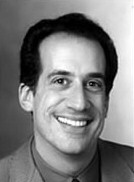

Steve Postrel and Vincent Schiavelli


Jackson Nickerson and David Duchovny
Other suggestions?
New Survey Paper on Vertical Integration
| Peter Klein |
Francine Lafontaine and Margaret Slade’s superb review paper on vertical integration, “Vertical Integration and Firm Boundaries: The Evidence,” appears in the current issue of the Journal of Economic Literature. (Non-gated version here.) Unlike previous reviews focusing on particular theoretical frameworks (e.g., my NIE Handbook paper on the transaction-cost approach), Lafontaine and Slade consider a broad range of factors potentially affecting vertical integration such as risk, agent effort, firm size, monitoring costs, and repeated interaction as well as the usual transaction-cost variables (asset specificity and uncertainty). They also look closely, following Whinston (2003), at distinctions between the transaction-cost (Williamson) and property-rights (Grossman-Hart-Moore) approaches. Here’s the abstract:
Since Ronald H. Coase’s (1937) seminal paper, a rich set of theories has been developed that deal with firm boundaries in vertical or input–output structures. In the last twenty-five years, empirical evidence that can shed light on those theories also has been accumulating. We review the findings of empirical studies that have addressed two main interrelated questions: First, what types of transactions are best brought within the firm and, second, what are the consequences of vertical integration decisions for economic outcomes such as prices, quantities, investment, and profits. Throughout, we highlight areas of potential cross-fertilization and promising areas for future work.
Also recommended, from the same issue of the JEL, is Bentley MacLeod’s “Reputations, Relationships, and Contract Enforcement.”
Organization Theory en Français
| Peter Klein |
French-speaking readers may enjoy Nathalie Gardes’s blog Theories des Organisations. There’s a bit too much on pouvoir for my tastes, but the site looks interesting nonetheless.
More on Tacit Knowledge
| Nicolai Foss |
O&M has featured a number of posts that are critical of the hugely influential notion of tacit knowledge (e.g., here and here). The latest issue of the Journal of Economic Methology has as nice paper by Jonathan Perrant and Iona Tarrant, ‘What Does Tacit Knowledge Actually Explain?” (more…)
More on Prices as Property
| Peter Klein |
We discussed earlier the status of price information as intellectual property. (We were skeptical.) Now we learn from Michael Perelman that Harvard’s Coop (bookstore) is ejecting students who take “a lot of notes” about book prices, on the grounds that the Coop “owns” the prices. Ouch.
I’m pondering the Hayekian implications. Will the Coop also claim that it owns the knowledge embodied in those prices?
Update: See also the links provided by Tim Swanson here.
Private Disupte Resolution
| Peter Klein |
Brian Caplan and Edward Stringham explore the private provision of dispute-resolution services:
Must the state handle the adjudication of disputes? Researchers of different perspectives, from heterodox scholars of law who advocate legal pluralism to libertarian economists who advocate privatizing law, have increasingly questioned the idea that the state is, or should be, the only source of law. Both groups point out that government law has problems and that non-state alternatives exist. This article discusses some problems with the public judicial system and several for-profit alternatives. Public courts lack both incentives to be customer oriented and pricing mechanisms, plus they face problems associated with the bureaucratic provision of services. When parties can choose their tribunals, in contrast, those tribunals must serve customers and be mindful about conserving resources. Competition between arbitrators also can allow for experimentation and the provision of customized services rather than a centrally planned, one size fits all system. Contracts with an arbitration clause can easily stipulate the choice of tribunal, and we argue that if government courts simply refused to overrule binding arbitration agreements, de facto privatization could easily take place. This article discusses how private adjudication of disputes could enable the market to internalize externalities and provide services that customers desire.
See also these comments about Bruce Benson’s Enterprise of Law.
Boskin Returns to CEA, Virtually
| Peter Klein |
Stanford’s Michael Boskin chaired the Council of Economic Advisers under George H.W. Bush. Yesterday we learned that Boskin will once again chair the CEA — for Gaia Online, not the United States. That’s right, Gaia, a teen-oriented role-playing site, has a Council of Economic Advisors.* It consists of Boskin, Stanford economics PhD candidate Saar Golde, and a member to be named later. No word if the members and their staff will be housed in a virtual Old Executive Office Building or will produce a virtual Economic Report of the President. (Thanks to Lynne for the pointer.)
* The real CEA, as former staffers (like me) know, spells its name “Advisers,” not “Advisors.” I’m sure Boskin will insist on the correction.
18 September 2007 at 11:41 am Peter G. Klein Leave a comment
Chicago School Blogging
| Peter Klein |
Ross Emmett, whose work on the Chicago school of economics we discussed here, has been blogging about a recent conference on Chicago economics. The first two posts are here and here. Stay tuned for more, including a post on Hayek coming in the next few days.
New Video and Audio
| Peter Klein |
Video and audio files that may intrest our readers:
- The 2006 and 2007 Allen Hamilton Eminent Scholar in International Management awards presentations. See lectures by C. K. Prahalad (with commentary by Yves Doz) and Ikujiro Nonaka (with commentary by David Teece).
- Economic history lectures from Brad LeLong: Marx, Rostow, Kuznets, Gerschenkron; The Slow Spread of Industrialization; Political Economy 101 .
- Original video from the 1962 Milgram experiment (via Max Raskin). As chilling today as 45 years ago. (See also the wiki.)
IT and Creative Destruction
| Peter Klein |
Information technology (IT) intensity is correlated with firm-specific performance heterogeneity, controlling for industry- and time-fixed effects and a host of strategic and financial control variables. Moreover, high rates of firm-specific performance heterogeneity are associated with subsequent increases in industry total factor productivity (TFP). In other words, IT can be interpreted as a general-purpose technology that unleashes a wave of innovation, leading to a shakeout followed by performance improvements — Shumpeter’s “gale of creative destruction.”
So say Hyunbae Chun, Jung-Wook Kim, Randall Morck, and Bernard Yeung in “Creative Destruction and Firm-Specific Performance Heterogeneity” (NBER Working Paper No. 13011, April 2007). (Non-gated version here.) There’s not much theory but the empirical exercise is interesting and worth a look.
Social Science Factoid of the Day
| Peter Klein |
Thomas Schelling wrote several chapters of The Strategy of Conflict while on sabbatical in London. He shared a typist with Agatha Christie, then working on her classic play The Mousetrap. Wonder if any pages got switched?
From Robert Dodge’s The Strategist: The Life and Times of Thomas Schelling (Hollis Publishing, 2006).
Menger the Empiricist
| Peter Klein |
Austrian economists eschew empirical analysis in favor of deductive, a priori reasoning. They don’t believe in prediction. Neoclassical economists, by contrast, endorse the “scientific method” of rigorous empirical testing. You know that, right?
Then you might be surprised to learn that Carl Menger (1840-1921), founder of the Austrian school, called his approach the “empirical method,” as distinguished from Léon Walras’s “rational method.” Menger was a prominent economic journalist before turning to scientific work and his primary interest, as a scholar, was to explain the actual pricing processes he observed in the marketplace, processes that did not at all resemble those described in contemporary textbooks. Menger’s purpose, writes Guido Hülsmann in Mises: Last Knight of Liberalism, was
to demonstrate that the properties and laws of economic phenomena result from these empirically ascertainable “elements of the human economy” such as individual human needs, individual human knowledge, ownership and acquisition of individual quantities of goods, time, and individual error. Menger’s great achievement in [Principles of Economics, 1871] consisted in identifying these elements for analysis and explaining how they cause more-complex market phenomena such as prices. He called this the “empirical method,” emphasizing that it was the same method that worked so well in the natural sciences. (more…)
More Presentation Tips
| Peter Klein |
More for our ongoing series on PowerPoint:
You can find good tips at Presentation Zen. A nice rule of thumb is 6×6, though I favor 1×6.
Especially with a technical topic one is ensnared to use bullet points. It doesn’t help. It doesn’t stick. As the speaker, you will read the list point by point, with some intermediary “and” and “uh”, and bore the audience. Do it like Steve, not like Bill!
Animations? Cease and desist!
This is from Andreas Zwinkau’s tips on technical presentations.





 Organizations and Markets
Recent Comments