Author Archive
Another Job Opening
| Peter Klein |
Following up Nicolai’s post, here’s another job listing for O&M readers interested in vertical integration and supply-chain issues in food, fiber, and natural resources (forwarded at the request of Karin Hakelius). Feel free to share similar listings with us and we’ll post them here. (We assume most of you already see the announcements posted at JOE, the BPS and ENT lists of AoM, etc.). (more…)
What Did Keynes Mean by “Animal Spirits”?
 | Peter Klein |
Keynes’s idea that investors are motivated by “animal spirits” has come back into vogue with the recent Keynesian revival, but the term is often misunderstood. Keynes referred not to psychological factors that make investors reluctant to invest, but those that make them invest at all — in the face of deep uncertainty, he thought, only a manic, driven, strong-willed person would put capital at risk. When animal spirits are strong, investment is sufficient to maintain aggregate demand; when they lag, aggregate demand falls, and the economy lapses into depression. (Lord Skidelsky approvingly calls this the “mood swings theory” of business cycles — an idea just crazy enough to spawn a recent NBER paper.)
The new issue of Capitalism and Society features a piece on What Keynes Really Meant on this issue, and it’s a good read:
Alexander Dow, Glasgow Caledonian University
Sheila C. Dow, University of StirlingThe term ‘animal spirits’ has returned to academic and public discourse in a way which departs significantly from the original use of the term by Keynes. The new behavioural economics literature uses the term to refer to a range of behaviour which falls outside what is normally understood as rational. This treatment follows from the mainstream dichotomisation between rationality and irrationality. However, Keynes explained that, given fundamental uncertainty, rationality alone was insufficient to justify action. Animal spirits was the name he gave to the (psychological) urge to action which explained decisions being taken in spite of uncertainty; animal spirits for him were neither rational nor irrational. Nor are they beyond analysis. We explore how the nature and role of animal spirits can vary according to context (as between different sectors, types of firm and within firms). This analysis indicates ways in which policy can promote structural change to strengthen animal spirits in the long term as well as offset short-term weakening in animal spirits.
Professor Secrets
| Peter Klein |
Their odd appearance is public, but they have secrets too. Some dislike students. Many wish they ran a really cool Center. And one has a secret identity!

Classic Professor Poses
| Peter Klein |
I need a new head-and-shoulders shot for my webpage, and am trying to choose among the classic professorial poses. See samples below. What do you recommend?
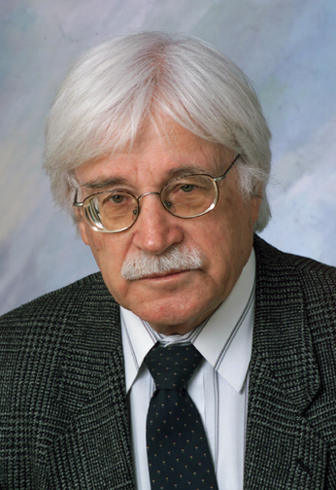
Classic
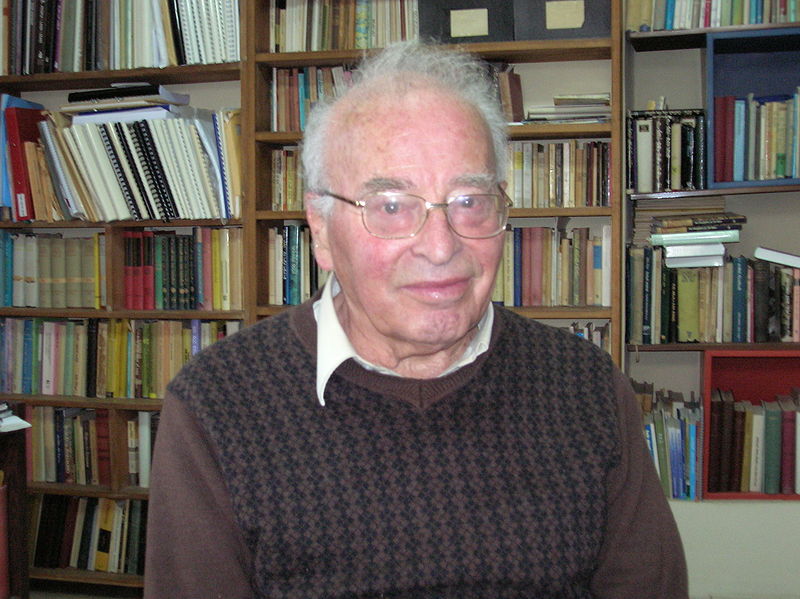
In front of books
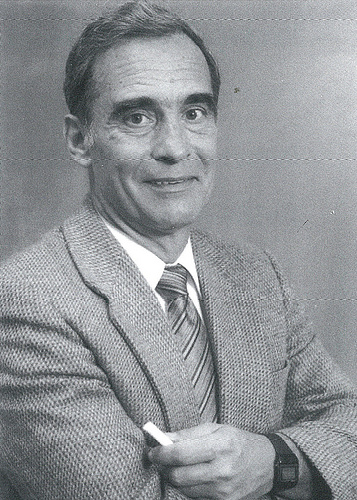
Holding chalk
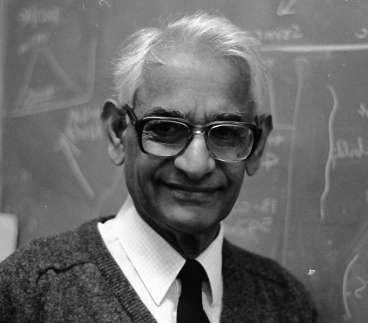
In front of chalkboard
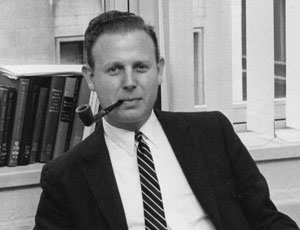
Pipe

Arms folded

At computer
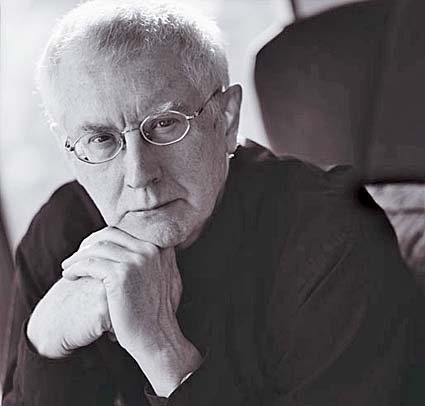
Hands folded

Hands folded (profile)

Holding book

Stern look (keeps 'em away at office hours)

Finger on side of head
Too Freaky
| Peter Klein |
We’ve been somewhat critical on this blog of the Freakonomics approach, but not as critical as Andrew Gelman. Here’s his latest (with Kaiser Fung) in the American Scientist:
On the heels of Freakonomics, the pop-economics or pop-statistics genre has attracted a surge of interest, with more authors adopting an anecdotal, narrative style.
As the authors of statistics-themed books for general audiences, we can attest that Levitt and Dubner’s success is not easily attained. And as teachers of statistics, we recognize the challenge of creating interest in the subject without resorting to clichéd examples such as baseball averages, movie grosses and political polls. The other side of this challenge, though, is presenting ideas in interesting ways without oversimplifying them or misleading readers. We and others have noted a discouraging tendency in the Freakonomics body of work to present speculative or even erroneous claims with an air of certainty. Considering such problems yields useful lessons for those who wish to popularize statistical ideas.
Here’s some additional commentary from Andrew.
My unease with Freakonomics is not its anecdotal, narrative style, but the emphasis on clever puzzles rather than substantive problems, over-reliance on weird instrumental variables, and belief that one can tackle almost any phenomenon with only the barest knowledge of its history and prior literature. Economic theory is indeed quite general and powerful, but not to be thrown around willy-nilly. After all, with great power comes great responsibility.
More on Counterfeiting
| Peter Klein |
We asked in an earlier post if counterfeiting is good for business. Fakes may compete with the real thing, but having them around may also constitute free advertising that boosts demand for the original. Rubik’s Cube distributor Seven Towns Ltd. faces this conundrum, as a WSJ front-pager demonstrates:
One reason . . . a new generation of Rubik’s fanatics can solve the notoriously difficult puzzle in record time: They don’t use Rubik’s Cubes at all, instead substituting souped-up Chinese knockoffs engineered for speed.
The spread of these black-market cubes challenges the London-based company with a marketing brain teaser. Should Seven Towns crack down on the pirated toys? Or piggyback on the phenomenon of competitive speed-cubing?
I for one am happy to have all those cheap knockoffs of my articles and books flooding Chinese markets. Not everyone can afford a Klein® original, after all.
Theory Construction Bleg
| Peter Klein |
A friend writes:
I am trying to improve the theory writing skills of my doctoral students. . . . [In my field] we don’t often build complicated mathematical models; our theory tends to be more story telling. But nevertheless there is good and bad theory. I have found some papers that discuss how to write theory and what constitutes a theoretical contribution. But I really would like for you to recommend a book on the theory of theory construction. I want to assign chapters from it to my students as well as learn something myself. Since the principles of theory construction are generic, I don’t care what literature the author comes from . The insights will be useful regardless.
What would you suggest?
Strategy and Regulatory Uncertainty
| Peter Klein |
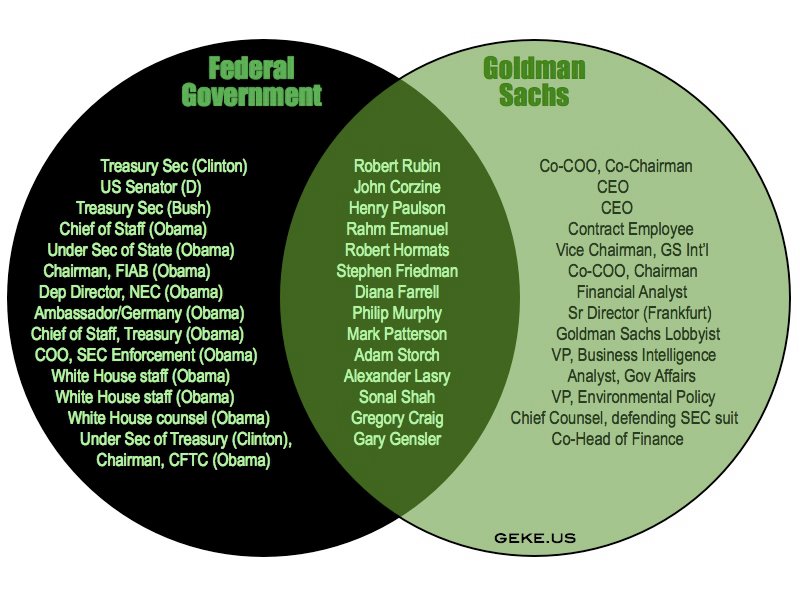
 The Fall 2011 issue of California Management Review is a special issue on “Environmental Management and Regulatory Uncertainty.” I don’t think the authors have been reading Robert Higgs but they nonetheless offer some interesting perspectives on nonmarket strategy and political entrepreneurship. I look forward to future issues on Enron and Goldman Sachs (is it yet considered a branch of the Federal government?).
Hotelling Model
| Peter Klein |
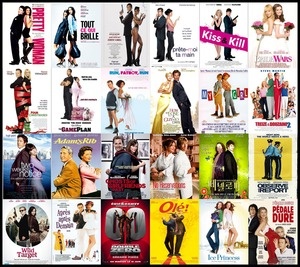
I often use the Hotelling model in class to illustrate the frequent clustering of firm and product characteristics. The example of firms locating on a street is boring, so I show the student’s Wired’s classic “Battle for Blue.” I think I’ll start using this one now (via Scott Rouse).
Disaggregation
| Peter Klein |
The idea that mainstream macroeconomic thinking focuses at too high a level of aggregation is a frequent complaint on this blog (e.g., here, here, here, and here). Our recent Strategic Organization paper hammers home this point. The level of aggregation is of course a fundamental difference between Keynesian and Austrian theorizing about economic fluctuations. But Keynesian economists don’t seem to recognize this.
The other day I posted a snarky blog entry at The Beacon, responding to a Krugman smear of Hayek (yawn). Today Mario Rizzo pens a more thoughtful response, emphasizing exactly this level-of-analysis issue:
I think the real issue is this. Hayek’s approach attacks, root-and-branch, the macroeconomic way of thinking. It is not simply a challenge to a particular theory of the determinants of mass unemployment, inflation, business cycles and the like. Hayek is not accepting the rules of the game or the parameters of the sub-discipline of modern macroeconomics. Hayek does not want to argue that the government expenditure multiplier is 0.5 instead of 2.0, for example. He does not want to discuss just how much fiscal stimulus should be undertaken and what form it should assume.
In short, he does not want to focus on aggregate spending and aggregate consequences. Hayek’s approach says: Let us pierce the veil of aggregates and look at the distortive effects on relative prices and relative output produced by boom-time credit expansions. Let us look at the distortive effects that booms leave us as we work our way through a recession. Let us concentrate on sustainable lines of expenditure both during the boom and during the road out from the bust.
Is Jim Collins Reading O&M?
| Peter Klein |
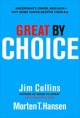 Über-guru Jim Collins has taken more than his share of hits here at O&M, mainly for lack of attention to experimental design (1, 2, 3). It appears that his new book, Great by Choice: Uncertainty, Chaos, and Luck: Why Some Thrive Despite Them All (Harper, 2011), finally tries to address this issue with an attempt at causal identification. If the dust-jacket blurb is to be believed, Great by Choice introduces to the Collins project the concept of treatment and control:
With a team of more than twenty researchers, Collins and Hansen studied companies that rose to greatness — beating their industry indexes by a minimum of ten times over fifteen years — in environments characterized by big forces and rapid shifts that leaders could not predict or control. The research team then contrasted these “10X companies” to a carefully selected set of comparison companies that failed to achieve greatness in similarly extreme environments.
This looks like a step in the right direction, but Collins is still selecting on the dependent variable — in a quasi-experimental design one normally chooses the treatment and control groups based on behaviors, not outcomes. (You don’t compare 100 healthy people to 100 sick people, you compare 100 smokers to 100 otherwise similar nonsmokers or 100 people on a medication to 100 similar people on a placebo to see which get healthy or sick.
For more, see Collins in the NYT or this interview from Knowledge@Wharton. I don’t have the actual book but I tried searching keywords from the Amazon “Look Inside,” and didn’t get any hits for “Knight,” “Schumpeter,” “dynamic capabilities,” or other appropriate key words, so I’m not expecting much theory here.
Rafe Champion at Missouri
| Peter Klein |
 It’s been fun hosting Australian writer (and frequent O&M commenter) Rafe Champion at Missouri the last couple of days. Rafe spoke to the economists about the philosophy of science (handout here), and to the graduate philosophy seminar of my colleague André Ariew on current research topics in the philosophy of biology. We’ve had many talks about Hayek, Mises, Popper, Parsons, and our mutual friend Bill Bartley, among others. Rafe blogs at Catallaxy Files and the Critical Rationalist blog, and his website The Rathouse contains a treasure-trove of writings by, and commentary on, the most important twentieth-century philosophers of science.
Urban Meyer’s Contract
| Peter Klein |
As sports-crazed American readers know, Urban Meyer was today named Ohio State University’s head football coach. The money’s not bad — $4 million per year. The contract itself, which you can find here, is pretty interesting (HT: Skip Oliva). There are lots of performance bonuses ($100k for winning the Big 10; $150k for making a BCS bowl; $250k for making the national title game), even some for academic achievement (e.g., $150k for an 80% player graduate rate — hmmm, no pressure on OSU professors here). Transportation will be by private jet; coach gets lots of free tickets; and the university will pay dues at “a mutually agreed-upon golf course.” I guess these are included in lieu of cash for tax purposes. The university also commits “to working with Coach to create the Urban Meyer Fellowship for Ethics and Leadership in Sports.”
A Turkey of a Thanksgiving Post
| Peter Klein |
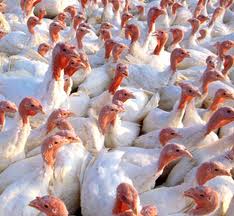 Many US bloggers try to post something clever on Thanksgiving about religious freedom, agricultural productivity, colonialism, property rights, immigration, etc. We’ve done it ourselves. But this year I thought I’d share something different: nerdy academic stuff about — what else? — the economic organization of the turkey industry. Tomislav Vukina’s 2001 paper on vertical integration in poultry is instructive. For example:
The pattern of vertical integration is less uniform in the turkey industry than in the broiler industry. A turkey company is less likely to own its own hatchery but is more likely to have company owned production farms (Martin et al. 1993). There is also more variation among production contracts in terms of division of risks and profits from growing turkeys than in the broiler industry. The processing plant is the center for control of placement.
A processor may contract directly with farmers or contract with a feed supplier who in turn contracts with farmers. In the turkey industry, there are still some independent producers with formal marketing contracts with processors. Such marketing contracts do not always provide any price or margin guarantees to producers. (more…)
Intellectual History Making a Comeback
| Peter Klein |
 At this blog we love intellectual history, particularly the history of economic and management thought. Of course, intellectual history has largely disappeared from the curricula of top economics and management programs. In these fields, the trend was driven by positivism — the belief that social science, like natural science, should favor experimental methods, hypothesis testing, and the rest of the usual trappings of Science. For positivists, there is no need to study the history of the discipline, because any truths emerging from prior work have already been incorporated in to the current textbooks and journal articles. (Murray Rothbard called this the “Whig theory” of intellectual history.)
In the field of intellectual history more generally, the challenges came from the late-twentieth-century emphasis on race, gender, and ethnicity, which privileged social, cultural, and material factors over intellectual ones. But apparently intellectual history is making a comeback. The New York Times reports on the newly formed Society for U.S. Intellectual History, which is sparking new interest in the field. The Times article describes
a resurgence in the fortunes of intellectual history — a discipline long dismissed, if not as boring, then as musty, elitist and out of touch. While intellectual historians like Richard Hofstadter and Perry Miller once dominated the profession, they were swept aside in the 1960s by the rise of social and then cultural history, which regarded talk of “the American mind” as code for “the mind of white, male Americans who happened to write books.”
Today, however, a new breed of young intellectual historian is aiming to integrate the spirit of “history from below” with an approach that doesn’t chop American history off at the neck. Young intellectual historians, scholars at the conference were quick to emphasize, have fully absorbed the lessons of the profession’s increased attention to questions of race, class and gender, without losing hold of the premise that ideas matter, even in a culture that still considers “intellectual” a term of abuse.
“We still want to talk about ideas, but we see ideas everywhere,” said Andrew Hartman, a professor at Illinois State University and president of the newly formed Society for U.S. Intellectual History, which sponsored the conference. “Big ideas affect everybody. It’s not elitist to talk about them.”
A Formal Model of Experimentation in Firms
| Peter Klein |
Following Knight, Mises, and Lachmann, we have often characterized entrepreneurship on this blog (and the McQuinn blog, which should be on your reading list) as experimentation with combinations of heterogeneous capital resources. Experimentation itself is relatively understudied in the entrepreneurship and strategy literature — we have general theories about the nature and effects of experimentation, indirect empirical evidence on competition as experimentation (e.g., my relatedness stuff with Lasse), case-study evidence about experimentation and innovation within firms, but don’t fully understand the exact mechanisms.
Here’s a new paper that will not be to everyone’s taste, but tries to get at these issues in a formal model of interaction between experimenting firms:
The Role of Information in Competitive Experimentation
Ufuk Akcigit, Qingmin Liu
NBER Working Paper No. 17602, November 2011Technological progress is typically a result of trial-and-error research by competing firms. While some research paths lead to the innovation sought, others result in dead ends. Because firms benefit from their competitors working in the wrong direction, they do not reveal their dead-end findings. Time and resources are wasted on projects that other firms have already found to be dead ends. Consequently, technological progress is slowed down, and the society benefits from innovations with delay, if ever. To study this prevalent problem, we build a tractable two-arm bandit model with two competing firms. The risky arm could potentially lead to a dead end and the safe arm introduces further competition to make firms keep their dead-end findings private. We characterize the equilibrium in this decentralized environment and show that the equilibrium necessarily entails significant efficiency losses due to wasteful dead-end replication and a flight to safety — an early abandonment of the risky project. Finally, we design a dynamic mechanism where firms are incentivized to disclose their actions and share their private information in a timely manner. This mechanism restores efficiency and suggests a direction for welfare improvement.
Shakespeare and Epistemology
| Peter Klein |
We university types love The Bard — we’ve got bookstores hither and yon, pizza joints, you name it. Not surprisingly, Shakespearean scholars are up in arms at Roland Emmerich’s film Anonymous, which they view as silly entertainment at best, disreputable Oliver Stone style revisionism at worst. I haven’t seen the movie and don’t have a particular dog in the authorship fight (though I once heard a very funny lecture by Joe Sobran based on his 1997 book Alias Shakespeare). But I’m puzzled by the core epistemological issue: what do we really know about Shakespearean authorship?
 An English professor friend told me that belief in a different author for any of Shakespeare’s works is like “belief in the phlogiston theory of fire.” Stephen Marche writes in the NY Times Magazine: “It is impossible that Edward de Vere wrote Shakespeare. Notice that I am not saying improbable; it is impossible.” Again, I don’t know anything about the issue other than what I’ve read in recent commentaries, but Marche’s case, in the piece linked above, is surprisingly weak (some Shakespeare products are dated after de Vere died, which only proves that de Vere couldn’t have written those; the doubters are snobs who don’t believe a poor country boy could have written such beautiful verse, which could be true, but hardly establishes that the country boy did in fact write them; and other circumstantial bits and ex cathedra pronouncements.)
My question, though, is the epistemological one: How can we possibly know with 100% certainty who authored every one of the literary works attributed to Shakespeare? Heck, we don’t know who really writes the stuff published under names like “Doris Kearns Goodwin” and “Stephen Ambrose,” and those appeared in the last few years, not the 17th century. There’s even a lively controversy about what Adam Smith wrote and what he copied. Intellectual historians are frequently reinterpreting and revising, and few cows are sacred. Regarding Shakespearean authorship, then, shouldn’t we expect a little Popperian or Hayekian humility?
Complete Contracts: Roomate Agreement Edition
| Peter Klein |
Contractual completeness is a core issue in organizational economics. A colleague helpfully suggested this illustration of a nearly complete contract. Note the deliberate omission of language dealing with an extreme low-probability event (time for Nicolai and Scott to resume their debate over bounded rationality?).
CFP: ISNIE 2012
| Peter Klein |
 The Call for Papers for the 2012 ISNIE conference, 14-16 June 2012 at the University of Southern California, is now posted. Proposals are due 30 January 2012, so start working on those abstracts!
I have been involved with ISNIE for many years and currently serve as the organization’s treasurer. The conferences are terrific, with a variety of papers, panels, and keynotes spanning the broad range of institutional and organizational social science research.
Trivia: I first met the good Professor Foss at the inaugural ISNIE conference in 1997 in St. Louis So if it weren’t for ISNIE, this blog might not exist. . . .
Causal Identification in Management Research
| Peter Klein |
Mike Ryall writes about the 2011 HBS strategy conference:
Of the empirical papers, almost half incorporated some method aimed at causal identification. My sense is that such identification strategies will soon become a fairly standard requirement for publication in a top management journal (“soon” being measured in academic time, of course).
We’ve discussed this issue several times, including a 2008 post on the potential tradeoffs between choosing problems that are well-identified and choosing problems that are important. I agree with Mike that the management and entrepreneurship literatures — at least the quantitative empirical part of those literatures — are catching up the economists here. But consider the advantages of backwardness: can management research learn to take identification seriously without falling into the Freakonomics trap? (Please, no Freakostrategy or Super-Freakopreneurship!)
Of course, management and entrepreneurship researchers, unlike most economists, tend to sympathize with (or at least tolerate) qualitative methods, and one legitimate means of generating causal inference is careful, detailed, historical investigation, case work, ethnography, analytical narrative, and so on. I suspect, though, that the trend Mike describes will tend to push these approaches to the side as well.





 Organizations and Markets
Recent Comments