Author Archive
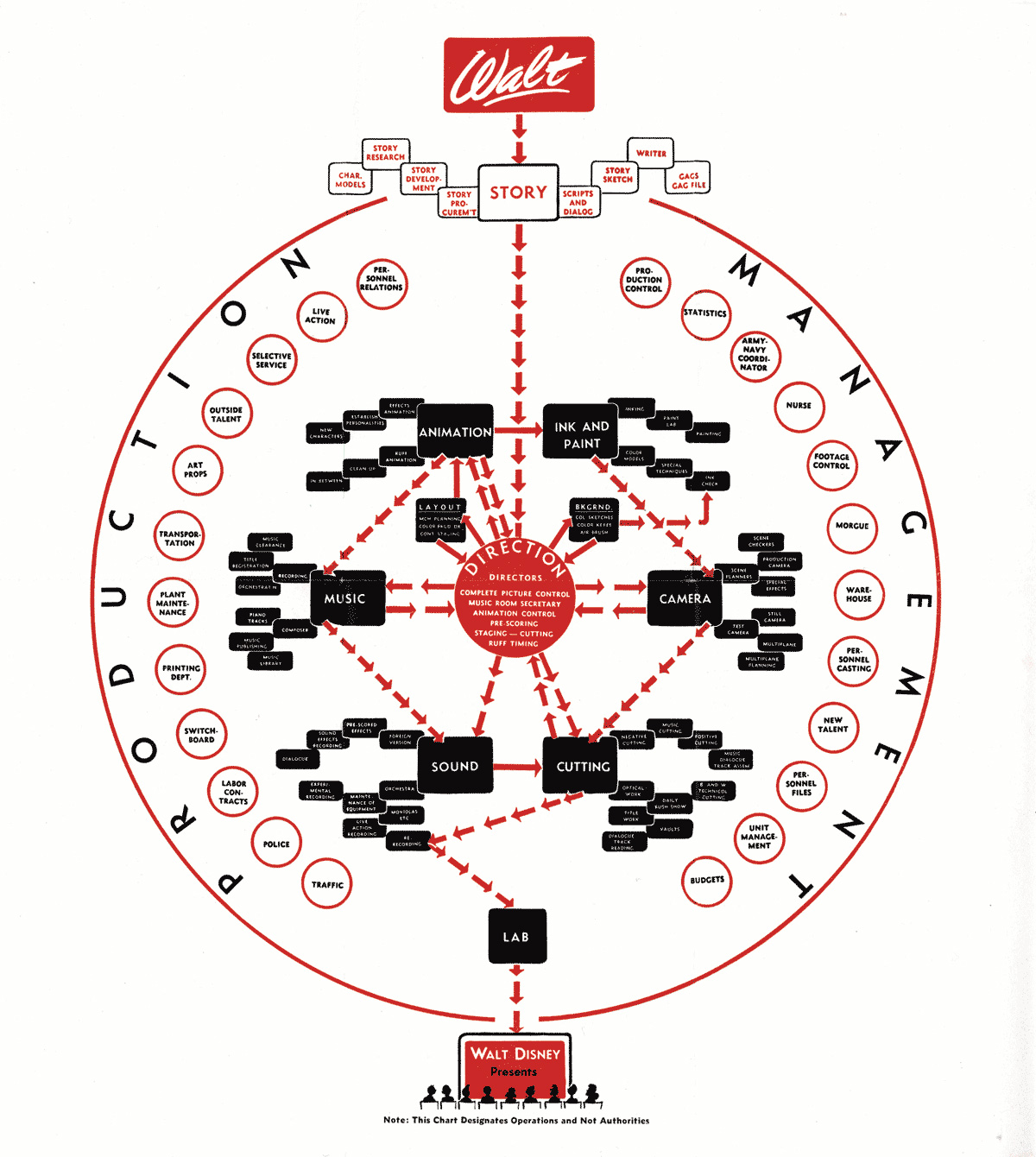
Disney Organizational Chart, circa 1943
| Peter Klein |
This week’s passing of Roy Disney has brought forth some interesting discussion of the firm founded by his uncle Walt and father Roy. Check out this Disney organizational chart from 1943 (click to enlarge), courtesy of design site @issue. Unlike the typical corporate hierarchy, writes Delphine Hirasuna, Disney’s “is based on process, from the story idea through direction to the final release of the film. All of the staff positions are in the service of supporting this work flow.” (From Cliff Kuang via WeLoveDataVis.)
The Thoughtful President
| Peter Klein |
The President’s supporters portray him as thoughtful, well-informed, and deliberative. Unlike his predecessor, who acted on impulse, rarely considered dissenting points of view, and lived in a protective bubble, Obama reads, understands alternative perspectives, and thinks through arguments. Look how long it took him to decide on an Afghanistan policy!
And yet, on economic policy, the President is shockingly parochial. He has repeatedly challenged critics of his stimulus program to “produce a single economist” who opposes his actions. Anyone who disagrees with massive government borrowing and expenditures to “rescue” the economy is simply an obfuscationist, a partisan trying to score cheap political points at the expense of the national good. I think Obama genuinely believes this. He’s certain he’s right, so criticism bewilders him. He simply can’t fathom that there might be honest disagreement on basic economic issues. For Obama, the range of macroeconomic opinion runs from, say, Krugman to Summers. It’s like Pauline Kael’s famous line that Nixon couldn’t have won in 1972 because “no one I know voted for him.”
Of course, I’m not expecting a White House invitation for me and my friends to present Austrian business-cycle theory. But you’d think he might listen to Cochrane, Zingales, Mulligan, Becker, Glaeser, or even Mankiw.
This is our thoughtful, well-informed, deliberative Chief Executive?
I Wish I’d Written That
| Peter Klein |
Arnold Kling on PAS:
[P]rior to Samuelson’s formalization in economics, there were a lot of papers published that lacked clarity and insight. Now that formalization dominates, we also see a lot of papers that lack clarity and insight. If you compare the most insightful mathematical papers with the average non-mathematical papers, math wins. But one can also run the comparison the other way and reach the opposite conclusion.
CFP: “Contracts, Procurement, and Public-Private Arrangements”
| Peter Klein |
It’s 14-15 June 2010 in Paris. Submissions are due 15 February. Stéphane Saussier is organizing, so you know it will be good. From the CFP:
This conference focuses on the recent developments in contract theories. Papers are invited on all topics of contract theories including:
- relational contracting,
- transaction costs,
- renegotiations,
- incentives,
- attribution mechanisms,
- incomplete contracting
- contract design, etc.
Papers presented may be theoretical or applied. A special attention will be given to proposals addressing issues related to procurement and public-private arrangements.
“This Paper Fills a Much-Needed Gap in the Literature”: Today’s Edition
| Peter Klein |
I was thumbing through the MDE issue containing Lasse and Nicolai’s paper when this sentence caught my eye: “Despite the widespread use of the production frontier approach to assess the efficiency of firms, there are no studies on ski lift operators.”
OK, I actually like the paper, “Are Multi-Resort Ski Conglomerates More Efficient?” by Martin Falk. It shows that resorts affiliated with a particular operator, Intrawest, have higher efficiency scores than independent resorts (and those affiliated with other ski conglomerates). There isn’t much theory, and I worry about endogeneity and unobserved heterogeneity — the major themes in recent empirical work on diversification — but I certainly agree that parental affiliation is an important, and often overlooked, issue. (Indeed, one of my favorite Brad De Long papers, from the old days before he became a full-time polemicist, deals with this problem.)
Maybe I’m just jealous that I didn’t think of this particular application when doing my own research on conglomerates. Oh, the travel grants I could have applied for!
Samuelson and Schumpeter
| Peter Klein |
Paul Samuelson, the enormously influential economic theorist, textbook writer, and teacher, died yesterday. The Times calls him “the foremost academic economist of the 20th century,” which may be true, depending what’s meant by “foremost.” He was certainly brilliant, talented, and creative. His Foundations of Economic Analysis (1949) changed forever the way economists think about their discipline (formerly a distinct, mostly verbal, logical science, economics became a branch of classical mechanics). His textbook Economics established a new style for introductory texts: lengthy, comprehensive, but ad hoc and unsystematic (Murray Rothbard called it a “vast potpourri . . . of bits and smidgens of technique and of data, none of them integrated into any sort of digestible or comprehensible whole”).
The blogosphere is beginning to spew out commentary, not all of it flattering (Krugman fawns, Ed Glaeser and Arnold Kling are more nuanced, Yuri Maltsev is gracious, Mario Rizzo is blunt). I don’t have much to add specifically for O&M readers, but I’m curious about one issue that may not get much play: the influence on Samuelson’s thought of Joseph Schumpeter, Samuelson’s dissertation supervisor at Harvard.
In many ways, they were opposites: Schumpeter the flamboyant, dramatic innovator, Samuelson the careful, rigorous systematizer; Schumpeter the defender of capitalism and critic of Keynes, Samuelson the interventionist and foremost American Keynesian; Schumpeter, someone I greatly admire, Samuelson. . . . well, you get the picture. Both were brilliant and egocentric (you all know the Schumpeter quip about wishing to become the greatest horseman, economist, and lover in Vienna, but achieving only two of the three; Samuelson once declared, “I can claim in talking about modern economics I am talking about me”).
Samuelson is mentioned in the Schumpeter biographies, including McCraw’s, mostly to illustrate Schumpeter’s enthusiasm for Samuelson’s brand of mathematical economics, which Schumpeter greatly admired even if he himself was not a practitioner. Samuelson has written a bit on his old teacher, mostly to praise Schumpeter’s brilliance (and celebrate his quirkiness, particularly in the classroom), but not much on Schumpeter’s specific theoretical contributions. (Here is Samuelson’s 1951 paper “Schumpeter as a Teacher and Economic Theorist,” which is a good read but not, ultimately, very informative; here is Samuelson’s critique of Schumpeter’s theory of equilibrium interest rates). Samuelson certainly didn’t give the entrepreneur a prominent place in his own system (here is a technical paper on innovation); what did he think of Schumpeter’s account of entrepreneurship and economic change?
Congratulations to Dick and Sid
| Peter Klein |
A comment from Dave Hoopes reminded me to congratulate Dick and Sid — Nelson and Winter, that is — for winning this year’s Dan and Mary Lou Schendel Best Paper Award from the Strategic Management Society, Dick for his 1991 paper “Why Do Firms Differ, and How Does it Matter?” and Sid for his 2003 paper “Understanding Dynamic Capabilities.” Dick’s paper is a particularly good introduction for economists wanting to understand what the strategy field is all about. I’m not a huge fan of dynamic capabilities — a friend calls the dynamic capabilities literature the “Derrida of strategic management” — but Sid’s paper strikes me as a particularly sensible approach.
On a personal note, many years ago I interviewed for a faculty position with Dick’s group at Columbia. I didn’t get the job, but Dick was a charming and gracious host. He has what you might call an impish sense of humor (I’m sure Dick Langlois can add some good stories). Sid Winter is a brilliant scholar and mentor to many in the strategy field (I only wish his views on macroeconomics were more, well, Kleinian).
Congratulations, gentlemen!
Paper Titles I Wish I’d Written
| Peter Klein |
“Shift Work and Business Cycles,” by Lucas Engelhardt, a PhD candidate at Ohio State (and former participant in the Rothbard Graduate Seminar).
Oh, wait, it’s “shift” work. . . . I thought it was a study of my daily routines and their effect on the economy.
The Professor and the Princess
| Peter Klein |
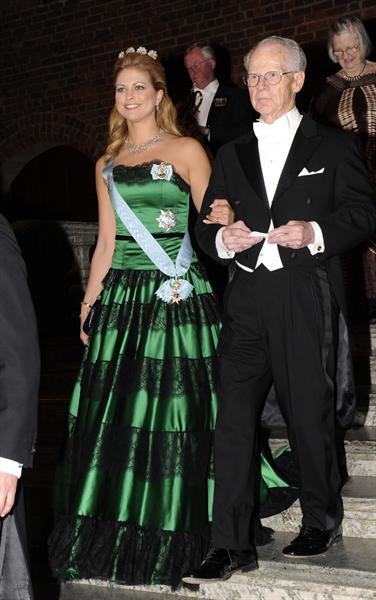
Writes my source: “Madeleine is the youngest of the three royal children and referred to as the ‘party princess.’ Is that why he looks scared?”
Words of Wisdom from Williamson’s Banquet Speech
| Peter Klein |
The transcript is here. My favorite bit, which can be read as a response to the econ-bashers:
Being hard-headed means that we aspire to tell it like it is — be it good news or bad. Although we take no joy in the downside, it is our duty candidly to confront all circumstances whatsoever. Our abiding concern is with improving the condition of mankind. Myopia, denial, and obfuscation are the enemy.
Only as we admit to and, of even greater importance, come to understand the problems that confront us — be they current or impending, obvious or obscure, real or imagined — by identifying and explicating the mechanisms that are responsible for these problems, can we expect to make informed decisions. Since, moreover, things that we do not understand at the outset sometimes have redeeming purposes, such efforts to get at the essence will often uncover real or latent benefits. Altogether, our capacity to work in the service of mankind increases as complex contract and economic and political organization become more susceptible to analysis.
Tuesday’s Prize lecture, in case you missed my earlier link, is here. I don’t see a video of the banquet speech on the Nobel site, but maybe that’s coming later. (Thank goodness they found time to post the seating chart!)
One tiny nit-pick: Williamson quotes Carlyle’s famous “dismal science” line, implicitly equating “dismal” with “mean-spirited,” but of course Carlyle’s barb had nothing to do with Malthus or scarcity or trade-offs, but with the classical economists’ opposition to slavery, which Carlyle, Dickens, Ruskin, and other literary critics of capitalism strongly supported (1, 2).
Boeing and the Higgs Effect
| Peter Klein |
In their calls for greatly expanding the Federal Reserve System’s and Treasury Department’s roles in the economy, Chairman Bernanke, Secretaries Paulson and Geithner, and their academic enablers have repeatedly emphasized the temporary nature of these “emergency” measures. “History is full of examples in which the policy responses to financial crises have been slow and inadequate, often resulting ultimately in greater economic damage and increased fiscal costs. In this episode, by contrast, policymakers in the United States and around the globe responded with speed and force to arrest a rapidly deteriorating and dangerous situation,” said Bernanke in September. Yeah, no kidding. But, we are assured, the basic structure of our “free-enterprise” system remains soundly in place.
 However, as Bob Higgs has taught us, “temporary,” “emergency” government measures are never that. Indeed, virtually all the major, permanent expansions of US government in the twentieth-century resulted from supposedly temporary measures adapted during war, recession, or some other “crisis,” real or imaginary. Cousin Naomi’s “disaster capitalism” thesis is exactly backward: it is socialism, or interventionism, that thrives during the crisis, and Washington, DC never looks back. I mean, does anyone seriously believe that the Fed will deny, or give back, the authority to purchase whatever financial assets it wishes at some future date when it deems the crisis officially “over”? Will the Treasury credibly commit never again to purchase equity or guarantee debt or otherwise protect some major industrial or financial firm after the economy returns to “normal”? Not a chance. Everything the authorities have done in the last two years to deal with this “emergency” will become part of the federal government’s permanent tool kit.
Today’s WSJ has a good example of Higgs’s ratchet effect, a front-pager on Boeing’s dependence on export loan guarantees from the Export-Import Bank, a federal government agency created in — you guessed it — 1934, as a temporary agency to deal with the Great Depression. “No company has deeper relations with Ex-Im Bank than Chicago-based Boeing. Without Ex-Im, aviation officials say, Boeing this year could have been forced to slash production, endangering hundreds of U.S. suppliers, thousands of skilled American jobs and billions of dollars in export contracts.” Bank official Bob Morin is described as “Ex-Im Bank’s rainmaker. His Boeing deals accounted for almost 40% of the bank’s $21 billion in business last year. To help Boeing through the credit crunch, his team has spent the past year developing government-backed bonds that promise to raise billions.” So, a massive industrial-planning apparatus, supposedly born during a temporary crisis, lives on as the lifeblood of a huge, politically connected US company.
Thank goodness all that money flowing to Goldman Sachs is only temporary!
Update: Here’s a short Higgs piece from 2000 on the Ex-Im Bank, appropriately titled “Unmitigated Mercantilism.”
Mechanism Design and the Office Holiday Party
| Peter Klein |
 Holiday office parties, far from being a waste of time (and booze), can be effective screening mechanisms, according to information forwarded by Doug French:
The Banc Investment Group’s “Banc Investment Daily” email report from December 6, 2005, urged its banker readers to turn the troops loose at the holiday season, because “the holiday party serves an important professional purpose — Darwinian selection.”
It turns out that people do and say the darnedest things while under the influence. Christmas party incidents are relived over and over for years at the office. Banc Investment points out that those employees who make the holiday party highlight film, “tend to do the same things at the office, but co-workers don’t notice as much.” . . .
Holiday parties are “effective at highlighting trouble makers,” according to Banc Investment Daily. “Now while we admit that one banker’s inappropriate behavior is another’s entertainment, knowing where your trouble spots are is a gift worth opening every year.”
Of course, there’s also the entertainment value for the rank-and-file: “For us, the appeal of the holiday bank party is the same as watching NASCAR. We know the bulk of the time will be a total snooze, but you have to go to see the outfits and the spectacular crashes.”
Rejecta Mathematica
| Peter Klein |
Rejecta Mathematica is an open-access journal featuring papers rejected by peer-reviewed mathematics journals. Each article includes an author’s statement describing the peer-review experience and explaining why the paper shouldn’t have been rejected. Great concept! (Link from Sheen Levine via Konstantina Kiousis.)
I eagerly await the first issues of Rejecta Economica and Rejecta Stratetgica.
Williamson Nobel Lecture Is Streaming Now
| Peter Klein |
Watch it here.

Money quotes so far:
- After questioning the design of the Department of Homeland Security: “The US has a Council of Economic Advisers; I look forward to the day when there’s also a Council of Organizational Advisers” [paraphrase].
- “That brings us to the ‘remediableness’ criterion. That word doesn’t exactly roll of the tongue. But my students have learned to say it after much repetition.”
Update: The stream is over, I’ll post a link to the archived file when I find it. Note that the ceremony is December 10, to be streamed here.
Update II: Via the ever-reliable Per Bylund, the archive link is here.
Becker and Posner on Williamson and Organizational Economics
| Peter Klein |
Ruminations on the field of organizational economics from Becker and Posner. Both are inspired by Williamson’s Nobel but neither discusses his contributions very directly. Posner’s comment, the longer of the two, describes some of his own work (with Luis Garicano) on public organizations.
PS: I’ve been looking for some time for an electronic copy of the 1993 Journal of Institutional and Theoretical Economics exchange between Posner, Coase, and Williamson. If anyone has it, can you email me a copy?
Internal and External Corporate Governance
| Peter Klein |
Most of the corporate governance literature focuses on external mechanisms for limiting managerial discretion: competition in product and factor markets; discipline from banks, institutional investors, and other large capital suppliers; and, of course, the market for corporate control. Firms have access to internal control mechanisms as well — performance-based pay, internal audits, a strong Board, competition among the top-management team, adoption of the M-form structure, and so on — but these are usually considered weaker, less effective instruments.
Viral Acharya, Stewart Myers, and Raghu Rajan have a new theory paper, “The Internal Governance of Firms,” on internal control mechanisms, focusing on dividend policy as a means of satisfying both internal and external constituents. NBER version here, ungated version here, older SSRN version here. Abstract:
We develop a model of internal governance where the self-serving actions of top management are limited by the potential reaction of subordinates. Internal governance can mitigate agency problems and ensure that firms have substantial value, even with little or no external governance by investors. Internal governance works best when both top management and subordinates are important in generating cash flow. External governance, even if crude and uninformed, can complement internal governance and improve efficiency. This leads to a theory of investment and dividend policy, where dividends are paid by self-interested CEOs to maintain a balance between internal and external control. Our paper can explain why firms with limited external oversight, and firms in countries with poor external governance, can have substantial value.
The WSJ on Vertical Integration
| Peter Klein |
It’s not as bad as this 2006 piece from Slate, but Monday’s WSJ front-pager, “Companies More Prone to Go ‘Vertical,'” is underwhelming at best. It shares a few interesting anecdotes about recent vertical mergers, but falls flat on two major grounds. First, like the Slate piece, it assumes that the advances in IT over the last few decades led to some sort of tectonic shift away from vertical integration, against which firms are now reacting by “rediscovering” the benefits of vertical coordination. Actually there’s little evidence for such a shift. Second, and more important, the article doesn’t bother to mention any theories about what vertical integration is and does. There are vague references to commodity-price volatility and the need to “control” the supply chain, but no recognition that risk-management and control over inputs can be achieved through contract as well as integration. Given that one of this year’s Nobel Laureates won the prize for his work on precisely this problem, you’d think some reference to transaction costs might be appropriate. Old Media, R.I.P.
My Naïveté
| Peter Klein |
I hoped Christy Romer would be a voice of reason within Obama’s economic team. What was I thinking? If yesterday’s WSJ op-ed is any indication, her role has been reduced to that of cheerleader for the President’s preposterous “stimulus” program. The editorial is a string of banalities, unsupported by argument or evidence, about the wonderful effects of stimulus and the need to “confront the challenges” that remain. For example, noting that real GDP increased slightly in the third quarter of 2009, after a sharp fall in the first quarter, she says that the “vast majority of professional forecasters attribute much of this dramatic turnaround to the fiscal stimulus.” Professional forecasters? Of course, we have no idea what GDP would have been in the absence of stimulus. And what of the secondary consequences, both short- and long-term? What of the unseen? She even praises the cash-for-clunkers program, recently skewered by my old friend John Chapman.
She knows all this. As Christy’s teaching assistant at Berkeley I saw her explain, patiently and carefully, how government programs have side effects, often unintended (she specifically used the airplane-child-safety-seat example of the Peltzman effect). All forgotten now. Some version of Lord Acton’s dictum, I guess.
The Lazy Manager Theory
| Peter Klein |
Good ideas from John Wilkins, who earned a PhD in (I think) evolutionary biology while working as a full-time manager (via Randy). Sample elements of the Lazy Manager Theory:
- Never do any piece of paperwork when the person who asked for it isn’t there and holding it when they make the request. If they don’t care enough to come see you, they probably don’t need it done. Also, you put faces to names and develop a good personal relationship with those who come to see you, so it’s win-win.
- If any piece of paper falls off your desk for any reason, throw it away. This is God’s way of telling you it is unimportant.
- Always sit on the left side of the table, at the far end from the secretary if you aren’t that person. This way when tasks are being handed out, you are less likely to be volunteered, as you are not in the immediate line of sight of either the chair or the secretary.
If you prefer meatier fare, try this paper from Philippe Aghion, John Van Reenen, and Luigi Zingales, “Innovation and Institutional Ownership,” which examines a version of the lazy-manager hypothesis:
We find that institutional ownership in publicly traded companies is associated with more innovation (measured by cite-weighted patents). To explore the mechanism through which this link arises, we build a model that nests the lazy-manager hypothesis with career-concerns, where institutional owners increase managerial incentives to innovate by reducing the career risk of risky projects. The data supports the career concerns model. First, whereas the lazy manager hypothesis predicts a substitution effect between institutional ownership and product market competition (and managerial entrenchment generally), the career-concern model allows for complementarity. Empirically, we reject substitution effects. Second, CEOs are less likely to be fired in the face of profit downturns when institutional ownership is higher. Finally, using instrumental variables, policy changes and disaggregating by type of owner we find that the effect of institutions on innovation does not appear to be due to endogenous selection.
Israel Strategy Conference
| Peter Klein |
This year’s Israel Strategy Conference has an impressive lineup, featuring Jay Barney on “The Missing Conversation in Strategic Management,” Mike Hitt on “Strategic Management: Taking Stock and Looking Forward,” Anita McGahan on “The Agenda for Strategic Management: Implications of the Economic Crisis,” and Harbir Singh on “Creating Competitive Advantage across Firm Boundaries.” There are also paper sessions, interactive sessions, and a doctoral consortium. Info at the link above.





 Organizations and Markets
Recent Comments