Author Archive
Famous Misquotes
| Peter Klein |
What are your favorite famous misquotes in social science? E.g., everybody knows Lord Acton’s dictum: “Power corrupts, and absolute power corrupts absolutely.” Except he actually wrote “power tends to corrupt, and absolute power corrupts absolutely.” Likewise, Adam Smith didn’t say that the merchant is led “as if by an invisible hand” to promote an end not his intention; he said the merchant “is in this, as in many other cases, led by an invisible hand. . . .” And, to get to the really deep thinkers, Gordon Gekko didn’t say “greed is good,” but “greed, for lack of a better word, is good. Greed is right. Greed works. Greed clarifies, cuts through and captures the essence of the evolutionary spirit. . . .” I love you, man!
On a related note, David Levy and Sandra Peart explain that Thomas Carlyle’s description of economics as the “dismal science” had nothing to do with Malthusian overpopulation. Carlyle actually despised the economists because they supported the emancipation of slaves and believed, in Levy and Peart’s words, “it was institutions, not race, that explained why some nations were rich and others poor.”
Introducing Guest Blogger Glenn MacDonald
| Peter Klein |
It’s a pleasure to welcome Glenn MacDonald as our newest guest blogger. Glenn is the John M. Olin Distinguished Professor of Economics and Strategy at the Olin Business School, Washington University in St. Louis, and Director of the Center for Research in Economics and Strategy. His recent research has focused on optimal compensation in competitive product markets, the impact of investor protection on entrepreneurship and economic growth, industry dynamics, and coalitional game theory foundations for strategy. His work has appeared in many journals including the Journal of Political Economy, Econometrica, American Economic Review, Quarterly Journal of Economics, and Management Science. He’s also an Associate Editor of Management Science. Welcome Glenn!
Two Quotations on Profits
| Peter Klein |
Henry Hazlitt, from Economics in One Lesson:
In a free economy, in which wages, costs and prices are left to the free play of the competitive market, the prospect of profits decides what articles will be made, and in what quantities — and what articles will not be made at all. If there is no profit in making an article, it is a sign that the labor and capital devoted to its production are misdirected: the value of the resources that must be used up in making the article is greater than the value of the article itself.
One function of profits, in brief, is to guide and channel the factors of production so as to apportion the relative output of thousands of different commodities in accordance with demand. No bureaucrat, no matter how brilliant, can solve this problem arbitrarily. Free prices and free profits will maximize production and relieve shortages quicker than any other system. Arbitrarily fixed prices and arbitrarily limited profits can only prolong shortages and reduce production and employment.
The function of profits, finally, is to put constant and unremitting pressure on the head of every competitive business to introduce further economies and efficiencies, no matter to what stage these may already have been brought.
Barack Obama, from last week’s address on healthcare:
I’ve insisted that like any private insurance company, the public insurance option would have to be self-sufficient and rely on the premiums it collects. But by avoiding some of the overhead that gets eaten up at private companies by profits and excessive administrative costs and executive salaries, it could provide a good deal for consumers, and would also keep pressure on private insurers to keep their policies affordable and treat their customers better. . . .
So, (a) profits and executive salaries are part of (avoidable) overhead, and (b) government agencies have lower administrative costs than private firms. Who knew? (Thanks to Gary for the quote.)
The Onion or Reality: Ron Kirk Edition
| Peter Klein |
Today’s installment of our series featuring statements so self-evidently absurd you wonder how anyone could have made them with a straight face focuses on US Trade Representative Ron Kirk. Here’s Captain Kirk failing Economics 101:
Following an announcement by the White House, United States Trade Representative Ron Kirk released the following statement today on the U.S. decision to impose remedies under Section 421 of the 1974 Trade Act to stop a harmful surge of imports into the U.S. of Chinese tires for passenger cars and light trucks. Following what the ITC determined was a surge, production of similar products in the U.S. dropped, domestic tire plants closed, and Americans lost their jobs. Today’s steps are designed to level the playing field for American workers in the tire market.
The three-year remedies, consisting of an additional tariff of 35 percent ad valorem in the first year, 30 percent ad valorem in the second, and 25 percent ad valorem in the third year, are being imposed after a finding by the United States International Trade Commission that a harmful surge of imports of Chinese tires disrupted the U.S. market for those products. . . .
“This Administration is doing what is necessary to enforce trade agreements on behalf of American workers and manufacturers. Enforcing trade laws is key to maintaining an open and free trading system.”
Christie Romer, where are you? Larry Summers? Austan Goolsbee? Does any economically literate person have a voice in Obama’s White House?
Mr. Kirk, please go read “Saving the X Industry” 500 times. This may help.
Professorial Role Models
| Peter Klein |
Mine is of course Professor Kingsfield from “The Paper Chase”:
Best line: “Loud! Fill the classroom with your intelligence.”
My co-bloggers are of course warm-and-fuzzy types. Anybody have a clip of the scene from One True Thing where the Renee Zellweger character remembers visiting her father’s classroom as a child? “So, I guess this is the last class of the semester. Thank you for taking this journey with me.” (Students all stand up and applaud, shake his hand as he walks down the aisle, etc.) Then there’s the scene from Better Off Dead with the high-school math teacher played by Vincent Schiavelli. Classic!
Corporate Diversification Humor
| Peter Klein |
As someone who works in the corporate diversification area I enjoyed this Onion piece on Yamaha:
Despite concerns over the recent global recession, Yamaha Corporation president Mitsuru Umemura announced last week that he was content with the current level of production of Jet Skis, alto saxophones, snowmobiles, power generators, scooters, and golf carts. “Initially we thought that the declining global market would result in overproduction of synthesizers, PA systems, DVD players, tone generators, and motocross bikes, but in fact our production quotas were almost perfectly attuned to the market in power amplifiers, heart-rate monitors, signal processors, analog mixers, engine oil, microphones, HiFi systems, and grand pianos,” said Umemura, who stressed that his company prides itself on attention to detail. “At the Yamaha Corporation we’re focused on one thing and one thing alone — quality sound chips, ceiling brackets, editing software, race-kart engines, sport boats, flugelhorns, ATVs, sequencers, outboard motors, conference systems, golf clubs, projectors, MIDI controllers, lamp cartridges, portable recorders, subwoofers, component systems, and motorcycles.”
I remember while doing my dissertation research coming across a mid-1960s cartoon from Fortune or Business Week showing Santa’s elves whispering nervously as Santa meets with a slick-looking conglomerator in the background. One elf to another: “I think we’re becoming a division of Gulf & Western!” Robert Sobel also tells a story (I think in The Rise and Fall of the Conglomerate Kings) about the conglomerate CEO who specializes in acquisition by stock-swap. One day his son announces that he’s sold the family dog for $1,000. “You got cash for that old pooch?” “No, I traded him for two $500 cats.”
And there’s the great line from Fortune about Peter Grace, whose famous acquisition sprees transformed W. R. Grace from a mundane shipping company into “a purveyor of everything from bull semen to grilled cheese sandwiches.”
Blogging About the Academic Job Market
| Peter Klein |
Political science profs don’t like it. The passage on job-market-rumor sites caught my eye in this Inside Higher Ed piece on the poli sci market (via Randy).
One change in the hiring process that is clearly frustrating to many graduate directors and search chairs is the popularity of Web sites devoted to the latest news and rumors about the status of searches. . . . Some in the audience said that they should try to discourage graduate students from frequenting the sites, given that postings are not only of questionable accuracy but are sometimes “hateful,” as one political scientist said. . . .
PoliSciGuy, one of the anonymous editors of Political Science Job Rumors, reached via e-mail, defended the site. He noted that his e-mail is on the site so he can respond to complaints about postings, and said that there is some moderation to remove certain posts. But he said that there is a strong demand for the information — even unverified information — from job seekers. “If we tighten things down too much, then a new board will spring up without moderation. So, we try to strike a balance between allowing enough free flow of information that this board remains the focal point for all political science rumors, and still being responsible about what we allow to remain posted.”
He also said that grad students know how to place the site’s information in perspective. “I’m not sure if graduate students actually rely on this message board, per se,” he said. “I think that they likely take it as one data point along with information they gain from other graduate students, advisers, and the rumor mill that has always existed at every conference bar.”
Exactly. There has always been a job-market rumor mill, in academia as in every other profession. Until now, this information has been restricted to faculty and students at elite schools, in particular specialized networks, who happen to know the guy who knows the guy. . . . Rumor-mill websites simply democratize this information. Yet another example of the great keepers of the democratic flame opposing something that looks like actual democracy.
Update: Maybe the hiring schools should just tweet their openings (HT: Cliff).
Books About Work
| Peter Klein |
I blogged earlier about Matthew Crawford, whose book Shop Class as Soulcraft challenges our commonly held beliefs about white- and blue-collar work. In a feature in Saturday’s WSJ Crawford listed his five favorite books about work. It’s an unusual list: Harry Braverman’s Labor and Monopoly Capital, Alasdair MacIntyre’s After Virtue, Arlie Russell Hochschild’s The Managed Heart, Richard Sennett’s The Corrosion of Character, and Mike Rose’s The Mind at Work. After Virtue, for example, is well-known as an outstanding work in contemporary moral philosophy, but Crawford sees it in a different light:
Alasdair MacIntyre shows that the manager, that stock character in modern institutional life, is a moral relativist by stipulation — it’s just part of the job. Unlike an entrepreneur, a hired manager must accept the ends of an organization as given — as unavailable for rational scrutiny. His task is to adjust others, and indeed himself, to the realization of those ends, by whatever means are effective. As the business section of any chain bookstore confirms, what is wanted are therapeutic techniques of “self transformation”; the manager becomes a sort of institutional pop psychologist.
What are your favorite books (and articles) about the workplace? Besides Dilbert. I’m partial to Donald Roy’s 1952 classic, “Quota Restriction and Goldbricking in a Machine Shop.”
Who Says Data-Visualization Tools Aren’t Useful?
| Peter Klein |
When they can produce beauties like this map of time-travel timelines from movies and TV? (Not quite as awesome as the Heavy Metal Band Names Flow Chart but still pretty cool.) HT: /Film.

Bonus: Here’s another one, from John Hagel, that many of you will appreciate.
Bayes of Our Lives
| Peter Klein |
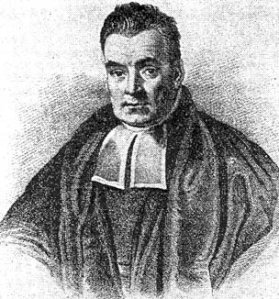 I’ve already shared my Bayesian anecdote. On a more serious note, Andrew Gelman is asked (by Bill Harris) to recommend overviews of Bayesian methods for practitioners (analysts, managers). Andrew provides several helpful suggestions. Any others? Any recommendations for teaching Bayesian (or classical) statistics to MBAs, executives, even undergraduate business majors?
Chalk or Dry-Erase Markers?
| Peter Klein |
I just committed a rookie teacher faux pas: wearing a black shirt to class in a room equipped with old-fashioned chalk and chalkboards. I do PowerPoint, but use the boards to make additional points and to guide Socratic discussion. Now I look like Woody Allen in the cocaine scene from Annie Hall. O Whiteboard with Black Dry-Erase Markers, Where Art Thou?
Now, I’m sure some professors and teachers among our loyal readership will have strong opinions on the chalk-versus-dry-erase controversy. Chalk generates more dust than markers, but the dust is easily washable and gives that disheveled, absent-minded professor look that many of us crave (especially when combined with tweed and elbow patches). Dry-erase boards are usually cleaner, but the dust and stray markings can ruin your clothes and make you look like a tattoo-school drop-out. What do you think?
NB: My favorite example of an academic Extreme Makeover relates to this discussion. When I was in grad school Andrei Shleifer came out to give a seminar, sometime around 1989 or 1990. He had the quintessential professor look — tousled hair, shirttail hanging out, chalk marks everywhere. I’m pretty sure there were no transparencies or PowerPoint slides, just Three Equations and a Cloud of Dust. Several years later, in the mid-2000s, I saw him give the keynote address for the ISNIE annual conference. This was after the Late Unpleasantness in Russia. In the transition to public servant, Shleifer had been completely transformed, now sporting a fashionable haircut, perfectly tailored Armani suit, bright purple tie, and legible PowerPoint slides (not up to Teppo’s standard, but a big leap for Shleifer nonetheless). Quelle difference!
How to Publish a Scientific Comment in 123 Easy Steps
| Peter Klein |
This is floating around the web and good for a chuckle. The situation in social science is in some ways better and in other ways worse than that described here (the author claims it’s based on a true story). Our journals are not quite as space constrained, on average, but our publication lags are typically much longer.
Be sure to read all the way through to the Addenda, in which the author makes interesting and important suggestions for revising the system. (HT: Randy.)
The Amish Internet
| Peter Klein |
It’s the Budget, a 119-year-old Amish weekly newspaper published in Sugarcreek, Ohio. “The Budget is the dominant means of communication among the Amish, a Christian denomination with about 227,000 members nationwide who shun cars for horse-drawn buggies and avoid hooking up to the electrical grid,” says an AP story. The national edition, which has a strong following in the US and Canada, simply aggregates dispatches produced by local writers. “People call the Budget the Amish Internet,” says its publisher. “It’s non-electric, it’s on paper, but it’s the same thing.”
The example highlights the benefits and costs of different types of networks. Open-access, open-source networks governed by just a few simple protocols like TCP/IP and HTML are not necessarily the best solution for every problem. Sneakernet is more secure, for example. In the Amish case, according to the AP story, the Budget’s customers limited access, threatening a rebellion when the newspaper recently announced plans to produce an online edition. “The writers, known as scribes, feared their plainspoken dispatches would become fodder for entertainment in the ‘English,’ or non-Amish, world.”
History of Economic Thought Boot Camp
| Peter Klein |
A message from Bruce Caldwell:
I am pleased to announce that the Center for the History of Political Economy at Duke University has been awarded a grant by the National Endowment for the Humanities to support a Summer Institute to be held at Duke June 6 – 25, 2010. The institute will bring 25 faculty members from colleges and universities in the US with no previous experience teaching history of economic thought to Duke for a three week “Boot Camp,” with the goal that the participants will go back to their home institutions both prepared and eager to teach an undergraduate course in the field. A number of HES members (past or present Society presidents all, in fact) will serve as lecturers and discussion leaders, including Brad Bateman, Bruce Caldwell, Craufurd Goodwin, Kevin Hoover, Steve Medema, Sandy Peart, and Roy Weintraub. We are hopeful that this institute, if successful, will be continued in future years, and that if alternative sources of funding become available, could be opened up to include graduate students and non-US citizens. (The current constraints on eligibility are due to NEH rules.)
You can contact Bruce for more information.
Interviews with Nobel Laureates
 | Peter Klein |
I just discovered that the official Nobel site has a multimedia section, with interviews, videos of the ceremonies and acceptance speeches, and so on. Most of the recent economics Laureates are included. Interesting stuff.
Bonus Nobel material: Josh Wright makes a good case for an economics prize honoring the UCLA tradition in the theory of the firm, property rights, and transaction costs. Josh himself is an excellent representative of that tradition. And here’s an old post on the prospects for a Nobel prize in organizational economics.
Williamson is still my favorite dark horse candidate, for obvious personal reasons, but I’d be delighted to see Klein, Alchian, Demsetz, or even Barzel and Cheung recognized for their contributions.
Even Stanley Fish . . .
| Peter Klein |
. . . recognizes that politicizing the basic English composition classes — one of the crowning achievements of literary and cultural postmodernism, the movement once championed by Fish himself — wasn’t such a good idea (via George Leef):
A few years ago, when I was grading papers for a graduate literature course, I became alarmed at the inability of my students to write a clean English sentence. They could manage for about six words and then, almost invariably, the syntax (and everything else) fell apart. I became even more alarmed when I remembered that these same students were instructors in the college’s composition program. What, I wondered, could possibly be going on in their courses?
I decided to find out, and asked to see the lesson plans of the 104 sections. I read them and found that only four emphasized training in the craft of writing. Although the other 100 sections fulfilled the composition requirement, instruction in composition was not their focus. Instead, the students spent much of their time discussing novels, movies, TV shows and essays on a variety of hot-button issues — racism, sexism, immigration, globalization. These artifacts and topics are surely worthy of serious study, but they should have received it in courses that bore their name, if only as a matter of truth-in-advertising.
As I learned more about the world of composition studies, I came to the conclusion that unless writing courses focus exclusively on writing they are a sham, and I advised administrators to insist that all courses listed as courses in composition teach grammar and rhetoric and nothing else. This advice was contemptuously dismissed by the composition establishment, and I was accused of being a reactionary who knew nothing about current trends in research.
Quelle ironie!
The Pretense of Bernanke’s Knowledge
| Peter Klein |
Chairman Bernanke, in his own words:
July 2005: “[U]nquestionably, housing prices are up quite a bit; I think it’s important to note that fundamentals are also very strong. We’ve got a growing economy, jobs, incomes. We’ve got very low mortgage rates. We’ve got demographics supporting housing growth. We’ve got restricted supply in some places. So it’s certainly understandable that prices would go up some. I don’t know whether prices are exactly where they should be, but I think it’s fair to say that much of what’s happened is supported by the strength of the economy.”
July 2005: “[Recession is] a pretty unlikely possibility. We’ve never had a decline in house prices on a nationwide basis. So what I think is more likely is that house prices will slow, maybe stabilize: might slow consumption spending a bit. I don’t think it’s going to drive the economy too far from its full employment path, though.”
February 2007: “Our assessment is that there’s not much indication at this point that subprime mortgage issues have spread into the broader mortgage market, which still seems to be healthy. And the lending side of that still seems to be healthy.”
July 2007: “The pace of home sales seems likely to remain sluggish for a time, partly as a result of some tightening in lending standards, and the recent increase in mortgage interest rates. Sales should ultimately be supported by growth in income and employment, as well as by mortgage rates that, despite the recent increase, remain fairly low relative to historical norms. . . . Overall, the U.S. economy seems likely to expand at a moderate pace over the second half of 2007, with growth then strengthening a bit in 2008 to a rate close to the economy’s underlying trend.”
July 2009: “Overall, the Federal Reserve has many effective tools to tighten monetary policy when the economic outlook requires us to do so. As my colleagues and I have stated, however, economic conditions are not likely to warrant tighter monetary policy for an extended period. We will calibrate the timing and pace of any future tightening, together with the mix of tools to best foster our dual objectives of maximum employment and price stability.”
A Hopeful Sign
| Peter Klein |
At least one major US bank is advertising the fact that it refused TARP funds. Bernanke and Co. must be unhappy, as they insisted that all large banks take the money to avoid tainting those that actually needed it. Wouldn’t it be great if the largest bailout recipients became tarred as Welfare Bums (just as people call G.M. “Government Motors”)? (HT to Lisa Fairfax.)
The irony in all this is that government intervention in financial markets is usually justified by claims about asymmetric information: consumers can’t distinguish reliable from unreliable banks, insurers can’t tell healthy from unhealthy people, and so on, leading to a rash of adverse-selection problems that market mechanisms cannot solve. Actually the reverse is true: low-quality but politically connected financial institutions rely on government intervention to enforce a pooling equilibrium, preventing the market signaling and screening that would otherwise take place.
Discipline-Based Policy Advice
| Peter Klein |
As noted before, the economist long ago replaced the fortune teller as the most popular kind of policy adviser. The US, for example, has a Council of Economic Advisers but no Council of Anthropological Advisers or Council of Critical Literary Theorist Advisers (thank goodness). Now the sociologists want a piece of the action. And, as Rajshree Agarwal, Jay Barney, Nicolai, and I have argued, management scholars (a partially overlapping set with economists, it should be noted) may also have something to offer in understanding the current economic mess.
Here’s Richard Posner making a pitch for legal scholars: “with a few notable exceptions, such as Lucian Bebchuk, Edward Morrison, and Steven Schwarcz, academic lawyers (and Bebchuk and Morrison have Ph.Ds in economics, as well as law degrees) have not made a contribution to the understanding and resolution of the current economic crisis, even though it bristles with legal questions.” But he isn’t sure that academic legal training is currently very useful. Kenneth Anderson is more optimistic:
I think that legal academics will have much to contribute in the reform of finance in the remaking of institutions and markets with fewer panglossian assumptions about how they will find optimal solutions on their own, and with fewer panglossian assumptions that they will do so as a matter of natural necessity. But I also think, even more strongly, and will raise it in some subsequent posts, that lawyers will bring to the table an understanding of the unquantified risks and uncertainties that are written into financial contracts — derivatives, securitizations, etc. — that financial analysts, economists, many other non-lawyer actors, took for granted as not having any effect.
Who else wants a seat at the table?





 Organizations and Markets

Recent Comments