Author Archive
Pre-Internet Blogging
| Peter Klein |
From the great Wiley Miller. The number of listeners seems about right.

MDE Special Issue, “Frontiers of Strategic Management Research”
| Peter Klein |
The March-April 2008 issue of Managerial and Decision Economics features a special issue on “Frontiers of Strategic Management Research,” edited by Catherine Maritan and Margaret Peteraf. Contributors include Mary Tripsas, Bill Hesterly, Jeff Dyer, Kyle Mayer, Janet Bercovitz, Ranjay Gulati, Bob Hoskisson, Jay Barney, Kathy Eisenhardt, Michael Jacobides, and many others. From the introduction:
Scholars working in the field of strategic management are fundamentally concerned with developing an understanding of how firms compete and how they can create competitive advantage. In addressing this overarching issue we ask questions about such diverse topics as the relationship between firms and industry conditions, the origins and consequences of heterogeneity among firms, how the scope of a firm’s activities affects how it competes, and factors that affect inter-organizational relationships. (more…)
Lesser-Known Counterparts of Common Words
| Peter Klein |
This week Anu Garg’s A.Word.A.Day is featuring lesser-known counterparts of common words, e.g.:
-
prepone (v. tr.): to reschedule an event to an earlier time
-
nocebo (n.): a substance producing harmful effects in someone because it is believed to be harmful, but which in reality is harmless
-
dystopia (n.): an imaginary place where everything is very bad, as from oppression, disease, deprivation, etc.
- inhume (v. tr.): to bury
- prequel (n.): a book, movie, drama, etc. set in a time preceding that of an existing work
Can you think of more?
Wages and Currency: Visualizing Wage Payments
| Peter Klein |
That’s the title of a virtual exhibition hosted by the International Institute of Social History in the Netherlands. Jan Lucassen has collected data and images showing the connection between coin circulation and wage payments throughout history, particularly for societies about which we know little of labor patterns and wage rates. “As far as wages are paid in currency, in particular in coin, specific patterns of denominations produced and used in space and time may provide insights into the importance of wage labour in those societies.”
Numismatists may also wish to pre-order George Selgin’s forthcoming Good Money: Birmingham Button Makers, the Royal Mint, and the Beginnings of Modern Coinage, 1775-1821, a chapter of which you can read here. Two other Selgin papers on private coinage are here and here. As you can see, Selgin’s work has improved considerably since he quit doing stuff like this.
The Grad Student’s New Best Friend
 | Peter Klein |
Forget coffee, Red Bull, and Krispy Kreme. Try Snickers Charged, which combines the decadence of a regular Snickers bar with 60mg caffeine. Delicious, nutritious, and sure to see you through that next dissertation chapter!
One taster’s report: “Shortly after downing the Snickers . . . my heartbeat began to accelerate. Within minutes, my hands were trembling and my stomach was a bit upset, but I was typing about twice as fast as I usually do.” Perfect!
Marshallian Industrial Economics
| Peter Klein |
Almost every recent paper on networks, clusters, agglomeration economies, and the like mentions Alfred Marshall’s concept of the “industrial district” and gives the obligatory cite to Book IV of Marshall’s Principles (Marshall’s term was the more colorful “thickly peopled industrial district”). But what exactly were Marshall’s views on industrial districts, and on industrial economics more generally? Attend this workshop to find out:
International Workshop: “Marshall and the Marshallians on Industrial
Economics”March 15-16th 2008, Mercury Tower, Hitotsubashi University, Tokyo (more…)
The Urban Toilet
| Peter Klein |
That’s the title of SCA 90.001, offered this semester at New York University’s Department of Social and Cultural Analysis. Professor Harvey Molotch’s syllabus, writes Ben McGrath in the New Yorker, “reads almost like a parody of Allan Bloom’s worst nightmare, bringing the jargon of gender and ethnic studies, city planning, and industrial design to bear on the most euphemized of subjects.” The reading list includes
- Jo-Anne Bichard, Julienne Hanson and Clara Greed, “Please Wash Your Hands.” The Senses and Society 2(3): 385-90.
- Barbara Penner, “A World of Unmentionable Suffering: Women’s Public Conveniences in Victorian London.” Journal of Design History 14 (2001): 35-52.
- Mitchell Duneier, “When You Gotta Go.” From Sidewalk.NY: Farrar Straus & Giroux, 1999.
- Lee Edelman, “Men’s Room,” in Joel Sanders, ed., Stud: Architectures of Masculinity. Princeton Papers on Architecture Series. New York: Princeton Architectural Press, 1996.
Apparently Clara Greed, of the World Toilet Organization, is a major player in the field. In class one day Molotch read aloud something by Greed about “the restroom revolution which is going on in the Far East.”
“Does she use the phrase ‘Far East’?” a young woman asked, sounding incredulous. “It’s really Western-centric, obviously.”
“O.K., so Clara stepped into that one, but she’s otherwise good on toilets,” Molotch said.
Thanks to Travis Kavulla for the pointer.
Religious Figures for Modern Times
| Peter Klein |
Remember Saint Hubbins, the patron saint of quality footwear? He has nothing on Lord Balaji, described in a recent WSJ story as the Hindu god of H-1B visas.
Local officials were on a tear to turn Hyderabad into the next Bangalore, the high-tech capital of the neighboring state of Karnataka. They started referring to Hyderabad as “Cyberabad.” They fixed roads and wooed Microsoft and General Electric Co. to set up offices there.
Hoping to capitalize on all the activity, technical colleges sprouted up in the city’s outskirts near Mr. Gopala Krishna’s temple. Students started trickling by on their way home from school; many complained about their failed attempts to secure U.S. visas. That gave the priest an idea to sell the students on the deity by giving him a new persona, “Visa God.” Mr. Gopala Krishna counseled the students in English, then told them to walk around the temple 11 times to get their wish. “I used to say, ‘Go, this time you’ll get it,'” he recalls.
Soon, Mr. Gopala Krishna started seeing dozens — then hundreds — of new visitors a day. In 2005, some local newspapers wrote about the Visa God, just as new U.S. visa restrictions were taking a toll. Mr. Gopala Krishna and his relatives also launched a Web site and a newsletter called Voice of Temples, with features like a primer of sample prayers for help in visa interviews.
The temple’s popularity surged. Last year, a public battle between Mr. Gopala Krishna’s family and the local government, which briefly wanted to take the temple over, only boosted its appeal among the young and subversive. Now devotees of the Visa God say they have to reach the temple by 6 a.m. to avoid the daytime rush.
Interview with Peter Bernstein
 | Peter Klein |
Here is Peter Bernstein, author of the terrific books Capital Ideas and Against the Gods, interviewed by Tom Keene of Bloomberg’s On the Economy series.
Still More on Legal Origins
| Peter Klein |
John Armour, Simon Deakin, Prabirjit Sarkar, Mathias Siems, and Ajit Singh add to the debate with a new dataset and a new interpretation: common-law countries offer better shareholder protection not because of the characteristics of common law per se, but because the emergence of a global common-law standard gave common-law countries a head start, a sort of network effect. Here is the paper. Abstract:
We test the ‘law matters’ and ‘legal origin’ claims using a newly created panel dataset measuring legal change over time in a sample of developed and developing countries. Our dataset improves on previous ones by avoiding country-specific variables in favour of functional and generic descriptors, by taking into account a wider range of legal data, and by considering the effects of weighting variables in different ways, thereby ensuring greater consistency of coding. Our analysis shows that legal origin explains part of the pattern of change in the adoption of shareholder protection measures over the period from the mid-1990s to the present day: in both developed and developing countries, common law systems were more protective of shareholder interests than civil law ones. We explain this result on the basis of the head start common law systems had in adjusting to an emerging ‘global’ standard based mainly on Anglo-American practice. Our analysis also shows, however, that civil law origin was not much of an obstacle to convergence around this model, since civilian systems were catching up with their counterparts in the common law. We then investigate whether there was a link in this period between increased shareholder protection and stock market development, using a number of measures such as stock market capitalisation, the value of stock-trading and the number of listed firms, after controlling for legal origin, the state of economic development of particular countries, and their position on the World Bank rule of law index. We find no evidence of a long-run impact of legal change on stock market development. This finding is incompatible with the claim that legal origin affects the efficiency of legal rules and ultimately economic development. Possible explanations for our result are that laws have been overly protective of shareholders; transplanted laws have not worked as expected; and, more generally, the exogenous legal origin effect is not as strong as widely supposed.
What Bad Academic Writing Does to the Brain
| Peter Klein |
 From the brilliant Jorge Cham (via Per).
Click to enlarge.
The Role of Missionaries in Social and Institutional Change
| Peter Klein |
First Brayden, then Fabio. Today another talented young sociologist, Robert Woodberry of UT-Austin, gave a research workshop in my building. Bob is leading a massive project to construct a comprehensive dataset of all Protestant and Catholic missionary activity from 1813 to 1968. Some of the data are here. Bob presented a working paper (not yet online) on the affect of missionary activity on the spread of democracy in the global south. Once Protestant missionary activity (missionaries per capita, length of time in host country, percent of local population evangelized) is controlled for, the usual predictors of democracy (British colonial origin, location, economic variables) drop out of regression models as statistically significant. One implication is that studies on the effect of religion on economic performance (e.g., Stulz and Williamson 2003) should control more carefully for the precise charactersitics of religious activity (not simply “Protestant,” “Catholic,” etc.).
The Rhetoric of Science
| Peter Klein |
Tom Lessl, who’s work on the history of science we’ve mentioned before, offers some interesting reflections on scientific rhetoric in this 2005 interview.
There is a popular and widespread misconception in the world that scientific communication is distinctly different from other forms of public communication, but this is not really so. Its persistence is explained by an old adage in my field, which I think comes from Roderick Hart at the University of Texas, which says that rhetoric is most effective which disguises itself as something else. And I would have to say that science is the master of disguises. . . .
In saying this I am not trying to suggest that science is not a profoundly powerful form of inquiry, that its truth claims are without substance or that many scientific questions cannot be answered with a definitive yes or no. But scientific communication has all the same kind of properties that we typically find in other arenas of communication.
This misconception, Tom argues, is actively promoted by scientists themselves, primarily as a means of securing resources:
What I call science’s “priestly voice” is the outcome of several hundred years of experimentation with different ways of relating itself to its patrons. Patronage is a perennial problem for science, one of huge proportions. Science is at once an exceedingly costly undertaking and also one that does not necessarily offer any immediate return on investments. We all know that science has produced applications of immeasurable benefit, but in history when scientific patronage has been dependent upon the promise of such payoffs, science work has suffered. This is because most of what we call basic science is exploratory and can’t promise applications. It produces knowledge that winds up in science journals but not in pharmaceutical patents or medical applications. The characteristic expectation of Americans that science is valuable because it pays off has traditionally deterred scientific growth. This was why the U.S. remained a backwater province of theoretical science until after WWII — when the public began to realize that theory might pay off in things like atom bombs. But more generally, scientific culture has responded to the pressures of patronage by trying to construct a priestly ethos — by suggesting that it is the singular mediator of knowledge, or at least of whatever knowledge has real value, and should therefore enjoy a commensurate authority. If it could get the public to believe this, its power would vastly increase. (more…)
State-Enforced Cartels
| Peter Klein |
Theory and evidence suggest that firms cannot form effective cartels on the free market. So, when producers wish to cartelize, they naturally turn to the state for help. Pennsylvania’s recent decision to forbid dairies from advertising hormone-free milk provides a vivid example. “It’s kind of like a nuclear arms race,” said State Agriculture Secretary Dennis C. Wolff in November. “One dairy does it and the next tries to outdo them. It’s absolutely crazy.” Right, next thing you know firms will be lowering prices, increasing output, improving quality — who knows what else! If only they could agree not to compete. . . . (Andrew Samwick helpfully declared Wolff’s office a “Microeconomics Free Zone.”)
The classic example of state-enforced cartelization is, of course, the National Industrial Recovery Act of 1933. The Depression, argued President Roosevelt, was exacerbated by excessive competition among firms, so firms must be compelled to form cartels to keep nominal prices and wages high (exactly the opposite, unfortunately, of what was needed to reduce unemployment). Despite a massive propaganda campaign to enforce participation the NIRA cartels largely fell apart by early 1934. Jason Taylor and I have a new paper exploring the role of expectations and enforcement in the collapse of the NIRA. Abstract below the fold: (more…)
Fun With Words
| Peter Klein |
You know the game where you take a common word, add or change one letter, and create a new definition? Our good friend Randy W. sends these examples, including some economics and management terms:
1. Cashtration: The act of buying a house, which renders the subject financially impotent for an indefinite period of time.
2. Ignoranus: A person who’s both stupid and an asshole.
3. Intaxication: Euphoria at getting a tax refund, which lasts until you realize it was your money to start with.
4. Reintarnation: Coming back to life as a hillbilly.
5. Bozone: The substance surrounding stupid people that stops bright ideas from penetrating.
I tried but all I could come up with is
6. Jive-forces analysis: a model analyzing the effect of intra- and
inter-industry rivalry on the truthfulness of corporate disclosures.
Dear readers, give it your best shot!
UPDATE: I thought of a few more:
7. Basset specificity: relationship specific investments dog-lovers make in their hounds.
8. Strategic compliments: what you give your significant other on Valentine’s Day.
9. Perennial gale of creative distraction: the blogosphere. (OK I changed two letters on that one.)
Impact of B-School Research
| Peter Klein |
The AACSB has released its Impact of Research Task Force Report. Key excerpt:
The Task Force believes that it is critical for business schools to find ways to continuously enhance the value and visibility of scholarship and research of all types — basic, applied, and pedagogical. Through its analysis, the Task Force has uncovered five issues that, if addressed by AACSB International, its member schools, and other organizations, could assist business schools to achieve their fullest potential from scholarship and research. First, current measures of intellectual contributions focus on inputs rather than outcomes. That is, the focus is on how faculty spend time (engagement in scholarship) and not on the value of outcomes produced (impact of scholarship on intended audiences). Second, business school and individual faculty incentives tend to create an overwhelming emphasis on discipline-based scholarship at the expense of contributions to practice and to pedagogical development. Third, the relationship between management research and teaching and the
mechanisms to support their interaction, especially when these functions are not always performed by the same people, are not well-understood. Fourth, there are inadequate channels for translating academic research to impact practice. Fifth, opportunities to support deeper, more continuous interaction between faculty and practicing managers on questions of relevance have not been fully developed.
The recommendations are fairly generic — require accredited schools to demonstrate the impact of faculty research, find ways to reward faculty for producing high-impact work, study more closely the links between scholarship, education, and practice, and so on. There’s less detail on exactly how impact should be measured, however. A few examples are given:
- number of practitioners or firms adopting new approach or developed practice
- awards by industry or professional associations
- adoptions and integration in curricula of schools
- sales of book
- number of regional/national/international presentations
- reviews in magazines (e.g., BusinessWeek, Forbes)
These are all fine, but it’s difficult to imagine criteria that can be applied consistently across disciplines, across types of research (basic versus applied), and so on.
Here is some commentary from Inside Higher Ed.
Economists with Verve
| Peter Klein |
Jim Heckman is one. Steve Sailer, whom I enjoy reading despite many disagreements, recently shared this Heckman nugget. Referring to Heckman’s angry 1995 review of Herrnstein and Murray’s The Bell Curve, Sailer notes:
What people didn’t realize . . . is that Heckman is almost always upset. That’s his personality. In a Medieval Big Four Humours model, he’d be The Man of Choler.
Years ago, I was participating in an email discussion with Heckman, who made all of his contributions to the conversation IN ALL CAPS.
As I recall, I privately emailed him to suggest — diplomatically, I hoped — that if he didn’t find the shift key convenient, he could just eschew upper case altogether and type using only lower case, like e.e. cummings. You see, I explained, using all caps gives other readers the impression that you are shouting.
“I AM SHOUTING!” he emailed back.
Heckman’s distinctive personality is one of the things that helps make him a great scientist.
Incidentally, this story helps place the thin-skinned scholar episode in perspective.
Henry Manne, Academic Entrepreneur
| Peter Klein |
Henry Manne did as much as anyone to create the modern discipline of law and economics. I refer here not only to his scholarly contributions, particularly his work on the market for corporate control and on insider trading, but also his creation of institutions (such as the original Law and Economics Center at the University of Miami) to support the emerging field. So it’s nice to see this essay by Larry Ribstein, “Henry Manne: Intellectual Entrepreneur,” coming out in Pioneers of Law and Economics edited by LLoyd Cohen and Josh Wright. (Via Josh.)
Writing when there was a theory vacuum in legal academia, Manne breathed life into corporate law by using economic principles to formulate a sweeping new theory of the corporation. Then he took his show on the road with seminars, programs and ultimately a law school to create a market for his ideas. The Chapter shows that Manne was an entrepreneur not only in bringing people and ideas together, but also in the Schumpeterian sense Manne discussed in his work on insider trading — an active participant in the creative destruction of the existing paradigm rather than merely a manager of existing ideas. Manne’s career demonstrates that, under the right conditions, a single scholar can leave noticeable ripples in the stream of intellectual history. By demonstrating that corporations, and by inference other important institutions, are best analyzed in market terms, and by creating an intellectual market for these and other economic ideas, Manne changed the way scholars, judges, regulators and others think about the role of law in society.
See also this Manne essay on the emergence of the field. And these papers by my former student Alex Padilla on insider trading. (And these cool gowns worn by the examiners at Alex’s dissertation defense at l’Université d’Aix en Provence.)
The Nicest Thing Anyone’s Ever Said About Us
| Peter Klein |
Alf Rehn directs his readers to
my favorite gang of theorists I do not agree with at all over at Organizations and Markets (fun blog, and I have a great deal of respect for them, even though we are as far apart in thinking as people in the kinda-the-same-field-although-you-could-be-forgiven-for-thinking-otherwise can be — I even like reading Nicolai Foss’s rants, bless his little hardliner heart).
But why does he think Nicolai has a heart?
Medieval Business Schools
| Peter Klein |
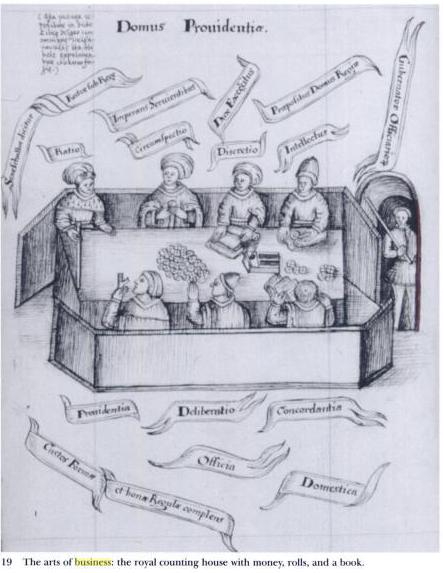
Contrary to popular belief, formal education in medieval times was not restricted to the clergy and the very wealthy. Nor was theology the most popular subject. Independent schools, unaffiliated with any particular religious body or royal institution and staffed by lay people, were common, and even taught business administration (writing letters, drafting contracts, keeping the books).
So says Nicholas Orme in Medieval Schools: From Roman Britain to Renaissance England (Yale, 2006). (Thanks to Tom Woods for the pointer.) In Britain, grammar schools were often supported by wealthy patrons and were open to students of modest means. Notes Orme:
Most [English] schoolmasters were probably broad rather than specialized teachers, catering for a wide range of needs, so it is not surprising that a brand of practical teacher emerged by the fourteenth century (at latest), offering more focused instruction for careers in trade and administration. Such instruction might include “dictamen” (the art of writing letters), the methods of drafting deeds and charters, the composition of court rolls and other legal record, and the keeping of financial accounts. Since documents of these kinds were often written in French between 1200 and 1400, the practical teachers came to teach French too.
This illustration, from p. 69 of the book, depicts such a class. How did they do it without PowerPoint?





 Organizations and Markets

Recent Comments