Author Archive
In the Pink
| Dick Langlois |
A propos Peter’s recent post about behavioral economics, I discovered this interesting video illustrating Daniel Pink’s book Drive (thanks, Steve). I don’t think there is anything about it that is particularly inconsistent with what we know about the economics of organization, but others may disagree.
I once heard Pink speak, at the 2002 Business History Conference meeting, just after his book Free Agent Nation (about the rise of self-employment) appeared. He was one third of a panel on the New Economy, the rest of which consisted of two extremely far-left twits. It was amusing to hear Pink, a former speechwriter for Al Gore, gamely hold up a sensible position, though I remember thinking what greater fun it would have been if they had invited Virginia Postrel.
Add to: Facebook | Digg | Del.icio.us | Stumbleupon | Reddit | Blinklist | Twitter | Technorati
Taking AIM
| Dick Langlois |
 Aha! So that’s why nobody met me at the airport: I was supposed to be in France. Actually, I’m in the UK, traveling around as a Visiting Fellow of the Academy of Advanced International Management (AIM). I will be giving a series of talks under their aegis in Lancaster, London, and Edinburgh. I am now in Lancaster, where my host is Martin Spring, an operations management guy who is interested in modularity and contracting in the delivery of complex services like engineering. My first stop in the UK was Nottingham, where I refrained from any tax protests let alone progressive redistribution of rents. (This despite the ads for the new Ridley Scott-Russell Crowe movie prominently displayed on all the busses.) But I did speak at the Nottingham University Business School, which is home to the likes of Paul Windrum and Peter Swann.
 Today I hope to see some of Lancaster, possibly including Williamson Park. Among its highly specific assets is the pictured Ashton Memorial, built by James Williamson, Jr., Lord Ashton, who made his fortune in the linoleum trade. (According to the city council website, he was able to afford this grand edifice because he paid his workers so little.)
During the trip I also plan to stop in at several conferences, including DRUID (for one day), the ISNIE conference in Stirling (where I am likely to view a flesh-and-blood Williamson), and the Schumpeter Society in Aalborg. If I can, and if the material warrants, I may try a little live (or at least half-dead) blogging from the conferences.
Add to: Facebook | Digg | Del.icio.us | Stumbleupon | Reddit | Blinklist | Twitter | Technorati
The “Knowledge Filter” and the New Economy
 | Dick Langlois |
I recently ran across a paper by Bo Carlsson, Zoltan Acs, David Audretsch, and Pontus Braunerhjelm called “The Knowledge Filter, Entrepreneurship, and Economic Growth.” It’s actually a 2007 paper, part of a series these authors in various combination have been writing about the idea of a “knowledge filter.” The standard story about knowledge (in the new growth theory, but long before that as well) is what I think of as the R&D sausage-machine: one pours inputs like capital and labor into the meat grinder of R&D and out comes knowledge, which shifts the production function. In a series of papers, Carlsson et al. have argued that there is a “filter” somewhere within the meat grinder that determines how effectively the inputs get turned into useful knowledge. Although I’m sympathetic to criticism of the sausage machine story, you can imagine why I don’t think the knowledge-filter idea helps much: it’s just another black box that can be sized to fit whichever facts (stylized or real) one has at hand. Why not do away with the model altogether and instead think hard about the structure of knowledge and how it has interacted with institutions and organizational forms?
In fact, of course, that is what the authors actually do to some extent in this paper: one can read it without having to buy into the “filter” part. What caught my attention, in fact, is that this paper is ultimately an argument about the causes of the New Economy, and I am a collector of such arguments. The authors seem completely innocent of the large Post-Chandlerian literature on this topic, and they try to explain the transition from the large Chandlerian firm to more specialized entrepreneurial units strictly in terms of trends in R&D and knowledge creation.
[T]he industrial revolution was based in part on turning knowledge into economically useful knowledge and … university education and research in the United States became practically and vocationally oriented (in comparison with European universities), partly through the land-grant universities established in the mid- to late 19th century. In the early part of the 20th century, corporate research and development labs began to emerge as major vehicles of basic industrial research. Virtually all of the funded research prior to World War II was conducted in corporate or federal labs. In conjunction with a rapidly increasing share of the population with a college education, this made for high absorptive capacity on the part of industry and, as a result, a “thin” knowledge filter. In subsequent sections we discuss the emergence of the research university, the dramatic increase in research and development spending, and the shift of basic research toward the universities, especially during and following World War II. During the 1960s and 1970s, this led to a thickening of the knowledge filter in the form of an increasing need to “translate” basic (academic) research into economic activity. New firms have increasingly become the vehicle to translate research into growth; this can be seen in the greater role of small business and entrepreneurship from the 1970s onward.
Interesting. But I see two serious problems with this. First off, it misunderstands and vastly oversells the research labs of the mid-twentieth century. In most cases these were not drivers of innovation but absorbers of ideas invented outside the company by networks of smaller inventors — much like today. And when they did perform genuinely basic research, as in the case of Bell Labs, they were not at all tightly coupled to application. These labs were good at systemic development, that is, developing technologies that required a lot of disparate pieces to be created and put together. Color TV at RCA is an example. But they were not good at generating genuinely new useful knowledge or at more modular kinds of innovation — or, at least, weren’t as good as diffuse networks of inventors. In fact, as I mentioned in my previous post, the concentration of research (and patents) in the labs of RCA arguably slowed innovation in radio and consumer electronics generally. This leads to my second point: it’s not clear that one can explain everything just by looking at knowledge and R&D. There is actually a lot similarity between the regime of government funding of research through Land Grant institutions and the post-War grant system of Vannevar Bush: it was always channeled through the universities. Changes in government funding thus can’t really explain why there were large R&D labs at one time and small entrepreneurial firms at another. For that one has to think about issues of organization that go beyond the R&D function.
Intellectual Steam
| Dick Langlois |
 There’s nothing like a rousing academic argument, especially when it deals with an intriguing historical case. “The Fable of the Keys” by Liebowitz and Margolis is the paradigm here. I recently stumbled upon another example, the (apparently ongoing) dispute that pits George Selgin and John Turner against Michele Boldrin and David Levine on the question of to what extent James Watt’s steam-engine patents retarded innovation in steam technology and slowed the British industrial revolution.
The Newcomen steam engine was a low-pressure device that, by using steam to create a vacuum, actually used air pressure to drive the engine. Watt invented and patented an improvement to the vacuum engine that involved a separate condenser to cool the steam, thus increasing efficiency. On the strength of his patent, Watt was bankrolled by the industrialist Matthew Boulton, and together they licensed the technology to others and did their best to block competing technology. Boldrin and Levine claim that the Watt patent constituted a wide-scope blocking patent, of the kind described by Merges and Nelson, which slowed development of rival technologies, including the high-pressure steam engine that was to be crucial in textiles and elsewhere. As a result, the Boulton-Watt patents and legal stratagems “delayed the industrial revolution by a couple of decades.” Selgin and Turner take issue with both facts and conclusions, arguing that patent law at the time, which derived from the 1625 Statute of Monopolies, actually forbade the patenting of a general idea and insisted that an innovation be instantiated in specific technology, in this case in the form of the condenser. In other words, they argue that patent scope was kept sensibly low in eighteenth-century Britain, something of which Merges and Nelson would approve. Thus Boulton and Watt could not, and in fact did not, slow the development of high-pressure steam through intellectual property, though they may have had an effect on the culture of contemporary inventors, who doubted the economies and feared the dangers of high-pressure steam at a time when complementary metallurgical technology was not yet up to the task. (Note to Selgin and Turner: here is a better reference on the dangers of high-pressure boilers in American steamboats.) (more…)
Admongo
| Dick Langlois |
 Slate has a piece on a video game called Admongo, which the Federal Trade Commission has created to teach children the dangers of commercial advertising. Characteristically, the author rather likes this idea, and the only criticism of this micro-Orwellianism he can imagine is that it doesn’t go far enough in bashing commercial advertising and is fact in bed with commercial interests like Scholastic.
Add to: Facebook | Digg | Del.icio.us | Stumbleupon | Reddit | Blinklist | Twitter | Technorati
ICC Special Issue on Alfred Chandler
| Dick Langlois |
The most recent number of Industrial and Corporate Change is a special issue: Management Innovation-Essays in the Spirit of Alfred D. Chandler, Jr. Guest editors are Bill Lazonick and David Teece. Some interesting articles and definitely many interesting contributors. Yours truly was not involved — indeed, I didn’t learn about it until the table of contents appeared in my inbox. But I am cited in at least four of the papers. Indeed, the paper by Susan Helper and Mari Sako, both of whom I admire greatly, spends considerable time comparing my argument with Chandler’s. For the most part, I don’t disagree with their assessment except in respect of spin (more on which in a moment); but at one point they make an assertion that had me scratching my head.
Some argue that as a central tendency, the buffering and coordination functions of management are devolving to the mechanisms of modularity and the market — informational decomposition, flexibility, and risk spreading (Langlois, 2003: 377). In contrast, in Chandler’s world, “Increased specialization must, almost by definition, call for more carefully planned coordination if the volume of output demanded by the mass market is to be achieved” (Chandler, 1977: 490). The disagreement lies in different assumptions made. Langlois assumes that thickness of the market is exogenously given or that it is already established, while Chandler assumes that the mass market is something that has to be developed. Chandler’s view seems more correct here. (Helper and Sako 2010, p. 420)
Hello? One can argue that I have spent most of my career making precisely the point they attribute to Chandler: it’s the basis of the theory of dynamic transaction costs. Neither markets nor firms snap into existence but evolve slowly and — as I often quote Brian Loasby as pointing out — both require managerial coordination. (more…)
Edgerati
| Dick Langlois |
I just received an email from John Hagel informing me that I am among the inaugural class of what he and John Seeley Brown call the Edgerati. According the website, “Edgerati are people who venture out onto various edges, engage with participants on those edges, develop deep insight from their involvement on the edge and report back to the rest of the world what they have learned.” I’m glad to learn that what I had always thought to be the fringe or the margin is actually the edge. (Actually, I’m genuinely flattered.) Among the other Edgerati is one Nicolai Foss.
Add to: Facebook | Digg | Del.icio.us | Stumbleupon | Reddit | Blinklist | Twitter | Technorati
Lachmannian Entrepreneurship
| Dick Langlois |
The new issue of Organization Studies carries an article by John Mathews called “Lachmannian Insights into Strategic Entrepreneurship: Resources, Activities, and Routines in a Disequilibrium World.” Here’s the abstract.
Recent contributions to the organizational literature see the radical subjectivist and disequilibrium framework of Ludwig Lachmann as providing a suitable foundation for strategic entrepreneurial studies, in that his approach seeks independence from conventional equilibrium-based reasoning. In a Lachmannian spirit, this article suggests that strategizing can fruitfully be viewed as choices made by the entrepreneur in terms of the organization’s constituent resources, activities and routines together with their recombinations and complexifications. Cast in a general, disequilibrium setting, the strategic goals that guide the organizational entrepreneur’s strategizing can be formulated in terms of the construction and capture of resource complementarities, the pursuit of increasing returns through activities reconfiguration, and the generation of learning and dynamic capabilities through reconfiguration of routines. Once formulated in this way, the strategizing issues may be seen to make sense not just in the comparative static and imperfect equilibrium frameworks within which they have hitherto been posed, but in a more general dynamic and disequilibrium setting that corresponds to the real conditions in which firms are required to make entrepreneurial decisions. The simplified framework offers some hope for overcoming the balkanization of management scholarship that is so widely deplored.
Add to: Facebook | Digg | Del.icio.us | Stumbleupon | Reddit | Blinklist | Twitter | Technorati
Hayekian Ants
| Dick Langlois |
A former student of mine (thanks, Don) sent me a link to a fascinating piece in the Proceedings of the Royal Society called “Rationality in Collective Decision-making by Ant Colonies.” Here’s the abstract.
Economic models of animal behaviour assume that decision-makers are rational, meaning that they assess options according to intrinsic fitness value and not by comparison with available alternatives. This expectation is frequently violated, but the significance of irrational behaviour remains controversial. One possibility is that irrationality arises from cognitive constraints that necessitate short cuts like comparative evaluation. If so, the study of whether and when irrationality occurs can illuminate cognitive mechanisms. We applied this logic in a novel setting: the collective decisions of insect societies. We tested for irrationality in colonies of Temnothorax ants choosing between two nest sites that varied in multiple attributes, such that neither site was clearly superior. In similar situations, individual animals show irrational changes in preference when a third relatively unattractive option is introduced. In contrast, we found no such effect in colonies. We suggest that immunity to irrationality in this case may result from the ants’ decentralized decision mechanism. A colony’s choice does not depend on site comparison by individuals, but instead self-organizes from the interactions of multiple ants, most of which are aware of only a single site. This strategy may filter out comparative effects, preventing systematic errors that would otherwise arise from the cognitive limitations of individuals.

Unquenchable
| Dick Langlois |
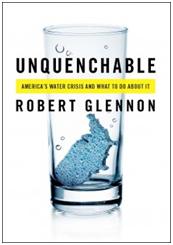 I attended an interesting lecture on Thursday, part of the University’s Edwin Way Teale lecture series on the environment. Normally these lectures do not tend, shall we say, to take perspectives that O&M readers would find congenial. But this lecture, by Robert Glennon of the University of Arizona Law School, was interesting along a number of dimensions. The talk was based on his book Unquenchable: America’s Water Crisis and What To Do About It. Here is the abstract:
From manufactured snow for tourists in Atlanta to trillions of gallons of water flushed down the toilet each year, Dr. Robert Glennon reveals the heady extravagances and everyday inefficiencies that are sucking the nation dry. The looming catastrophe remains hidden as the government diverts supplies from one area to another to keep water flowing from the tap. But sooner rather than later, the shell game has to end. And when it does, shortages will threaten not only the environment, but every aspect of American life. America must make hard choices — and Glennon’s answers are fittingly provocative. He proposes market-based solutions that value water as both a commodity and a fundamental human right.
The talk was interesting not only in that I learned a few things about the screwed-up water system in the U. S. (the broad contours of which I was vaguely familiar with) but also in that it presented an interesting case study in rhetoric. Glennon spent most of the talk revving up the environmentalist crowd, with lots of show and tell about the effects of bad water policy and a tour through various command-and-control policies that environmentalists might think of to fix the situation. (He even paused to make fun of Ann Coulter’s claim that the flush toilet is man’s greatest invention.) But Glennon’s bottom line, revealed at the very end, is that the only thing that will fix the problem is properly assigning property rights and trading those rights on markets. This was the conclusion I was expecting, not only because of the abstract but also because Glennon has an NBER Working Paper with Gary Libecap. Maybe this is the way to go in selling market-based solutions.
The Best and the Brightest
| Dick Langlois |
I read Peter’s post about paternalism — and the limits of smart people in government — just after I read about the death of Carl Kaysen, long-time MIT economist and one-time Kennedy advisor. Obituaries praise Kaysen for his role as a policy intellectual of great scope, especially in the area of nuclear non-proliferation. But they either fail to mention, or mention with considerable approval, Kaysen’s pivotal role in the famous 1954 United Shoe Machinery case. Kaysen’s view of the case, and of the role of economic analysis in antitrust, is a key example of what Williamson calls the “inhospitality tradition” — that any kind of contract we don’t understand must therefore be anticompetitive. In the eyes of many present-day economists, Kaysen is implicated in having destroyed the American shoe machinery industry and with it the American shoe industry. (The post-mortem is by Masten and Snyder.) Not exactly McNamara in Vietnam, but worth mentioning amid the hagiography of Kaysen, not to mention the reawakened culture of elitist decision-making in Washington.
Apocalypse Averted
| Dick Langlois |
In a recent post, I lamented the willingness of pundits (and dissenting Justices) to see rights as a consequential exercise: we should restrict the speech of group X, in this case private corporations, because allowing such speech would lead to a bad outcome, in this case the corruption of democracy by corporate interests. (Feel free to substitute here your own favorite candidate for silencing and your own associated bad outcome.) But, of course, those who argue in this manner must also demonstrate that the asserted bad outcome would actually happen. A recent article in the Times — bless some reporter’s or editor’s contrarian heart — asks the question: so, what effect does corporate money actually have on democracy?” The answer seems to be: none at all. One of the economists cited is Peter’s Missouri colleague, and my former student, Jeff Milyo: “There is just no good evidence that campaign finance laws have any effect on actual corruption.”
And while we are at it, a study by the Insurance Institute for Highway Safety finds no effect of cell phone laws on traffic accidents. This hasn’t stopped Connecticut’s Governor from calling for even stricter cell phone laws.
New Issue of ICC
| Dick Langlois |
A new issue of Industrial and Corporate Change is out (TOC here) with a bunch of interesting articles. Prominent among them is a well-researched and nicely written piece by Pierre Desrochers that argues a politically unpopular view about corporations and the environment. Free speech in action?
Paging John Stuart Mill
| Dick Langlois |
I have been amused by the firestorm of outrage in the press over the Supreme Court’s recent mild affirmation of the free-speech rights of corporations. As many readers of this blog will probably appreciate, the point of a right to free speech is that it must apply even to speech, and to speakers, we don’t like. Many if not most angry commentators, like the writers of the Times editorial on the subject, don’t even bother to worry about the nature of rights. To the Times and many others, constitutional jurisprudence is a purely consequentialist exercise no different from legislation (which, sadly, may be often be true in practice). But other writers and organizations aghast at the Court’s decision have a thorny problem of argument, to the extent that they have themselves invoked the First Amendment in an effort to protect speech of which they approve (or, more generally, to protect specific sub-spheres of discourse in which they themselves participate). A case in point is People for the American Way, which has called for a constitutional amendment to outlaw corporate political speech (via William Saletan). “People For the American Way,” they write, “has been at the forefront of defense of free speech and the First Amendment for almost 30 years. We continue in that role today.” In order to square the circle, PFAM and like-minded pundits and Justices have to find a way to define corporate speech as not speech. The answer? Spending is not speech and corporations aren’t people. So: does this mean that it would be OK under this logic for the government, say, to decree that the New York Times must limit its editorial budget — limiting dollars not ideas, after all — because the Times is a corporation not an individual? Why should this logic not apply to the other Amendments as well? The Times should flat-out not have freedom of the press because it is a corporation; and the Roman Catholic Church should certainly not have freedom of religion.
My favorite line, from Justice Stevens (in dissent): “The Court’s blinkered and aphoristic approach to the First Amendment may well promote corporate power at the cost of the individual and collective self-expression the Amendment was meant to serve.” So freedom of speech is really a neoclassical or Benthamite exercise in which we aren’t trying to protect individual (let alone corporate) speech but are instead trying to maximize the total amount of self-expression in society.
In its recent obituary of Erich Segal, the Times cites the following cringe-inducing line, spoken by college-student protagonist Oliver Barrett IV, as a measure of the literary caliber of Segal’s novel Love Story: “Jenny, for Christ’s sake, how can I read John Stuart Mill when every single second I’m dying to make love to you?” This suggests that many a Justice, editorial writer, and pundit must have fallen prey to similar distractions in college. They certainly failed to read John Stuart Mill.
Endogenous Indoctrination
| Dick Langlois |
I have been wanting for some time to write about an interesting paper by Gilles St. Paul called “Endogenous Indoctrination.” (I wasn’t familiar with his work, but he seems to do interesting things, including this.) Here’s the abstract:
Much of the political economy analysis of reform focuses on the conflict of interest between groups that stand to gain or lose from the competing policy proposals. In reality, there is also a lot of disagreement about the working of the policy: in addition to conflicting interests, conflicting views play an important role. Those views are shaped in part by an educational bureaucracy. It is documented that the beliefs of that bureaucracy differ substantially from those of the broader constituency. I analyse a model where this effect originates in the self-selection of workers in the educational occupation, and is partly reinforced by the insulation of the educational profession from the real economy (an effect which had been discussed by Hayek). The bias makes it harder for the population to learn the true parameters of the economy if these are favourable to the market economy. Two parameters that govern this capacity to learn are social entropy and heritability. Social entropy defines how predictable one’s occupation is as a function of one’s beliefs. Heritability is the weight of the family’s beliefs in the determination of the priors of a new generation. Both heritability and social entropy reduce the bias and makes it easier to learn that the market economy is “good,” under the assumption that it is. Finally I argue that the capacity to learn from experience is itself affected by economic institutions. A society which does not trust markets is more likely to favour labour market rigidities that in turn reduces the exposure of individuals to the market economy, and thus their ability to learn from experience. This in turn reinforces the weight of the educational system in the formation of beliefs, thus validating the initial presumption against the market economy. This sustains an equilibrium where beliefs and institutions reinforce each other in slowing or preventing people from learning the correct underlying parameters.
I was catalyzed to write today because of a related article I recently saw in the Times, which enthuses giddily about a paper called “Why Are Professors Liberal?” by two sociologists called Fosse [N. B. not Foss] and Gross. The Times lauds the paper for its sophistication and use of the quantitative. (more…)
Separated at Birth?
| Dick Langlois |
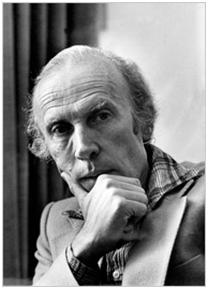
In reading the obituary of French New Wave director Eric Rohmer, I was struck by his uncanny resemblance to (fellow Frenchman) Gérard Debreu. Many things to ponder here, including the relationship of general-equilibrium theory to the cinema of the nouvelle vague.

For Hire: Neo-Schumpeterian Economist
| Dick Langlois |
I was recently contacted by Robert Atkinson of the Information Technology and Innovation Foundation in Washington. His group is looking for a neo-Schumpeterian economist interested in the role of innovation in addressing climate change. Here’s the position listing. Surely there is a reader of O&M out there who fills the bill.
War, Taxes, and Doux Commerce
| Dick Langlois |
Uwe Reinhardt, a health economist at Princeton, is eminently familiar with the idea of moral hazard. In a recent blog in the New York Times, he applies the idea to war. “If the monetary and the blood cost of war are shifted mainly to citizens other than the elites who are empowered to declare war and decide how it is conducted,” he writes, “then that elite is more likely to embrace war and to spend on it.” (I’m sure others have said this before, though I’ll rely on my colleagues and readers to supply the cites. Bob Higgs?) Reinhardt points out that, rather than raise taxes to pay for war, Bush cut taxes after entering Afghanistan. This had the effect of hiding the cost and pushing the financing into deficit spending, which is less easy for voters to detect. Those of us of a certain age remember how Lyndon Johnson, with the acquiescence of the Fed, financed Vietnam (and his domestic programs) largely through inflation. Apparently, some in Congress are calling for a law that would require a tax surcharge whenever war is declared.
As I say, these ideas may already be familiar to O&M readers and may even have been touched on in previous posts. But the Reinhardt piece reminded me of an idea I’ve been playing with for a long time. There is a large literature on the doux commerce thesis (see especially Albert Hirschman): the idea that increasing trade and wealth (increasing capitalism, if you will) leads to less violent and warlike societies. Oversimplifying more than a bit, the idea is that increased wealth increases the opportunity cost of war and violence. Maybe this is already in Hirschman or elsewhere, but it seems to me, however, that there must be not just a substitution effect but also an income effect. Higher GDP increases the opportunity cost of war on average (even if, as Reinhardt points out, not necessarily for the elites). At the same time, however, a wealthier society is more able to buy more war, all other things equal. Someone with the wherewithal might try to see which effect is more important by using cross-country historical data sets in the Acemoglu-Johnson-Robinson vein. If you ever run into somebody doing that sort of thing, remember that you heard it here first.
User Innovation and Collaborative Innovation
| Dick Langlois |
Two of my favorite scholars, Carliss Baldwin and Eric von Hippel, have bridged the Charles to team up on a joint manifesto pushing their related views on innovation. The paper is subtitled (or is it supertitled?) “Modeling a Paradigm Shift.” Here is the abstract.
In this paper we assess the economic viability of innovation by producers relative to two increasingly important alternative models: Innovations by single user individuals or firms, and open collaborative innovation projects. We analyze the design costs and architectures and communication costs associated with each model. We conclude that innovation by individual users and also open collaborative innovation increasingly compete with — and may displace — producer innovation in many parts of the economy. We argue that a transition from producer innovation to open single user and open collaborative innovation is desirable in terms of social welfare, and so worthy of support by policymakers.
Carliss has always been more willing than I am to make a normative case for modularity, which is the idea underlying the collaborative model. But she does have some analytical arguments to back that up. The “worthy of support by policymakers” part actually turns out to be a healthy argument against present-day political forces in the direction of stronger intellectual property rights. As this blog has noted in the past, these political forces are moving opposite to increased patent skepticism among scholars.





 Organizations and Markets
Recent Comments