Posts filed under ‘Classical Liberalism’
New Leoni Collection: Law, Liberty, and the Competitive Market
| Peter Klein |
Transaction Publishers and the Instituto Bruno Leoni have just published a new collection of essays by Bruno Leoni, Law, Liberty, and the Competitive Market, edited by Carlo Lottieri. The essays elaborate on Leoni’s distinction between law and legislation, and the analogy between the latter and centralized economic planning, themes introduced in his best-known book, Freedom and the Law. Richard Epstein provides an informative introduction.
Disaster Socialism
| Peter Klein |
As I noted elsewhere yesterday, the “stimulus” bill making its way through Congress is a fine illustration of the Higgs effect, the tendency of government to expand massively in response to “crises,” real or imagined. Naomi Klein’s “Disaster Capitalism” thesis is exactly backward: “disasters” are inevitably followed by huge increases in the public sector at the expense of the private. Anyway, if you have any doubt that the current legislation has precious little to do with economic stimulus, consider the details of the House’s proposed $825 billion package, which includes:
- $1 billion for Amtrak
- $2 billion for child-care subsidies
- $50 million for the National Endowment for the Arts
- $400 million for global-warming research
- $2.4 billion for carbon-capture demonstration projects
- $650 million for digital TV conversion coupons
- $8 billion for renewable energy funding
- $6 billion for mass transit
- $600 million for the federal government to buy new cars
- $7 billion for modernizing federal buildings and facilities (including $150 million for the Smithsonian)
- $252 billion is for income-transfer payments ($81 billion for Medicaid, $36 billion for expanded unemployment benefits, $20 billion for food stamps, and $83 billion for the earned income credit for people who don’t pay income tax)
- $66 billion for education
Now I should state, for the record, that unlike other critics of this particular stimulus package, I don’t favor government “stimulus” packages of any kind. I’m not a Keynesian, after all.
Keynesian Economics in Four Paragraphs
Courtesy of Robert Barro:
[A]ssume that the multiplier was 1.0. In this case, an increase by one unit in government purchases and, thereby, in the aggregate demand for goods would lead to an increase by one unit in real gross domestic product (GDP). Thus, the added public goods are essentially free to society. If the government buys another airplane or bridge, the economy’s total output expands by enough to create the airplane or bridge without requiring a cut in anyone’s consumption or investment.
The explanation for this magic is that idle resources — unemployed labor and capital — are put to work to produce the added goods and services.
If the multiplier is greater than 1.0, as is apparently assumed by Team Obama, the process is even more wonderful. In this case, real GDP rises by more than the increase in government purchases. Thus, in addition to the free airplane or bridge, we also have more goods and services left over to raise private consumption or investment. In this scenario, the added government spending is a good idea even if the bridge goes to nowhere, or if public employees are just filling useless holes. Of course, if this mechanism is genuine, one might ask why the government should stop with only $1 trillion of added purchases.
What’s the flaw? The theory (a simple Keynesian macroeconomic model) implicitly assumes that the government is better than the private market at marshaling idle resources to produce useful stuff. Unemployed labor and capital can be utilized at essentially zero social cost, but the private market is somehow unable to figure any of this out. In other words, there is something wrong with the price system.
Barro thinks a multipler of zero is a more plausible baseline assumption. Of course, if GDP is adjusted for quality, the multipler is most likely negative, as resource allocation is directed by government officials, not consumer demands. In prior work Barro has estimated wartime multiplers of 0.8, but this seems high based on Robert Higgs’s important work [1, 2]. More important, there the Austrian point that resources are heterogeneous, and the additional goods and services financed by government spending will tend to be in the “wrong” place in the economy’s intertemporal structure of production. Keynes rejected the idea of capital heterogeneity, so this problem was lost on him.
Robert Burns and Adam Smith
 | Peter Klein |
I’m sure you’re all busy this week preparing your Burns Supper. I’ll be celebrating on Sunday, of course, the 250th anniversary of Burns’s birth (this Burns, not this one). To honor the occasion Gavin Kennedy has written about the influence on Burns of Adam Smith, whose Theory of Moral Sentiments Burns knew well. Reflecting on the famous lines from Burns’s “Poem About a Louse” — O wad some Pow’r the giftie gie us / To see oursels as ithers see us! — Gavin notes that
Burns’s poem is a way into Smith’s “impartial spectator.” Both men would have agreed that “to see oursels as ithers see us” expresses their different perspectives; Burns, pessimistically, reminding us of human frailty and its consequences, and Smith, optimistically, mapping how humans develop and maintain their moral senses. Smith, contrary to the poet’s assertion, says we do have the power “to see oursels as ithers see us” and he explains how. We have this power, if we wish to use it, from what we may crudely describe as akin to a conscience (though it was much more) in a weak resistance to self-deceit.
Smith is explicit and his stance inspired Burns’s verse:
. . . self-deceit, this fatal weakness of mankind, is the source of half the disorders of human life. If we saw ourselves in the light in which others see us, or in which they would see us if they knew all, a reformation would generally be unavoidable. We could not otherwise endure the sight. (TMS III.4.6)
Philosophy Bites
| Peter Klein |
Philosophy Bites is a philosophy podcast site run by David Edmunds (co-author of Wittgenstein’s Poker) and Nigel Warburton. The political philosophy section is quite good (and features our friend Chandran Kukathas a couple of times). Via 3quarks.
The Failure of the Journalists, Part II
| Peter Klein |
Another aspect of journalists’ remarkably credulous and fatuous attitude towards policymakers is their view that rhetoric, not substance, is what matters. Hence the constant references to the Bush Administration’s “dedication to free-market principles,” its “aversion to regulation,” its “belief in letting markets work by themselves.” This is of course sheer balderdash and piffle, virtually the reverse of the truth. Bush and Paulson and Greenspan and their clique are “free marketeers” in the same way (to borrow from A. J. Jacobs) that Olive Garden is an Italian restaurant. They adopt the language, and some of the form, of market advocacy without any of the content. The Bush Administration was already, before the “financial crisis,” the most economically interventionist since LBJ; it now ranks with Hoover and FDR as the most aggressively anti-market in US history. Greenspan and Bernanke expanded the money supply like none before; Bush and Cheney borrowed and spent trillions to finance overseas adventures; the Federal Register added pages at a record-setting pace; now the banking and automobile industries have become GSEs. Lassiez-faire, indeed! (BTW can anyone name a specific act of “deregulation” that contributed to the financial crisis? Gramm-Leach-Bliley? No way. And GLB was under Clinton, as was the infamous WGFM. What specific regulations, e.g. on hedge funds or mortgage-backed securities or executive compensation, did the Bush Administration oppose?)
And yet, there was Juan Williams on yesterday’s Diane Rehm show explaining, matter-of-factly, how Bush and Paulson had allowed their “free-market ideology” and “resistance to regulation” to “commitment to the idea that the market works itself” to lead the nation into ruin. Williams may be a good news reporter, but he has the political-economy understanding of a fifth-grader. Does it ever occur to these “watchdogs” to investigate what government officials actually do, rather than simply repeat what they say?
Government and the Corporation
| Peter Klein |
What is the net effect of government intervention on firm size, scope, complexity, and ownership? Roderick Long thinks government intervention makes firms larger and more hierarchical than they would otherwise be, and that a pure market economy would be dominated by small firms like worker-owned cooperatives. I think the net effect of government intervention on firm characteristics is ambiguous, because there are so many interventions affecting different types of firms. Here’s some back-and-forth between Roderick and me: his original essay on Cato Unbound, my comment on Mises.org, his reply, and my rejoinder.
Update: See also Caplan.
Group Blog of the NYU Austrian Economics Colloquium
| Peter Klein |
It’s ThinkMarkets, written by the members of the NYU Austrian colloquium (formerly currently known as the Colloquium on Market Institutions and Economic Processes). The group includes Mario Rizzo, Bill Butos, Gene Callahan, Young Back Choi, Sandy Ikeda, Roger Koppl, Chidem Kurdas, and Joe Salerno. The colloquium was established in the 1980s by Israel Kirzner, who is still an occasional participant.
A Silver Lining
| Peter Klein |
As I mentioned in a recent talk, one good thing to come out of the bailout disaster is the diminished reputation of St. Alan the Wise. It was fun watching the same Congressional clowns who months earlier praised the “Maestro” as the greatest Fed chair in history slap him down for failing to prevent the housing bubble. Of course, Greenspan, like these clowns, ignored the issue of credit expansion, expressing regret only that he had put “too much trust” in market forces. Ha!
Now Paulson, never too popular in the first place, is suffering a similar fate, as he abandons the Troubled Asset Relief Program — the rationale for the bailout itself — and praises Congress for giving him the broad authority to do, well, whatever the hell he wants. Oh, please, let Bernanke be next!
BTW, Bob Higgs continues to offer some of the best commentary on the disaster — the political, journalistic, and educational disaster, I mean, not the supposed economic disaster. I hope his term, “Bailout of Abominations,” catches on.
Update: The Economist puts it this way: “One of the most humbling features of the financial crisis is its ability to humiliate policymakers who, thinking that they have a bazooka in their closet, soon discover that it is a mere popgun.”
New Blogs of Interest
| Peter Klein |
- Campus Entrepreneurship by David J. Miller
- Evolution and Complexity in the Social Sciences by Eliana Santanatoglia
- Anything Peaceful by the staff at FEE
Tooth-Fairy Economics
| Peter Klein |
Art Laffer offers this succinct summary of Bernankeconomics:
No one likes to see people lose their homes when housing prices fall and they can’t afford to pay their mortgages; nor does any one of us enjoy watching banks go belly-up for making subprime loans without enough equity. But the taxpayers had nothing to do with either side of the mortgage transaction. If the house’s value had appreciated, believe you me the overleveraged homeowner and the overly aggressive bank would never have shared their gain with taxpayers. Housing price declines and their consequences are signals to the market to stop building so many houses, pure and simple.
But here’s the rub. Now enter the government and the prospects of a kinder and gentler economy. To alleviate the obvious hardships to both homeowners and banks, the government commits to buy mortgages and inject capital into banks, which on the face of it seems like a very nice thing to do. But unfortunately in this world there is no tooth fairy. And the government doesn’t create anything; it just redistributes. Whenever the government bails someone out of trouble, they always put someone into trouble, plus of course a toll for the troll. Every $100 billion in bailout requires at least $130 billion in taxes, where the $30 billion extra is the cost of getting government involved.
If you don’t believe me, just watch how Congress and Barney Frank run the banks. If you thought they did a bad job running the post office, Amtrak, Fannie Mae, Freddie Mac and the military, just wait till you see what they’ll do with Wall Street.
Philosophy: Who Needs It?
| Peter Klein |
When Greenspan was appointed Fed chair in 1987 the New York Times Magazine ran a lengthy profile noting, among Greenspan’s other eccentricities, that he was a follower of Ayn Rand, generally regarded as a strong advocate of laissez faire. But Greenspan is doctrinaire only “at a high philosophical level,” wrote Leonard Silk, reassuringly. Murray Rothbard, who knew Greenspan in the 1950s, when both were friends with Rand, got a kick out of that line:
There is one thing, however, that makes Greenspan unique, and that sets him off from his Establishment buddies. And that is that he is a follower of Ayn Rand, and therefore “philosophically” believes in laissez-faire and even the gold standard. But as the New York Times and other important media hastened to assure us, Alan only believes in laissez-faire “on the high philosophical level.” In practice, in the policies he advocates, he is a centrist like everyone else because he is a “pragmatist.” . . .
Thus, Greenspan is only in favor of the gold standard if all conditions are right: if the budget is balanced, trade is free, inflation is licked, everyone has the right philosophy, etc. In the same way, he might say he only favors free trade if all conditions are right: if the budget is balanced, unions are weak, we have a gold standard, the right philosophy, etc. In short, never are one’s “high philosophical principles” applied to one’s actions. It becomes almost piquant for the Establishment to have this man in its camp.
Today Tyler Cowen, writing on Anna Schwartz’s very good interview with the WSJ, calls Bernanke a person “with libertarian sympathies,” which I find puzzling, since I can’t recall any evidence of this sympathy in Bernanke’s writings or policy actions. Perhaps he is a sympathetic libertarian “at a high philosophical level.”
Blame Basel, Not “Deregulation”
| Peter Klein |
Says Charles Calorimis in the Saturday WSJ. First, as Calorimis points out, there wasn’t any deregulation. (Jacob Weisberg, what part of this can’t you understand?) Indeed, by any reasonable measure, government has grown more under George W. Bush than under any administration since LBJ — after this month, perhaps since FDR. Specifically, Calomiris notes:
Financial deregulation for the past three decades consisted of the removal of deposit interest-rate ceilings, the relaxation of branching powers, and allowing commercial banks to enter underwriting and insurance and other financial activities. Wasn’t the ability for commercial and investment banks to merge (the result of the 1999 Gramm-Leach-Bliley Act, which repealed part of the 1933 Glass-Steagall Act) a major stabilizer to the financial system this past year? Indeed, it allowed Bear Stearns and Merrill Lynch to be acquired by J.P. Morgan Chase and Bank of America, and allowed Goldman Sachs and Morgan Stanley to convert to bank holding companies to help shore up their positions during the mid-September bear runs on their stocks.
Even more to the point, subprime lending, securitization and dealing in swaps were all activities that banks and other financial institutions have had the ability to engage in all along. There is no connection between any of these and deregulation. On the contrary, it was the ever-growing Basel Committee rules for measuring bank risk and allocating capital to absorb that risk (just try reading the Basel standards if you don’t believe me) that failed miserably. The Basel rules outsourced the measurement of risk to ratings agencies or to the modelers within the banks themselves. Incentives were not properly aligned, as those that measured risk profited from underestimating it and earned large fees for doing so.
That ineffectual, Rube Goldberg apparatus was, of course, the direct result of the politicization of prudential regulation by the Basel Committee, which was itself the direct consequence of pursuing “international coordination” among countries, which produced rules that work politically but not economically.
Update: Here’s Larry White on the phantom deregulation.
Karl’s Revenge
 | Peter Klein |
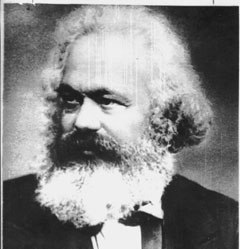
I closed my first post on the bailout mess with “Capitalism, requiescat in pace.” Here’s Martin Masse with the details. (Thanks to Mark Thornton.)
Paulson, Bernanke, Congress: We Need Your Help!
| Peter Klein |
With our economy in crisis, the US Government is scrambling to rescue our banks by purchasing their “distressed assets”, i.e., assets that no one else wants to buy from them. We figured that instead of protesting this plan, we’d give regular Americans the same opportunity to sell their bad assets to the government. We need your help and you need the Government’s help!
Use the form below to submit bad assets you’d like the government to take off your hands. And remember, when estimating the value of your 1997 limited edition Hanson single CD “MMMbop”, it’s not what you can sell these items for that matters, it’s what you think they are worth. The fact that you think they are worth more than anyone will buy them for is what makes them bad assets.
Here’s the link (via Sean Corrigan, and please excuse the language). Remember, if people can’t get rid of their bad assets, they will have to cut back their spending, hurting local businesses, which will then be unable to spend, hurting other businesses, and so on, generating a “consumption crunch” that will cause the next Great Depression. Please, somebody, break some windows!
Government Funding and the Economic Organization of Scienctific Research
| Peter Klein |
A prominent climate scientist, Richard Lindzen of MIT, argues that the politicization of climate science over the last decade is but a symptom of a larger, more general problem caused by government science funding: namely an emphasis on demonstrable results that satisfy the public and have “practical” implications, rather than the pursuit of scientific truth (via Sean Corrigan).
For a variety of inter-related cultural, organizational, and political reasons, progress in climate science and the actual solution of scientific problems in this field have moved at a much slower rate than would normally be possible. Not all these factors are unique to climate science, but the heavy influence of politics has served to amplify the role of the other factors. By cultural factors, I primarily refer to the change in the scientific paradigm from a dialectic opposition between theory and observation to an emphasis on simulation and observational programs. The latter serves to almost eliminate the dialectical focus of the former. Whereas the former had the potential for convergence, the latter is much less effective. The institutional factor has many components. One is the inordinate growth of administration in universities and the consequent increase in importance of grant overhead. This leads to an emphasis on large programs that never end. Another is the hierarchical nature of formal scientific organizations whereby a small executive council can speak on behalf of thousands of scientists as well as govern the distribution of ‘carrots and sticks’ whereby reputations are made and broken. The above factors are all amplified by the need for government funding. When an issue becomes a vital part of a political agenda, as is the case with climate, then the politically desired position becomes a goal rather than a consequence of scientific research. This paper will deal with the origin of the cultural changes and with specific examples of the operation and interaction of these factors. In particular, we will show how political bodies act to control scientific institutions, how scientists adjust both data and even theory to accommodate politically correct positions, and how opposition to these positions is disposed of.
The paper is well worth reading by social scientists and organization theorists. Business-school faculty will recognize the parallels with the call for “relevance” in management education (see the links in Teppo’s recent post). And there are important connections to the arts and humanities; recent scholarship, for example, challenges the notion that public funding produces better art (painting, music, literature, drama) than patronage or commercial funding (Cantor, Cowen, Scherer). Some readers may respond, with Pilate, “What is truth?” Somebody has to pay the bills, in other words, and that party will want something in return. (more…)
29 September 2008 at 10:17 am Peter G. Klein Leave a comment
Mankiw: Defer to the Philosopher-Kings
| Peter Klein |
One of the most disappointing economist responses to the proposed bailout is Greg Mankiw’s. While not exactly endorsing the Paulson-Bernanke plan itself, Greg supports the process through which it emerged. His argument, essentially, is this: Paulson and Bernanke are very smart and have access to better information than the rest of us, so we should stop complaining and go along with whatever they propose.
I find this stunningly naive, for four reasons:
1. It ignores differences in theoretical frameworks or models. No doubt Karl Marx, John Maynard Keynes, Oskar Lange, Paul Samuelson, and Joseph Stiglitz were or are highly intelligent people. Do we have to accept all their policy conclusions? Surely intelligent specialists can come to different conclusions not only because they have access to different information (the Friedmanite view), but because they have different understandings of how the world works. (This is especially true when long-run, rule-utilitarian consequences are at stake.)
2. It ignores the distinction between theoretical and applied economics. Even if people agree on theoretical questions, they may disagree on the application of theory to specific historical situations, which is a matter of judgment, not intelligence.
3. It ignores private interests. Paulson and Bernanke are not disinterested, Platonic philosopher-kings pursing the common good. Presumably they are pursuing private interests, just like every other political actor. Has Greg never heard of public choice?
4. It ignores concerns other than economic efficiency. Economists, like everyone else, have normative opinions. Some may oppose the bailout not on utilitarian grounds, but because they think giving taxpayer dollars to failing enterprises is immoral, regardless of possible contagion effects.
A New Hope
| Peter Klein |
 Finally, encouraging signs of resistance to the Paulson-Bernanke Corporate Welfare Act of 2008. Naturally, the commentators at our favorite sites at our favorite sites listed in the “Links” section below and to the right have been been against the bailouts from the beginning, but now mainstream scholars and analysts are getting into the act. I don’t mean complaints from members of Congress or The Candidates that the recent and proposed bailouts don’t go far enough (e.g., homeowners should get bailed out too) or that the Paulson-Bernanke proposal doesn’t include enough new regulations. Rather, I’m talking about sensible analysis by prominent, mainstream economists and other experts explaining that a market economy in which profits are private while losses are socialized is, well, not a market economy at all but a socialist or corporate-fascist state. See, for example, statements by Luigi Zingales, John Cochrane, and Richard Epstein, among others. Maybe the Empire can be defeated after all. (Apologies to Seth MacFarlane for modding his image.)
Update: Casey Mulligan is also quite good.
The Financial Crisis
| Peter Klein |
A regular reader asks why we haven’t written much on the US financial crisis. What, he asks, do organizational economics, strategic management, Austrian economics, entrepreneurship theory, and the new institutional economics say about the events of recent weeks?
I can’t speak for Nicolai, Dick, and Lasse, but I personally have avoided talking about it because, well, I’m too depressed — not so much about the crisis itself, which I view as a necessary corrective to two decades of potentially ruinous malinvestment, but about the political reaction to it. I agree with Larry White that the general level of discourse not just among laypeople but also among the political and financial elites, top journalists, and academics, has been shockingly vapid and vacuous, even by the usual standards. Listening to government officials, pundits, and analysts analyzing the crisis is like listening to my son’s first-grade class discussing the finer points of postmodern French literature. It was too much deregulation! (Huh?) The free market broke down yet again, just like in the 1930s! Market failure! Thank goodness the government is “stepping in”! Excuse me while I blow my groceries.
My view, in brief, is that the current crisis is the predictable result of a massive credit bubble that began under Greenspan in the 1990s and spilled over into the housing market, following the general outlines of the boom-bust cycle described by the Austrians, along with moral hazard encouraged by the financial “safety net” and the implicit (and, increasingly explicit) guarantees of the “too-big-to-fail” mentality. Of course, the US government’s reaction — spending taxpayer money like candy to bail out favored groups and institutions — can only exacerbate the problem. You can do your own Googling like this or this to find informed commentary. I have little to add but will highlight a few favorite comments: (more…)
An Orthodox Response to Max Weber
| Peter Klein |
“Orthodox” with a capital O, that is. The current issue of the Acton Institute’s flagship journal, the Journal of Markets and Morality, features the first English translation of Sergey Bulgakov’s 1909 essay “The National Economy and the Religious Personality,” described by translator Krassen Stanchev as “the first Orthodox Christian response to Max Weber’s The Protestant Ethic and the Spirit of Capitalism.” Bulgakov, widely regarded as the greatest 20th-century Orthodox theologian, has been attracting increasing interest in recent decades, in both East and West. Writes Stanchev:
Only in the 1906s did scholars turn their attention to business in the Orthodox medieval world. Professors in theological academies in Communist countries carefully avoided the topic while economic historians, at best, studied the relations between religion and business for closed audiences, but most often they pretended the phenomenon did not exist.
Just a few years after Weber, Bulgakov managed to put together similar theoretical arguments and a set of historical evidence that allowed claiming origins of the capitalist spirit from Orthodox Christianity as well. For those who are familiar with the later Russian “scientific” philosophers’ disregard for facts and documents, it will be a surprise as to how rich Russian historiography in the nineteenth century has been.
The article is currently gated but should be available to non-subscribers later this year. Or you can subscribe now and avoid the wait.





 Organizations and Markets

Recent Comments