Posts filed under ‘Entrepreneurship’
Off to Boot Camp
 | Peter Klein |
I’ll be in Utah this week for the Society for Entrepreneurship Scholars conference, also known as “Manuscript Boot Camp.” It’s a sort of cross between a regular academic conference and a professional development workshop, with an interesting and unusual format. The conference is organized around a set of competitively selected working papers written by PhD students and junior faculty, who will be paired with a rotating series of senior scholars for one-on-one mentoring sessions designed to improve the quality of the papers for publication. These sessions, combined with plenary roundtables and lots of informal interaction, should make for a fun and professionally valuable event, for all concerned. I wish more workshops were organized this way.
The set of senior scholar-mentors includes many of the biggest names in entrepreneurship and strategy research, people like Rajshree Agarwal, David Deeds, Greg Dess, Jeff Dyer, Bill Hesterly, Bob Hoskisson, Jeff Reuer, Harry Sapienza, Bill Schulze, Dave Whetten, and your humble correspondent. More important, the participant list includes several bloggers — me and orgtheory’s Teppo Felin among the mentors, Brian McCann of Management R&D and former O&M guest blogger Chihmao Hsieh among the mentees — so expect good during- and post-conference reporting in the blogosphere.
My only concern, expressed to co-organizer Bill Shulze yesterday, is fitting that many egos into a single room. His solution: “free beer.”
A Note on Systems Integration
| Dick Langlois |
First let me apologize for being out of circulation for so long. I’ve been inundated with teaching and committee work this semester, but I hope to get back in the swing of things as the year winds down.
The New York Times had an interesting article the other day on a company called Super Micro Computer, a public family-run company in San Jose that puts together leading-edge servers and other hardware for clients that include eBay and Yahoo. The company sells high performance and speed, both the speed of the computer and the speed of the company in designing and delivering its products.
Whereas rivals long ago sent key design work to Asia to take advantage of cheaper, plentiful labor, Super Micro still relies on hundreds of expensive engineers working at its San Jose headquarters. These workers are charged with grabbing the latest and greatest components from suppliers and coming up with new designs months ahead of lumbering heavyweights like Hewlett-Packard and Dell.
Clayton Christensen and his coauthors have argued that a premium on high performance calls for vertical integration and systemic integration in order to fine tune and customize systems, whereas a premium on cost reduction leads to modularity, standardization, and vertical disintegration. The Super Micro case seems to question this conclusion. On the one hand, the company emphasizes design and produces customized units. On the other hand, however, the company is really just a systems integrator — not a vertically integrated company — whose advantage lies in discovering and making use of the innovation of others. In Carliss Baldwin’s phrase, the company “leverages modularity” along the performance margin in much the same way that Dell does (or at least once did) along the cost margin. My conjecture is that, the more inherently modular (whatever that means) the product is, the more systemic integration can be squeezed into a single independent stage of production (systems integration) and the less necessary is genuine vertical integration — even when performance is what matters.
Entrepreneurship Links
| Peter Klein |
- The World Bank’s 2008 Entrepreneurship Survey and Database. Includes over 100 countries.
- A new RAND report, Enhancing Small-Business Opportunities in the DoD. Our own Cliff Grammich is one of the authors.
- The Call for Papers for the Searle Center’s Second Annual Research Symposium on The Economics and Law of the Entrepreneur (11-12 June 2009). I attended the first one and it was really great.
Sentences to Ponder
| Peter Klein |
Although it does very well on the share of total jobs created by new firms, America scores highest of all in terms of the percentage of its lost jobs that are destroyed by enterprises’ going out of business. Perhaps, in the spirit of Joseph Schumpeter’s theory of creative destruction, it is the ability for firms to fail — and for the entrepreneurs involved to escape without stigma — that provides the overlooked but crucial part of the American entrepreneurial culture.
That’s from an Economist story on Global Entrepreneurship Week (did you know it started Monday?) that focuses on the Kauffman Foundation’s work on collecting and analyzing global data on startups, firm growth, innovation, bankruptcy, and the like. The story opens with one of the all-time great (and probably apocryphal) Bushisms: “the problem with the French is they don’t have a word for entrepreneur.” (Thanks to Chris Boessen for the pointer.)
Entrepreneurship: Hot and Cold
| Peter Klein |
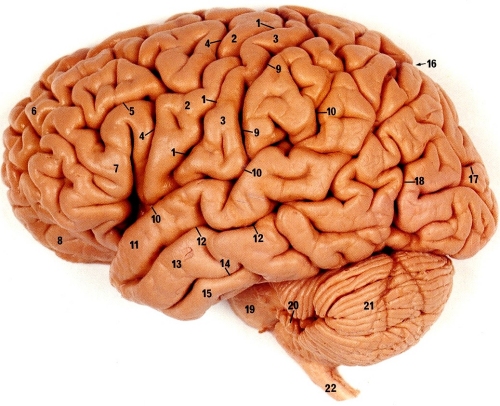
 The current issue of Nature features “The Innovative Brain” by a team of Cambridge researchers, suggesting that that entrepreneurs (defined here as proprietors or founders) excel at “hot” decision making, an emotional, intuitive, under-pressure kind of reasoning familiar to neuroscientists.
Our groups of entrepreneurs and managers showed comparable performance on the Tower of London test of cold processes, with no differences in the number of solutions solved at the first attempt. On the Cambridge Gamble Task, both groups were able to make high-quality decisions, selecting the majority colour at least 95% of the time. The remaining 5% is likely to be accounted for by ‘gambler’s fallacy’ in which subjects try to second guess the computer by choosing the less likely colour. However, when subjects were introduced to the hot components of the task, differences were observed. We found that entrepreneurs behaved in a significantly riskier way, betting a greater percentage of their accrued points (63%) than their managerial counterparts (51%). Both groups adjusted their wagering according to the likelihood of success (dependent on the ratio of red-to-blue boxes). The only performance difference was the amount that was bet.
Interestingly, this risk-taking performance in the entrepreneurs was accompanied by elevated scores on personality impulsiveness measures and superior cognitive-flexibility performance. We conclude that entrepreneurs and managers do equally well when asked to perform cold decision-making tasks, but differences emerge in the context of risky or emotional decisions.
The researchers suggest that entrepreneurship education should perhaps give more attention to emotional, impulsive behavior rather than teach business planning and market research. (But, really, do 18-22 year olds need instruction in this area?) And here’s something to delight your local pharmacist:
These cognitive processes are intimately linked to brain neurochemistry, particularly to the neurotransmitter dopamine. Using single-dose psychostimulants to manipulate dopamine levels, we have seen modulation of risky decision-making on this task. Therefore, it might be possible to enhance entrepreneurship pharmacologically.
The exercise is a bit scientistic for my tastes, but interesting nonetheless. (Thanks to Yiyong Yuan for the pointer.)
Creative Capitalism
| Peter Klein |
The book is coming out in a few weeks, and the blog is back in business. I didn’t follow all the previous discussion but what I read was of high quality and reflected diverse, and interesting, perspectives.
Bill Shughart’s Review of Prophet of Innovation
| Peter Klein |
It’s in the December 2008 issue of Managerial and Decision Economics. Excerpt:
Many readers, as I did, will close Prophet of Innovation with a feeling of dissatisfaction. On the plus side, McCraw’s life of Joseph Alois Schumpeter is not as dauntingly long as it seems: Nearly 30% of the volume is devoted to notes and other end matter, and so the text runs to a more digestible 506 pages. Generous line spacing and a respectable number of archival photographs speed the pace of reading.
On the minus side, Prophet of Innovation pales in comparison with the recent and far more penetrating biographies of John D. Rockefeller, Sr. by Ron Chernow, of J. P. Morgan by Jean Strouse, and of Andrew Mellon by David Cannadine. In the end, one doesn’t know Joseph Schumpeter quite as fully as one now knows those titans of industry. And we certainly don’t know him as well as we know Robert Skidelsky’s John Maynard Keynes, who was born the same year (1863). Something is missing from Prophet of Innovation, perhaps because McCraw chose not to be “concerned with Schumpeter’s economic thinking, narrowly construed” (p. xi). That choice, in my judgment, fatally compromises any attempt to tell the story of a man who lived and breathed economics over a distinguished, remarkably productive academic career that spanned four decades, taking him from the classrooms of the University of Vienna, where he (and Ludwig von Mises) studied under Eugen von Böhm-Bawerk, to Harvard Square.
New Blogs of Interest
| Peter Klein |
- Campus Entrepreneurship by David J. Miller
- Evolution and Complexity in the Social Sciences by Eliana Santanatoglia
- Anything Peaceful by the staff at FEE
Beware of Geeks Bearing Formulas
| Peter Klein |
The entrepreneur, writes Mises in one of my favorite passages, “is a speculator, a man eager to utilize his opinion about the future structure of the market for business operations promising profits.” The entrepreneur relies on his “specific anticipative understanding of the conditions of the uncertain future,” an understanding that “defies any rules and systematization.”
 This passage was in my mind today as I read the WSJ front-pager about the computer models used by AIG to analyze asset risk. Poor Gary Gorton, who designed many of AIG’s models, is put on public display. AIG’s catastrophic failure is likely to fuel skepticism about the use of such models for risk analysis, though Gorton maintains the problem was the application of the models, not their basic design. (His Yale colleague Ian Ayres will likely agree.) Longtime skeptic Warren Buffet has the best line: “Beware of geeks . . . bearing formulas.”
Today’s paper also includes an item on Harry Markowitz, including this:
As with all new information tools at our disposal, applying portfolio theory to investing entails its share of trial and error. Mr. Markowitz admits some people might object to asking him how to repair the credit crisis. “You, Harry Markowitz, brought math into the investment process,” he imagines some people thinking. “It is fancy math that brought on this crisis. What makes you think now that you can solve it?”
He draws a line between his portfolio theory and its later misapplication. “Not all financial engineering is always bad,” he says, “but the layers of financially engineered products of recent years, combined with high levels of leverage, have proved to be too much of a good thing.”
Update (Nov. 5): See this related piece from the Times.
New Issue of Strategic Entrepreneurship Journal
| Peter Klein |
Volume 2, number 3 of the Strategic Entrepreneurship Journal, a special issue edited by Sharon Alvarez and Jay Barney on “Opportunities, Organizations, and Entrepreneurship,” is now out. It features my paper “Opportunity Discovery, Entrepreneurial Action, and Economic Organization,” Nicolai’s paper with Kirsten Foss, “Understanding Opportunity Discovery and Sustainable Advantage: The Role of Transaction Costs and Property Rights,” and several others of interest. The abstracts from my paper and the Foss & Foss paper are below the fold. (more…)
Interviews with Alchian, Coase, Kirzner, Manne
| Peter Klein |
 The Liberty Fund has put online several interviews from its Intellectual Portrait Series. Of particular interest to O&M readers:
- Armen Alchian, interviewed by Dan Benjamin
- Ronald Coase, interviewed by Richard Epstein
- Israel Kirzner, interviewed by Tibor Machan
- Henry Manne, interviewed by Fred McChesney
Update (Nov. 2): Manne link fixed.
Mises Quote of the Day
| Peter Klein |
Here is Mises on entrepreneurial “understanding,” a concept distinct from quantitative prediction according to a known model. You could even call it judgment. It’s particularly germane to current economic conditions and the phalanx of economic forecasters attempting to predict how the economy will do in the coming months and years. The source is a 1956 essay, “The Plight of Business Forecasting,” reprinted in Economic Freedom and Interventionism:
Economics can only tell us that a boom engendered by credit expansion will not last. It cannot tell us after what amount of credit expansion the slump will start or when this event will occur. All that economists and other people say about these quantitative and calendar problems partakes of neither economics nor any other science. What they say in the attempt to anticipate future events makes use of specific “understanding,” the same method which is practiced by everybody in all dealings with his fellow man. Specific “understanding” has the same logical character as that which characterizes all anticipations of future events in human affairs — anticipations concerning the course of Russia’s foreign policy, religious and racial conditions in India or Algeria, ladies’ fashions in 1960, the political divisions in the U.S. Senate in 1970; and even such anticipations as the future marital relations between Mr. X and his wife, or the success in life of a boy who has just celebrated his tenth birthday. There are people who assert that psychology may provide some help in such prognostications. However that may be, it is not our task to examine this problem. We have merely to establish the fact that forecasts about the course of economic affairs cannot be considered scientific.
Kirzner’s Tapestry
 | Peter Klein |
One of the points I make in my forthcoming SEJ paper is that Kirzner’s metaphor of entrepreneurial discovery is, like Freud’s cigar, just a metaphor. It’s invoked by Kirzner to explain the tendency of markets to clear, not to describe a particular behavior or personality type. Applied entrepreneurship studies aimed at identifying what kinds of people really “are” more alert to opportunities, in some sense we can measure with a survey or experiment, misses the point of the metaphor. Likewise, Kirzner does not mean that opportunities literally are given, objectively, in the environment, independent of human creativity. “Discovery” is an analytical construct, an instrumental device, not a description of behavior.
Kirzner explains all this in a 1997 interview:
Q: What do you mean in saying something is “waiting” to be discovered?
A: Philosophically, people have objected to that. I do not mean to convey the idea that the future is a rolled-up tapestry, and we need only to be patient as the picture progressively unrolls itself before our eyes. In fact, the future may be a void. There may be nothing around the corner or in the tapestry. The future has to be created. Philosophically, all this may be so. But it doesn’t matter for the sake of the metaphor I have chosen.
Ex post we have to recognize that when an innovator has discovered something new, that something was metaphorically waiting to be discovered. But from an everyday point-of-view, when a new gadget is invented, we all say, gee, I can see we needed that. It was just waiting to be discovered.
Q: Consumer demand was there, resources were there, and the technology was there. . .
A: Yes, so there was no reason why it wasn’t being done. The entrepreneur is alert to this reality, to the profit opportunity it represents, and responds creatively to it.
Notice the emphasis on opportunities “metaphorically waiting to be discovered,” not literally waiting to be discovered. Kirzner isn’t offering a particular ontology or epistemology, just proposing an analytical device, designed for a specific purpose (to understand market clearing). Some of the literature comparing “discovery” and “creation” as alternative conceptions of the entrepreneurial act seems to me to read too much into Kirzner.
Dead Founders
| Lasse Lien |
Here is a link to a very nice paper in the somewhat morbid empirical tradition of using death as a natural experiment. Hans K. Hvide looks at the value of the founder to a newly established firm by examining the performance effects of founder death (or the death of a member of the founding team). Using several empirical tests and an impressive battery of robustness checks, he concludes that the negative impact of founder death is almost unnoticeable on all the classic performance variables. Apparently the importance of the founder is as a discoverer of opportunities and an initiator. As a manger the founder appears to be quite substitutable (on average).
Judgment, Luck, and Schultz
| Peter Klein |
Lasse raised an interesting point a while back about the Knightian concept of judgment, and how it differs from pure luck. Here’s a passage from T. W. Schultz that asks the same question:
[I]t is not sufficient to treat entrepreneurs solely as economic agents who only collect windfalls and bear losses that are unanticipated. If this is all they do, the much vaunted free enterprise system merely distributes in some unspecified manner the windfalls and losses that come as surprises. If entrepreneurship has some economic value it must perform a useful function which is constrained by scarcity, which implies that there is a supply and a demand for their services.
The key to understanding this passage is to recognize Schultz’s rejection, following Friedman and Savage (1948), of the concept of Knightian uncertainty. If all uncertainty can be parametrized in terms of (subjective) probabilities, then decision-making in the absence of such probabilities must be random. Any valuable kind of decision-making must be modelable, must have a marginal revenue product, and must be determined by supply and demand. For Knight, however, decision-making in the absence of a formal decision rule or model — what Knight calls judgment — isn’t random, it’s simply not modelable. It doesn’t have a supply curve, because it is a residual or controlling factor that is inextricably linked with resource ownership. It is a kind of understanding, or Verstehen, that defies formal explanation but is rare and valuable.
Without the concept of Knightian uncertainty, then, Knight’s concept of entrepreneurial judgment makes little sense.
Searle Center Symposium on Property Rights and Innovation
| Peter Klein |
It’s next month in Chicago. The high-powered lineup includes Joel Mokyr, Avner Greif, Robert Merges, Lynne Kiesling, Stan Liebowitz, Scott Stern, my old classmates Emerson Tiller and Rich Brooks, and many more. Harold Demsetz gives the keynote. Wish I were going.
Society for Entrepreneurship Scholars Manuscript Boot Camp
| Peter Klein |
The Society for Entrepreneurship Scholars runs a manuscript “boot-camp” to help junior faculty and graduate students in entrepreneurship, as well as established scholars from other disciplines who are new to the entrepreneurship field, get a manuscript ready for publication in a top-tier journal. Bill Schulze and Sharon Alvarez are chairing the conference this year, to be held 11-13 December at the Solitude Mountain Resort near Salt Lake City. A team of senior scholar-mentors, including Rajshree Argawal, Julio DeCastro, Greg Dess, David Deeds, Harry Sapienza, and me, will work with participants to get their manuscripts in shape. There’s also great networking and, this year, great skiing.
Submissions should be sent to ses@utah.edu by November 3. The full announcement, with all the relevant contact information, is posted below the fold. (more…)
Call for Papers: Org Economics and Org Capabilities
| Nicolai Foss |
The relation between organizational economics (agency theory, TCE, property rights theory, team theory) and the organizational capabilities view has often been debated on O&M. Perhaps not surprising, as at least three out of the four current O&M bloggers have frequently covered this theme in their research, Dick Langlois writing about the relation between these ideas at least as early as 1984 (here), my first publication on the subject appearing in 1993 (here), and Peter’s first paper on it appearing in 1996 (here). I think we hold different views on the nature of the relation between organizational economics and capabilities ideas. I increasingly think of ideas on transaction costs, property rights etc. as primary to, and more fundamental than, notions of capabilities (e.g., see this paper, forthcoming in Strategic Entrepreneurship Journal). Dick, on the other hand, seems to hold the opposite view.
Such differences are even more pronounced in the strategy and organization fields. Some scholars reject organizational economic altogether (Sid Winter seems close to that position). Others argue that organizational economics and the organizational economics view are complementary in an additive sense: They deal with different, yet complementary issues, so that, for example, the organizational capabilities view tells us which assets/resources we need, organizational economics providing insight in the actual organization of those assets/resources (this seems to be the current mainstream view). Some scholars go further, and argue that there is a real scope for integrating, for example, ideas on localized knowledge and learning from the capabilities view with transaction cost economics (e.g., this paper). In fact, overall there seems to have been some movement from the i initial polarized positions of 10-15 years to today’s more integrative stance.
In order to report advances in research on the relation between organizational economics and the organizational capabilities view, Nick Argyres, Teppo Felin, Todd Zenger and I will edit a special issue of Organization Science on “Organizational Economics and Organizational Capabilities: From Opposition and Complementarity to Real Integration.” Papers which can be both theoretical (or, for the US audience, “conceptual”) and empirical, must be submitted between Oct. 1 and Oct. 30 2009. The Call for Papers is here (scroll down a bit). The Call contains a long list of possible themes for papers, but feel free to mail me at njf.smg@cbs.dk (or any of the other editors) if you are in doubt whether your paper may make a fit with the SI.
Spawning: The Small-Firm Effect
| Nicolai Foss |
Entrepreneurs are usually dissatisfied employees from large companies who find their ideas crushed under the weight of the corporate hierarchy, right? No so, say Dan Elfenbein, Barton Hamilton and Todd Zenger in a recent (well, March 2008) paper, “The Entrepreneurial Spawning of Scientists and Engineers: Stars, Slugs, and the Small Firm Effect.” In fact, they point out, “roughly two-thirds of all entrepreneurial ventures started between 1995 and 2001 by scientists and engineers in the US, were founded by individuals employed immediately prior in firms of less than 100 employees” (p. 1). Interestingly, they also find that new ventures founded by employees coming from small firms perform better than ventures founded by employees from large firms. These small firms effects, the authors argue, are not just driven by sorting effects, but also because employees in small firms tend to acquire more entrepreneurial skills. An excellent contribution to the generally interesting spawning literature. Highly recommended. (more…)
Wiki Textbooks
| Peter Klein |
I teach two graduate courses without textbooks, Economics of Institutions and Organizations and Entrepreneurship: Theory, Applications, Debate. Maybe I should ask the students to create a Wiki Textbook? Anybody out there in the blogosphere want to coordinate such a project? (Thanks to Molly Burress for the link.)
See also previous entries on Wikisummaries, the Global Text Project, wiki notes, and Wikiversity.





 Organizations and Markets
Recent Comments