Posts filed under ‘Former Guest Bloggers’
Navigating a Process of Integrating Co-Authors’ Diverse Mental Models
| Russ Coff |
Not long ago, Peter mentioned his heavily downloaded SEJ article (with Nicolai, Yasemin, and Joe). They argue that entrepreneurial teams have a greater potential for competitive advantage than individuals if positive team dynamics allow them to draw upon members’ diverse mental models.
My related working paper unpacks positive team dynamics across the variance generation and selection stages of creativity. In a nutshell, the required group mood differs markedly between the two stages and many teams are unable to navigate the divide.
Ironically, this paper has, itself, been a journey to meld co-authors’ diverse mental models. (more…)
Will Mitchell’s Comments on Receiving the BPS Irwin Award
| Russ Coff |
A big congratulations to Will for winning this prestigious award. It is really something to hear a person’s students describe how their mentor has altered their lives. Many misty eyes in the room…
Embedded in Will’s comments after receiving the award was an observation that in many business settings, such as in developing countries, effective business decisions cannot be made using the risk-based tools (like NPV) that are so often taught in business schools. He argued that, in the face of Knightian uncertainty, these tools fail miserably.
So what would be a set of tools to address uncertainty? The closest that I teach would be scenario analysis and real options. Here, one still needs to estimate parameters like the volatility of the investment or probabilities of outcomes (for decision trees or binomial trees). Of course, the assumption that these parameters could be known still suggests reflect risk rather than uncertainty. However, I emphasize sensitivity analysis (such as simulations, etc.) on these parameters to address the fact that they cannot be known.
First, is this the best set of tools available for Knightian uncertainty?
Second, is Will right that these are left out of most strategy courses? Perhaps we need to re-think the curriculum a bit…
What Are the Bounds on the Right to Healthcare?
| Russ Coff |
My last blog dealt with the efforts to reform U.S. healthcare to reduce costs. Now I turn to the other key objective of achieving universal coverage. This seems at odds with lowering costs since covering 46 million uninsured people would not come cheap.
As Karl points out in his comment to my earlier post, many believe that healthcare is a right. Certainly there is an ethical and moral obligation to help those who are ill: it is part of the oath to which all physicians pledge as well as the UN charter.
But how far does this right extend? What level of healthcare is a human right and what level becomes a luxury? This is a very practical question. Currently there is a proposal for a luxury tax on insurance plans that offer too much coverage (Listen on NPR). Clearly some believe it is no longer a human right at that level. . . .
But let’s unpack the 46 million uninsured. (more…)
Organizations, Markets, and Health Care Reform
| Russ Coff |
Amidst the fierce debate about the U.S. health care system is a raving lack of clarity. At the core, is whether organizations and markets fail to produce an optimal solution. Even the most neoclassical of economists these days acknowledge that market externalities exist and that these should be the focus of government intervention. Unfortunately, I don’t feel that the debate has been rigorous or well-informed in defining the market failure or why a government run system would be superior.
Liberal Economist Paul Krugman explains why markets fail summarizing Kenneth Arrow’s arguments (here). Basically, the third-party payee system and the information asymmetries render comparison shopping ineffective (and hence competition fails to yield an optimal solution).
Indeed, there is a good bit of inefficiency in the current U.S. system. A recent NY Times article notes that health care costs the average U.S. household $6,500 more each year than other comparable wealthy nations. Unfortunately, looking at many of the important outcomes, it appears that consumers are not getting much for their money on many dimensions (e.g., chronic disease outcomes). So it should be possible to lower costs and improve outcomes. Of course, this ignores the question of whether costs are higher to subsidize R&D that ultimately spills over into other countries.
Unfortunately, the article continues to point out how the reform efforts seem to ignore this low-hanging fruit. (more…)
Introducing Guest Blogger Russ Coff
| Peter Klein |
We’re delighted to introduce Russell Coff as our newest guest blogger. Russ is Associate Professor of Organization and Management at Emory University’s Goizueta Business School. He has published widely on the knowledge- and resource-based foundations of competitive advantage, with a particular focus on human capital and its role in M&A, compensation policy, and other aspects of organizational design. Russ is past Chair of the Academy of Management’s BPS Division and will be pretty busy leading up to and during the AoM meeting, but he’s promised to carve out some blogging time now and between sessions. We’re really looking forward to his insights. Welcome, Russ!
Thanks to Guest Blogger Benito Arruñada
| Peter Klein |
Thanks to Benito Arruñada for a provocative and insightful series of posts over the last few weeks. We look forward to Benito’s continuing participation in the comment threads here at O&M. You can also follow the action (in English and Spanish) at Benito’s own blog.
Watch for more guest bloggers to be announced soon!
Will Macroeconomists Solve the Crisis?
| Benito Arruñada |
One may doubt it after observing that Ben Bernanke was one of those believing in the Great Moderation — the claim that macroeconomic volatility had been reduced. Macroeconomic policymaking seems to be as unsafe as firefighting: extinguishing small fires creates the conditions for hell. Shouldn’t macroeconomists learn something from forest management? (For a start: “Fire Must Be Ally in Forest Management.”) Of course, if coupled with an acid-suppressing pill, they could even dare to read Hayek’s “Pretence of Knowledge.”
Does Economics Training Hinder Managers’ Ability?
| Benito Arruñada |
In a new paper with Xosé H. Vázquez we explore the consequences of using different behavioral assumptions in training managers on their future performance. We argue that training with an emphasis on the standard assumptions used in economics (rationality and self-interest) leads future managers to rely excessively on rational and explicit safeguarding, crowding out instinctive contractual heuristics and signaling a “bad” type to potential partners. In contrast, the behavioral assumptions used in management theories, because of their diverse, implicit, and even contradictory nature, do not conflict with the innate set of cooperative tools and may provide a good training ground for such tools.
We present tentative confirmatory evidence by examining how the weight given to behavioral assumptions in the core courses of the top 100 business schools influences the average salaries of their MBA graduates. Controlling for the average quality of their students and some other school characteristics, we find that average salaries are significantly higher at those schools whose core MBA courses contain a higher proportion of management courses as opposed to courses based on economics or technical disciplines. (more…)
How Active are Governments in the Morality Business?
| Benito Arruñada |
Brad Taylor doubts in his reaction to my previous post on organizations and markets in morality that:
The moral authority of the Church was anywhere near complete in even the most ardently Catholic societies. The Church claimed a monopoly on morality, and many people went along with it to a greater or lesser degree. This seems pretty close to what government does today. The state doesn’t simply create laws aimed at resolving the inevitable conflicts among people, but attempts to influence public opinion through various types of propaganda – telling people not to smoke or get drunk and dance, for example.
I would not claim that the Church enjoyed a monopoly, only that the production of morality was more organizational — i.e., it took place within organizations (the Church itself was divided in several organizations), was more centralized, and was made by specialized moralist experts (mainly, theologians and priests, but even with some specialization of priests between those who focused on taking care of parishes, preaching, and confessing). In contrast, I am inclined to think that morality is now produced more in the market: it is less centralized and is produced by generalists.
It is true, as Brad says, that governments play an increasing role, especially in many European countries where they (1) control most education, even introducing new mandatory courses on “Good Citizenship”; (2) run their own TV stations, with plenty of scope to manipulate its contents; and (3) are actively running advertising campaigns about everything from global warming to racism or the use of condoms.
However, there are many other powerful sources of morality that are purely market driven: e.g., Hollywood movies and commercial TV series; biologists, pop stars, and former politicians moonlighting as preachers for their favorite causes; reality shows; gossip media; and so on.
Organizations or Markets in Morality?
| Benito Arruñada |
Moral codes can be produced and enforced through markets or through organizations. In particular, Catholic theology can be interpreted as a paradigm of the organizational production of morality. In contrast, the dominant moral codes are now produced in something resembling more a market.
The organizational character of Catholicism comes from its centralized production and enforcement of the moral code by theologians and priests and the mediation role played by the Church between God and believers. The epitome of both features is the old institution of confession of sins, a cultural universal that reaches full sophistication — for good and for bad — within Catholicism. My forthcoming JSSR paper argues that confession was a strikingly organizational solution to the production and enforcement of morality, something that Western societies now do mostly through markets. (more…)
Why “Doing Business” Leads to Bad Policy
| Benito Arruñada |
In a post at the PSD blog, David Kaplan sees little difference between the “Doing Business” position and my own. He writes:
Part of Professor Arruñada’s argument is that the Doing Business indicators do not capture all the relevant components of the business environment. The writers of the Doing Business 2009 report agree. . . .
I believe that the debate is not mainly about what Doing Business measures. Really, the debate is about how these measures are used in shaping public policy. Critics of Doing Business are concerned that countries will ignore the above warnings and only reform in areas that are measured in Doing Business.
I doubt that one can separate what DB measures and how it does it from how DB measures are used in the field. My main complaint, however, is different, namely that the DB method has often led to bad policy. (more…)
Does Capitalism Suffer Cycles of Statism?
| Benito Arruñada |
Does the current expansion of the State reverse a previous reduction, to be reduced once again in the future? Or, alternatively, is there a sort of ratchet effect, with a trend towards greater statism disguised by cycles along such increasing trend?
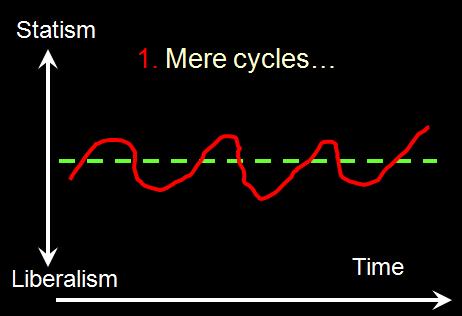 I am inclined to think that cycling has not taken place around a stationary average but around an increasing tendency (see the figures). But perhaps a better way of facing these questions would be to disaggregate in different dimensions. For instance, in several papers with Veneta Andonova we argue that freedom
 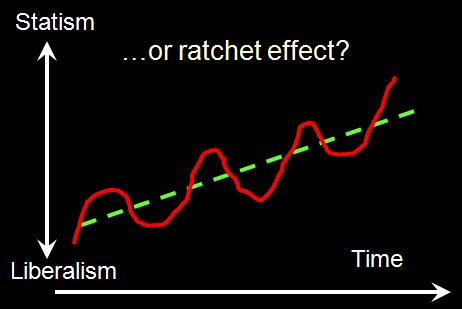 of contract has been in decline for more than a century in Western Law, both in civil- and common-law countries. Something similar could probably be said about trade, but in the opposite direction. However, in both freedom of contract and trade, it might be the case that exchange opportunities have expanded mainly as a result of technological change (e.g., cheaper transportation and communications), whatever the legal constraints. In terms of research, how could these trends be measured?
These thoughts were triggered by a timely and extremely suggestive paper by Witold J. Henisz presented at the Workshop on “Manufacturing Markets” organized last week in Villa Finaly, Florence, by Eric Brousseau and Jean-Michel Glachant. My next few blogs will address other aspects of Henisz’s views on the broader challenges facing capitalism.
Is the Future in Contract Manufacturing?
| Benito Arruñada |
The purchase of Opel by Magna shows the strength of contract manufacturers and their strategies, which I discussed with Xosé H. Vázquez in our 2006 article in the Harvard Business Review. Once thought of as a lifebelt for the decreasing margins of large-brand owners, contract manufacturing has now become a major source of competition. Shanghai Automotive Industry Corporation (SAIC), which learned the business by producing initially for Volkswagen and GM, has actually started to sell its own cars in Europe and North America. It has even bought R&D knowledge, acquiring from bankrupt MG Rover the drawings needed to build the Rover 25, Rover 45, and Rover 75.
The economic crisis is accelerating this process. The need to liberate assets to increase ROI has been facilitated by technological and organizational change. This is stimulating business practices at the corporate level that are pushing outsourcing practices to dangerous limits. The wrong management of contract manufacturing will thus increasingly provoke knowledge leaks to direct competitors and the loss of internal manufacturing knowledge; more importantly, it will continue to eliminate barriers to entry, allowing large distributors and contract manufacturers themselves to market their own brands much more easily.
Thanks to Mike Sykuta
| Peter Klein |
Thanks to Mike Sykuta for a great series of guest posts on contracting, transaction cost theory, and the crazy political and regulatory world around us. We look forward to Mike’s continued participation in the O&M comment threads and elsewhere in the blogosphere. If you need Mike you can reach him through the usual virtual channels or, if you prefer something meatier, let me know and I’ll walk the 10 feet to his office and bop him over the head.
World Bank’s “Doing Business” Changing Course
| Benito Arruñada |
Thanks to O&M for the opportunity to join the conversation. I plan to be blogging about some issues discussed in my book.
One of my recent research areas is the cost of business formalization. In particular, I have criticized the World Bank’s Doing Business project for the narrow focus of its “Starting a Business” indicator on reducing the initial costs of incorporating companies (Arruñada, 2007, 2009), which disregards the more important role of business registers as a source of reliable information for judges, which is essential for reducing transaction costs in future business dealings. In many developing countries, registers produce documents that judges do not trust and, therefore, registration does not facilitate impersonal transactions that it should be supporting. Reducing the explicit cost of registers and speeding production of useless paperwork will not help. The priorities of reform policies should therefore be thoroughly reviewed, aiming first for registers to achieve a minimum reliability. (See this discussion).
In April, following continuing pressure by Barney Frank, chairman of the US House Financial Services Committee, the World Bank decided to drop Doing Business’s “Employing Workers Indicator” and develop a new “Worker Protection Indicator” after concluding that the first indicator “does not represent World Bank policy and should not be used as a basis for policy advice or in any country programme documents that outline or evaluate the development strategy or assistance programme for a recipient country” (Aslam, 2009).
In line with my argument about registration, meaningful indicators of institutional quality should be comprehensive of costs and values. Therefore, an indicator of the quality of employment regulation should consider not only workers’ protection but other aspects, such as, most prominently, unemployment rates.
Introducing Guest Blogger Benito Arruñada
| Peter Klein |
We’re delighted to announce Benito Arruñada as our newest guest blogger. Benito is Professor of Business Organization at Pompeu Fabra University in Barcelona, a former President of ISNIE, and a prolific researcher in the areas of organization, law and economics. Most of his work focuses on the organizational conditions that facilitate impersonal exchange, from property titling or business regulation to moral systems. He has published widely in journals such the Journal of Law and Economics, Industrial & Corporate Change, Harvard Business Review, Journal of Law, Economics, and Organization, Journal of Economic Behavior & Organization, Journal of Comparative Economics, and International Review of Law and Economics.
Benito will be blogging about his new book on property and business formalization, Building Market Institutions: Property Rights, Business Formalization, and Economic Development, coming out next year from the University of Chicago Press, and other topics that strike his fancy. Welcome, Benito!
A Second Act for the CAFE Standards
| Peter Klein |
From former guest blogger David Gerard:
As you have no doubt learned, President Obama and Governor Schwarzenegger have teamed up for a healthy bump in the federal Corporate Average Fuel Economy (CAFE) standards, forcing automakers to boost their fleet averages to 35 miles per gallon by 2016. The announcement will dismay many economists, who for many, many reasons have advocated steeper gasoline taxes instead. Lester Lave and I argued that that there were some solid reasons to support some form of CAFE standards in conjunction with higher gasoline taxes. On pragmatic grounds, the CAFE standards have enjoyed public support and gas taxes decidedly have not, so CAFE has carried the day.
The original CAFE measures did not do much in terms of pushing the envelope of vehicle technology, as a change in consumer tastes toward more fuel efficient vehicles in the late 1970s. As a result, the standards were met by altering the mix of vehicles sold, not by any radical improvements in technology. It wasn’t until the early 1980s when oil prices tanked that the CAFE became a serious binding constraint. In contrast, the CAFE standards announced Monday are very aggressive. However, setting the standard is only the first part of the story. The real action takes place during the second act. What happens as the deadline approaches if firms are unable to meet the stricter standards? (more…)
An Official O&M Holiday
| Mike Sykuta |
This date, May 8, is a holiday of sorts at O&M and certainly in the field of Austrian economics. As Peter is traveling today and has thus far not taken the opportunity to remind us of the day’s significance, I simply refer you to one of Peter’s earlier posts and wish you (and Peter) a Happy Hayek-Klein Day.
Thanks to O&M
| David Gerard |
I would like to thank Peter and the O&M bloggers for giving me some space here over the past few months. Blogging certainly has its challenges, such as finding something interesting to say, taking the trouble to write it down, and actually having a point. Or at least one of those three. Unfortunately, I haven’t been as prolific as I might have been on these fronts, nor have I been able to foment a syllabus exchange on organizations, industrial organizations, organizational economics, etc. . . . I hope to get another chance to contribute later on.
Economists More Ethical; US Researchers Not
| Mike Sykuta |
Thanks to Josh Wright over at TOTM, I found Ben Edelman and Ian Larkin’s recent HBS Working Paper on “Demographics, Career Concerns or Social Comparison: Who Games SSRN Download Counts?” Their abstract reads:
We use a unique database of every SSRN paper download over the course of seven years, along with detailed resume data on a random sample of SSRN authors, to examine the role of demographic factors, career concerns, and social comparisons on the commission of a particular type of gaming: the selfdownloading of an author’s own SSRN working paper solely to inflate the paper’s reported download count. We find significant evidence that authors are more likely to inflate their papers’ download counts when a higher count greatly improves the visibility of a paper on the SSRN network. We also find limited evidence of gaming due to demographic factors and career concerns, and strong evidence of gaming driven by social comparisons with various peer groups. These results indicate the importance of including psychological factors in the study of deceptive behavior.
Their results suggest that papers published in the Economics Research Network of SSRN are significantly less likely to have “fraudulent” downloads (as measured in their paper) while papers in the Finance, Legal, and Accounting Networks are significantly more likely to have fraudulent downloads. Aren’t these the places in which ethics are being more broadly taught? Business and Law?
Among their other interesting results, papers by non-US authors are less likely to have fraudulent downloads. Perhaps surprisingly, one’s status on the tenure track seems not to be important, but one’s peer comparisons do. Sadly, there is no attempt to directly measure the O&M effect.





 Organizations and Markets
Recent Comments