Posts filed under ‘Former Guest Bloggers’
Introducing Guest Blogger David Gerard
| Peter Klein |
I’m pleased to introduce David Gerard as our newest guest blogger. David is Executive Director of the Center for the Study and Improvement of Regulation (CSIR) at Carnegie-Mellon University. He works on the development, implementation and enforcement of regulations and the effect of regulatory institutions on economic behavior, the environment, and public safety. David teaches the core course in managerial economics and a course on innovation in the master’s program in Engineering and Technology Innovation Management. He also teaches several courses in the Department of Social and Decision Sciences including entrepreneurship, regulation, and technological change (with David Hounshell). I’ve known David since his student days at the University of Illinois, where he received a PhD in economics in 1997. Welcome, David!
Westgren to Missouri
| Peter Klein |
I’m delighted to announce that Randy Westgren, organizational scholar, academic entrepreneur, bon vivant, and all-around great guy — and, most important, former O&M guest blogger — has been named McQuinn Professor of Entrepreneurial Leadership at the University of Missouri. I’ve greatly enjoyed interacting with Randy over the years from his perch in Urbana-Champaign and am looking forward to having him just down the hallway.
As McQuinn Professor Randy will also direct the McQuinn Center, which was launched in 2004 under the leadership of Bruce Bullock. The Center is creating an innovative and unusual program to research and teach the “functional” aspects of entrepreneurship, with particular emphasis on firm organization and strategy and applications to food, agriculture, biotechnology, natural resources, and rural development.
Please join me in congratulating Randy on his new post!
Thanks to Randy, and Get Well Soon!
| Peter Klein |
Our thanks to Randy Westgren for some terrific guest blogging this past spring and summer. Randy had a little time left on his guest-blogger clock, and was planning to share some additional thoughts in the coming weeks, but he was involved in a freak carpentry accident this weekend, losing a thumb and forefinger to a circular saw. Fortunately his digits have been reattached but — the academic’s worst nightmare — he can’t write or type, for the short term at least. He’s therefore requested, and been granted, a graceful early retirement.
We’ve greatly enjoyed Randy’s insights and look forward to his continued participation in the comment threads when fully healed. Thanks, Randy, and best wishes for a speedy recovery!
Before They Were Famous
| Randy Westgren |
If we point to “The Nature of the Firm” (1937) as the moment when Ronald Coase earned is place in the Pantheon, then we can go back two years (and 16 years before his doctorate was awarded) to a period when he was lecturing at LSE and working on public utilities to find the beginning of a series of papers in Economica (with R.F. Fowler) on the English pig industry (see here, here, here, and here for JSTOR links). The story line is about the effects of anticipated prices (based on lags) for hogs and corn on production decisions and the consequent cobweb model of dynamic prices. A classic in agricultural economics.
Another giant figure, Sewell Wright, examined the same phenomenon in the US in an obscure publication ten years earlier: Corn and Hog Correlations, USDA Department Bulletin # 1300, July 1925. Wright was an animal husbandman (and guinea pig breeder) at USDA after completing a doctorate in genetics at Harvard. (more…)
Westgren at Missouri
| Peter Klein |
Those of you within driving distance of Columbia, Missouri should come over Monday (2 June) for a seminar by Randy Westgren, “The Entrepreneurial Niche,” at 2:00 2:30pm in 217 Mumford Hall. Abstract below the fold. The talk is sponsored by the McQuinn Center for Entrepreneurial Leadership. Email me for details. (more…)
Incentives
| Randy Westgren |
This weekend, I am planning to drive to Columbia, Missouri, the home of Peter Klein. I had to check the map this afternoon, as there is a wire service report that Max Motors in Butler, MO, is offering each car buyer $250 toward the purchase of a gun or gasoline. According to the report, “General manager Walter Moore said that, so far, most buyers have chosen the gun, adding that he suggests they opt for a semiautomatic model because it holds more rounds.”
I note that Butler is on the other side of Columbia from my route of ingress, though I will remain watchful. I suppose it is the curse of being an economist that causes me to believe that cars and guns sold together are complementary goods. . . .
InBev and Bud . . . In Bed?
| Randy Westgren |
Recent news about the impending bid by InBev for Anheuser-Busch was interesting subtext for my current study tour on EU agri-food supply chains. We normally schedule a stop at InBev when we spend our first week based in Leuven, Belgium, which is InBev’s HQ. This year, they told us a visit was impossible. I had assumed that it was due to shake-ups in the management following a weak first quarter, but I guess there was more in the air!
You will note that A-B shares rose on the news. The strategic fit is stunning. InBev is strong in its traditional markets (Belgium and Germany from the Interbrew parent; Brazil from the Ambev parent) as is A-B, who also has an equity strategic alliance with Tsingtao in China. Not much overlap geographically and lots of opportunities for building on existing distribution alliances. A merged firm gets serious presence in mature markets as well as the growing ones.
The other thing that the market will react to is the InBev style. They drive growth with a limited number of global brands; they pare local brands over time. And they are relentless cost-cutters. Look at the top management team for a “Belgian” brewer. It has only taken a few years for the “tradition-oriented” Belgians to be succeeded by aggressive Brazilians. (I know this smacks of ethnic profiling, but ask around. . . .) The corporate culture of InBev is palpable.
From Rumination to Rumelt via Dobzhansky
| Randy Westgren |
I was perusing the website of the Oxford Symposium on Food and Cookery to find the references to last year’s theme: food and morality. Some interesting reads there. I noticed that the Symposium awards the Sophie D(obzhansky) Coe Prize in Food History annually. Dr. Coe was an anthropologist who wrote on pre-Columbian diets and was the daughter of Theodosius Dobzhansky, one of “the Four Horsemen” of the modern synthesis of genetics and evolution (American Philosophical Society). Dobzhansky emigrated from the University of Kiev in 1927 to Columbia University, thence to Caltech, where he and his colleagues bred squillions of generations of fruit flies and provided the empirical basis for the mathematical models of evolution of the other horsemen: Haldane, Fisher, and Wright.
In 1937, Dobzhansky had two publications. One was his landmark book, Genetics and the Origin of Species, which was the siren song that drew Ernst Mayr and other biologists to the field of evolutionary biology. Mayr has often been credited with developing the concept of the isolating mechanism as the basis for speciation. Methinks that Mayr’s long shadow at Harvard fell on Richard Rumelt, who ported the concept to strategic management without much attribution in his 1984 and 1987 pieces. Mahoney and Pandian must be credited with the most complete exposition of the concept. (more…)
Pensées de l’Alsace
| Randy Westgren |
Sorry to carry no intellectual weight tonight. One day remains of a 14-day whirlwind tour of the EU with 24 students of business, international studies, and agriculture. No student has had as much as 4 hours of sleep any night this week and I am in awe of their willingness to throw themselves into long days of travel and company visits. I am beat. Much of my day was spent translating between English and French, between US weights and measures and EU metrics (including such oddballs as quintals and hectolitres), and between currencies. Luckily, there was beer.
In honor of Peter Klein’s francophilia, I note the following from our second day outside Strasbourg.
(1) Cousin Naomi’s book has been translated as La Stratégie de Choc and sells as a trade paperback for 25 euros. It is not flying off the shelves. Evidently, there aren’t enough intellectuals in Europe’s second capital to make a sale.
(2) Not that polemics aren’t big press here. I bought Le Monde Selon Monsanto by Marie-Monique Robin. Evidently (on first read) Monsanto is behind the dioxin poisoning in Belgium, agent orange use, hormones in beef, and lost biodiversity in Mexico. Complete crap, but worthy of two hours on national TV earlier this year. Something for Naomi Klein to aspire to.
(3) We dined at a restaurant in the beautiful village of Obernai tonight. The specialty of the house is choucroutte (sauerkraut) served in a 2 kilo pile topped with 4 kilos of sausages, meatballs, pork chops and belly slices. What sweet revenge on the sour, self-absorbed vegetarian in the group (add emoticon here)! Magnificent food!
Bonne nuit.
An Organization and a Market
| Randy Westgren |
 Yesterday I visited a unique auction in the small town of Roeselare, in Western Flanders. A cooperative organization of vegetable and strawberry growers, REO Veiling, operates a 7 hectare receiving and shipping facility that serves their members and buyers (wholesale, supermarkets, export) from all over northern Europe. The trading floor has six electronic Dutch auction clocks that operate simultaneously, two for the Roeselare site, two for a sister site in Mechelen, and two for small lots/direct delivery. Mechelen has a matching facility and there are dozens of remote terminals for buyers. Prices are pooled across lots within a given crop and quality category; all growers receive an identical payout, even if their particular lot of a given quality drew a higher/lower bid. All transactions clear within the day. All product is turned and shipped within 18 hours of delivery. The combined exchange has a 95% market share for Belgium.
The grower/owners pay the exchange costs from their revenues. This includes third-party grading and sorting and third-party production monitoring.They own a brand name in common for the top quality shipped from the facility (which earns a significant premium) and individual growers may pack for a private label and accept the pool price from the day of delivery. The exchange will collect from the private label buyer upon shipment from the auction warehouse.
A very innovative hybrid organization. I’ll have to formalize a case study.
Something to Abuse Graduate Students
| Randy Westgren |
I carried a few articles along with me to punctuate the tedium of consuming as many Belgian beers as one can, in tacit competition with 24 20-year olds. One of these is “The Sociology of Markets” by Neil Fligstein and Luke Dauter, from the 2007 Annual Review of Sociology (ungated version here). Those of you who throw brickbats at sociology will find this an interesting read, as Fligstein and Dauter describe the three major camps and a few lesser cabals as a “cacophony of voices” talking past each other. For others, the piece is a useful entry point for students to see the clear expositions of the development of network theory (i.e. Burt, White, and Granovetter) and institutional theory (i.e. DiMaggio and Powell, Durkheim, and Fligstein, himself). They also review the performativity school — unfortunately named and unfortunately constituted. They tie the review to March and Simon, Williamson, and some of the corporate governance literature, and discuss the roles efficiency plays in the alternative conceptions of markets.There is also some useful allusion to equilibrium and disequilibrium conceptions of markets. This is worth a read, or at least, worth making your grad students read. The entree to seminal literature that undergirds current articles in the management journals is useful.
I’d fault the review only for its insistence on trying to make population ecology appear to be a useful piece of sociology for the study of markets, though the authors admit it really isn’t true. Pop ecology should, like an overly large litter of unwanted kittens, be placed in a burlap sack with a large stone and cast into a deep river.
Greetings from Leuven
| Randy Westgren |
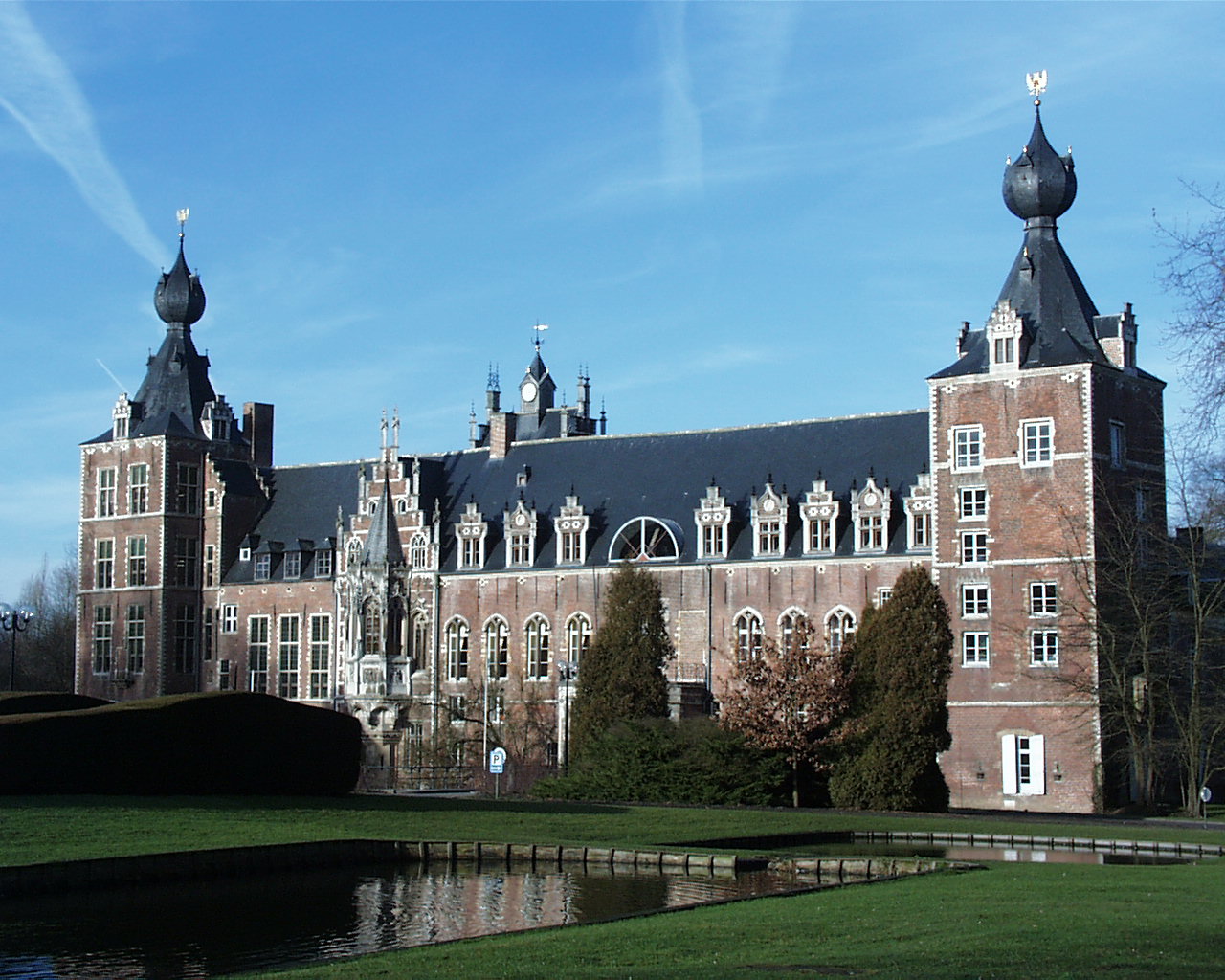 I am sorry to have been lax in fulfilling my (implicit) obligations as a guest blogger. I have been in Belgium for about 36 hours, centered at the Katholieke Universiteit Leuven, with 2 dozen undergraduates at the beginning of a two-week study tour which follows on from a semester-long course in the spring semester. The nonpecuniary transaction costs for getting myself from a Midwest university town to another university town 1/3 of the world away have caused me to self-medicate with several of the excellent Trappist brews from Flanders. As a consequence, (a) my attitude has improved greatly and (b) my productivity has plummeted. There are a couple of posts that are near the end of gestation and will follow soon. Alas, tomorrow (Thursday) will be a Brussels day — McDonald’s EU HQ, US Trade Rep assigned to the Mission, the DG for EU agricultural policy, and a reception at the Flemish industrialists’ club, De Warande. So, you’ll have to wait another day. . . .
P.S. Don’t tell anyone how hard professors work.
Peter and Inspiration
| Randy Westgren |
Before enplaning for Vancouver, I spent a great day at the University of Missouri with Peter Klein and his (local) colleagues. I discovered that Peter and I share a common interest in the fiction of Richard Powers, a novelist whose works draw from the biological, physical, cognitive, and information sciences. Moreover, Peter acknowledged that his favorite Powers novel is The Gold Bug Variations; it’s my favorite as well. I finished my second reading on the airplane and found a passage that incites this post:
The world we know, the living, interlocked world, is a lot more complex than any market. The market is a poor simulation of of the ecosystem; market models will never more than parody the increasingly complex web of interdependent nature. (First edition, p. 411)
I agree that market models are pale abstractions compared to any ecosystem. But I have studied a great many models of ecosystems (dynamic system simulations, agent-based simulations, statistical models of species interactions, analytical models of populations) and find them to be pale abstractions of ecosystems, as well. I will propose — for refutation — that most market models I see are less interesting than ecosystem models; they are still undersocialized in the Granovetter sense. The ecological models seem to require more attention paid to the social interactions of the individuals.
Just a thought.
From Vancouver
| Randy Westgren |
I have been hunkered down in Vancouver for several days, teaching the final module of an executive education course. One of the amusing elements of the course is that it migrates from Halifax, Nova Scotia, to Vancouver, British Columbia during the year, with intermediate stops in Calgary and Niagara Falls. Execs and instructors get to spend time in some innovative, entrepreneurial firms outside their own regions (and escape the classroom).
From the Listel Hotel on Robson Street, one can reach 29 Starbucks stores within a 2 km by 2.5 km area of downtown. There are seven Starbucks on Robson Street alone, between the 400 and 1700 blocks — a 20 minute walk. Among these are the stores at 1099 Robson and 1100 Robson; they face each other kitty-corner across Thurlow Street. One of the execs stated that this constitutes a unique phenomenon within the Starbucks chain — two stores so closely juxtaposed.
1. Has anyone seen or heard of a similar situation in another city?
2. Has someone written about this (apparent) strategy of location-packing Starbucks stores?
BTW, if you are a Starbucks-hater, there twice as many direct competitors in the same 5 square km area, including 13 Blenz Coffee outlets, which is a local competitor with international ambitions (www.blenz.com). The best thing they do isn’t coffee; they will make you Japanese ceremonial green tea while you wait — bamboo whisk and all.
Occupational Psychosis
| Randy Westgren |
One of the profoundly valuable benefits of recently giving up an administrator’s position is that I have time to read. I sat down with a stack of journals, biographies, fiction, and cookbooks that has grown since last summer. In the first pass through the stack, I found a couple pieces that echo one of the themes of this blog: how our training affects our perceptions of theory, facts, and phenomena.
One piece is an article by two young, interesting colleagues, Brianna and Arran Caza, who write about “Positive Organizational Scholarship” (POS) in the March 2008 issue of the Journal of Management Inquiry . They argue that the bulk of research on organizations, as highlighted by the top-cited articles in three years of ASQ and AMJ, begin with negative framing of organizational issues — what Brianna and Arran call a deficit model approach. They propose the need for research based on positive framing — not exclusively — as necessary to advance theory and practice in the organizational sciences. The POS paradigm is unabashedly post-modern (up periscope!), but it serves us all when alternative lenses are trained on issues that we all observe from our particular perspectives. (more…)
Introducing Guest Blogger Randy Westgren
| Peter Klein |
It’s a pleasure to welcome Randy Westgren as our newest guest blogger. Randy is Professor of Business Administration and Professor of Agricultural and Consumer Economics at the University of Illinois at Urbana-Champaign. A specialist in the economic organization of food sector, Randy’s interests span strategic management, strategic marketing, governance, Austrian and evolutionary economics, supply-chain management, and much more. Randy describes himself as someone who “switches from econ to management and back and forth” and “studies such peculiar things as agent-based modeling, cooperative member commitment, the foodie culture, and biotechnology supply chains.” In explaining his diverse set of interests, Randy quotes this passage from Ralph Waldo Emerson (“Self-Reliance,” from Essays: First Series, 1841):
There will be an agreement in whatever variety of actions, so they be each honest and natural in their hour. For of one will, the actions will be harmonious, however unlike they seem. These varieties are lost sight of at a little distance, at a little height of thought. One tendency unites them all. The voyage of the best ship is a zigzag line of a hundred tacks. See the line from a sufficient distance, and it straightens itself to the average tendency. Your genuine action will explain itself, and will explain your other genuine actions.
Randy has been one of our regular readers, and frequent commentators, from the beginning, showing that he is also a discriminating consumer of blogiana. Welcome, Randy!
Choice Architecture
| Steve Phelan |
Interesting article by Thaler and Sunstein in the LA Times on “choice architecture” and the concept of “libertarian paternalism”:
the organization of the context in which people make decisions. Choice architects are everywhere. If you design the ballot that voters use to choose candidates, you are a choice architect. If you are a doctor and must describe the alternative treatments available to a patient, you are a choice architect. If you design the form that new employees fill out to enroll in the company healthcare plan, you are a choice architect. If you are a parent, describing possible educational options to your son or daughter, you are a choice architect. If you are a salesperson, you are a choice architect (but you already knew that).
AND
The libertarian aspect of the approach lies in the straightforward insistence that, in general, people should be free to do what they like. They should be permitted to opt out of arrangements they dislike, and even make a mess of their lives if they want to. The paternalistic aspect acknowledges that it is legitimate for choice architects to try to influence people’s behavior in order to make their lives longer, healthier and better.
Hmmm….is this freedom (of choice)? How would we build a practice of choice architecture?
Riding Off Into the Sunset. . . .
| Steve Phelan |
Dear colleagues, this post represents my 22nd and final post as a guest blogger on O&M. Over the last four months I have learned a lot about blogs and successful blogging. For instance, the average post on O&M gets seen/read by about 70 people in the first 48 hours. Of these, perhaps only 5% will comment on a post. But blog posts have an incredibly “long tail”. The top posts on O&M average 3,000 or more views, with the top post over 7,000 views (see physics envy if you wish to add to the count). As a result of this long tail of posts, O&M receives about 1,000 hits per day! (more…)
Fed Intervention Policy
| Steve Phelan |
Greg Mankiw reports that Myron Scholes has a novel idea to fix the credit crisis – rather than simply guaranteeing to underwrite asset losses (as they have with the JP Morgan/Bear Stearns ) Scholes proposes that the Fed takes senior equity and debt positions in a distressed bank thereby improving the capital adequacy ratio, and thus preventing a credit freeze which would damage the real economy. I like it – what do YOU think?
Debt Bites Back
| Steve Phelan |
A nice cartoon presentation of the debt crisis by the Wasington Post that you might want to use in your classes.
Two questions:
1) Is the story essentially correct or is it overly damning?
2) What are the organizational implications of this story – for institution and policy building?
We can only assume that all sorts of “corrective” measures will be planned and taken in the immediate future. I believe we should be getting involved in the debate by honing our theoretical position. We are watching economic history in the making.





 Organizations and Markets

Recent Comments