Posts filed under ‘Institutions’
IRB Flames
| Peter Klein |
Zachary Schrag’s excellent Institutional Review Blog highlights the discussion on a recent Chronicle post about IRBs. As you can imagine, most of the comments are from frustrated researchers who see the campus IRB as their enemy, not their ally. Sample: “At my current institution, humanities scholars are subject to an IRB that only makes sense for scientists collecting blood and doing life-threatening experiments on small children.” Zach points out that a few comments defend the local IRB, but these comments “are vaguer and less eloquent,” and “none tells a story of an IRB review that proved necessary.”
I suspect that some of this researcher frustration can be alleviated by recognizing that IRBs exist not to protect research subjects, but to protect the university. The IRB’s goal is to prevent the university from being sued or otherwise losing Federal funding. Protecting research subjects, improving research methods, and contributing to the growth of knowledge are incidental.
Add to: Facebook | Digg | Del.icio.us | Stumbleupon | Reddit | Blinklist | Twitter | Technorati
Miscellaneous Conference and Paper Links
| Peter Klein |
SSRN has a new Philosophy and Methodology of Economics working-paper series, sponsored by the International Network for Economic Method.
Here’s a CFP for a Special Issue of the E-conomics e-Journal on the Social Returns to Higher Education, R&D and Innovation.
You can watch a live stream of this weekend’s SEJ Special Issue Conference on Knowledge Spillovers & Strategic Entrepreneurship.
The registration and accommodations section of the ISNIE 2010 website is now open.
Add to: Facebook | Digg | Del.icio.us | Stumbleupon | Reddit | Blinklist | Twitter | Technorati
A Hayekian Story About Taxis
| Peter Klein |
No, not taxis, but taxis. You know the old story about colleges placing paved footpaths along the paths already worn down by students, relying on “spontaneous order” to select the best routes across campus? Here’s a similar story involving New York City taxicabs. This New York Times infographic tracks taxi traffic and pick-up/drop-off locations across Manhattan throughout a typical week. You can see where traffic clusters during the weekly commute, on Saturday night, and so on. If the city were going to improve certain roads, build taxi stands, re-time traffic signals, and the like, these data could allow for a sort of Hayekian solution. (Via Cliff Kuang, who provides interesting commentary as usual, including this link to a similar San Francisco project.)
Add to: Facebook | Digg | Del.icio.us | Stumbleupon | Reddit | Blinklist | Twitter | Technorati
Why Are the Dutch So Clean?
| Nicolai Foss |
Folk wisdom holds that people stopped bathing after the fall of the Roman Empire. Thus, it is commonly held that all of Europe was, until recently, quite smelly indeed. Some hold the view that this is still the case.
There were serious exceptions, of course. I cannot resist mentioning a particularly well taken example, reported by the prior of St. Fridswides, John of Wallingford, “who complained bitterly that the Danes bathed once a week, combed their hair regularly, and changed their clothes regularly. The result was that English women were easily seduced by the nice-smelling Danes” (here).
A perhaps better-known example of European cleanliness is that of the Dutch. It is also the most seriously researched example. In the 17th and 18th century, visitors to Holland wondered about Dutch cleanliness, indeed, obsession with hygiene. Some have argued that this, somehow, reflected Dutch Calvinism. No, argue Bas van Bavel and Oscar Gelderblom in “The Economic Origins of Cleanliness in the Dutch Golden Age,” the reason is . . . butter! And here is the explanation (Abstract):
This paper explores why early modern Holland, and particularly its women, had an international reputation for cleanliness. We argue that economic factors were crucially important in shaping this habit. Between 1500 and 1800 numerous travellers reported on the habit housewives and maids had of meticulously cleaning the interior and exterior of their houses. We argue that it was the commercialization of dairy farming that led to improvements in household hygiene. In the fourteenth century peasants as well as urban dwellers began to produce large quantities of butter and cheese for the market. In their small production units women, and their daughters, worked to secure a clean environment for proper curdling and churning. We estimate that, at the turn of the sixteenth century, half of all rural households and up to one third of urban households in Holland produced butter and cheese. These numbers declined in the sixteenth century as peasants sold their land and larger farms were set up. Initially the migration of entire peasant families to towns, the hiring of farmers’ daughters as housemaids, and the exceptionally high consumption of dairy products continued to encourage the habit of regular cleaning in urban households. However, by the mid-seventeenth century the direct link between dairy farming and cleanliness was, for the most part, lost.
Posner on Institutions and Organizations, Round Two
| Peter Klein |
Remember the infamous Posner-Coase-Williamson exchange from JITE, 1993? Posner dismissed the New Institutional Economics as a derivative form of Posnerian law and economics, prompting unhappy replies from Coase and Williamson. Here’s Coase:
Posner [1993, 79] says that the first part of his paper describes “the conception of the field [the new institutional economics] held by Ronald Coase.” Reading this part of his paper recalled to my mind Horace Walpole’s opening remarks in his book on King Richard the Third: “So incompetent has the generality of historians been for the province that they have undertaken, that it is almost a question, whether, if the dead of past ages could revive, they would be able to reconnoitre the events of their own times, as transmitted to us by ignorance and misrepresentation” (Walpole [1768, 1]). I have only one foot through the door but should the final yank come before this piece is published, Horace Walpole’s words would apply exactly to Posner’s highly inaccurate account of my views.
Adds Williamson, wryly: “Richard Posner is a prolific writer and distinguished jurist. He is frequently asked to speak with wisdom and authority on many issues. Whether he hits the mark or misses varies with his depth of knowledge and understanding of those issues. . . . I content that Posner’s [1993] commentary mainly misses.”
Now Geoff Hodgson has produced a reboot: a long essay by Posner in the Journal of Institutional Economics titled “From the New Institutional Economics to Organization Economics: with Applications to Corporate Governance, Government Agencies, and Legal Institutions,” with replies from Jürgen Backhaus, Bruno Frey, Lin Ostrom, John Roberts, Tom Ulen, and several others (but not Coase or Williamson!). Posner focuses almost exclusively on the principal-agent problem, perhaps unaware that information, delegation, coordination, and adaptation are also important issues in organizational economics. His main conclusion seems to be that both private firms and public agencies are equally inefficient. Interesting reading, to be sure (and much better than Posner’s solipsistic essay on his conversion to Keynesianism, inexplicably published by the New Republic).
A New Organizational Chart
| Peter Klein |
Fodder for dozens of future PhD dissertations, no doubt! (Click to enlarge.)

Unquenchable
| Dick Langlois |
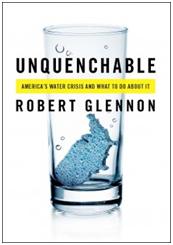 I attended an interesting lecture on Thursday, part of the University’s Edwin Way Teale lecture series on the environment. Normally these lectures do not tend, shall we say, to take perspectives that O&M readers would find congenial. But this lecture, by Robert Glennon of the University of Arizona Law School, was interesting along a number of dimensions. The talk was based on his book Unquenchable: America’s Water Crisis and What To Do About It. Here is the abstract:
From manufactured snow for tourists in Atlanta to trillions of gallons of water flushed down the toilet each year, Dr. Robert Glennon reveals the heady extravagances and everyday inefficiencies that are sucking the nation dry. The looming catastrophe remains hidden as the government diverts supplies from one area to another to keep water flowing from the tap. But sooner rather than later, the shell game has to end. And when it does, shortages will threaten not only the environment, but every aspect of American life. America must make hard choices — and Glennon’s answers are fittingly provocative. He proposes market-based solutions that value water as both a commodity and a fundamental human right.
The talk was interesting not only in that I learned a few things about the screwed-up water system in the U. S. (the broad contours of which I was vaguely familiar with) but also in that it presented an interesting case study in rhetoric. Glennon spent most of the talk revving up the environmentalist crowd, with lots of show and tell about the effects of bad water policy and a tour through various command-and-control policies that environmentalists might think of to fix the situation. (He even paused to make fun of Ann Coulter’s claim that the flush toilet is man’s greatest invention.) But Glennon’s bottom line, revealed at the very end, is that the only thing that will fix the problem is properly assigning property rights and trading those rights on markets. This was the conclusion I was expecting, not only because of the abstract but also because Glennon has an NBER Working Paper with Gary Libecap. Maybe this is the way to go in selling market-based solutions.
Quote of the Day: Bartley on the Marketplace of Ideas
| Peter Klein |
I happened to be looking today through Unfathomed Knowledge, Unmeasured Wealth by W. W. Bartley, III, who passed away shortly after this book was published. Bartley, a student and colleague of Karl Popper and the Founding Editor of The Collected Works of F. A. Hayek, was a brilliant and penetrating thinker whose work is not very well known outside of a few professional circles. Unfathomed Knowledge, a book about higher education (with the subtitle “On Universities and the Wealth of Nations”), was written for a general audience and is full of insights about the crazy business of academia. Here’s one passage:
Analogies have often been drawn between a free market in ideas and free markets in goods and services. Yet intellectuals tend to dislike such comparisons. They see the free market in ideas as something on a higher plane, qualitatively different from free markets in commodities and the like. Many of them indeed even hate the marketplace as traditionally conceived, and would want nothing to do, even analogically, with a free market in coal, housing, fish, or petroleum.
Take a few examples. Several scholars, including Edward Shils, of the University of Chicago, strongly protested the analogy when it was drawn by Michael Polanyi at the Congress for Cultural Freedom. One called Polanyi’s comparison between free markets in goods and in ideas “clever but questionable” in that a man who offers commodities in the free market “is not bound by anything” whereas in science one is bound to an objective method. Shils added that members of the scientific community, by contrast to businessmen and traders, act in accordance with overriding standards, a “common law” above and beyond individuals.
Such a position does not withstand examination. Someone offering commodities in a market — far from being “not bound by anything” — is governed by enforceable law relating to fraud, credit, contract and such like. The analogy does have limits, but of a different sort: in the marketplace of ideas, fraud, plagiarism, theft, false advertising (including false claims to expertise and the whole mystique of expertise), “conspiracies of silence,” casual slander and libel, breach of contract, deceit of all sorts are more common than in business — simply because there are few readily enforceable penalties against offenders, whereas “whistle-blowers” are severely punished. This is so especially in those areas (the humanities, social sciences, the arts — as opposed to the profitable fields) where the transaction costs of enforcing such things as property rights, priority claims, or even accurate report5ing usually outweigh the advantage in doing so, and where the transaction costs of trying to defend oneself against such things as slander are prohibitive.
New Issue of QJAE
| Peter Klein |
The new issue of the Quarterly Journal of Austrian Economics (volume 12, no. 3) has several papers of likely interest to O&Mers. For instance:
Jack High, “Entrepreneurship and Economic Growth: The Theory of Emergent Institutions”
This paper enlarges Menger’s theory of the origins of money by making explicit the role of entrepreneurship in the theory and by extending the theory to market institutions other than money. Drawing on the research of anthropologists, archaeologists, and historians, the paper considers the origins of three institutions that underlie economic growth — the division of labor, monetary accounting, and private property. Menger’s generalized theory of the origins of institutions is used to interpret each of these institutions.
Laurent A.H. Carnis, “The Economic Theory of Bureaucracy: Insights from the Niskanian Model and the Misesian Approach”
Governmental interventions in the economy take numerous forms, and they require the existence of a public authority, a bureaucracy, to implement them. This article proposes an analysis of the origins and the dynamics of bureaucracy, and discusses means of escaping bureaucracy’s disadvantages. I will proceed by means of a comparison between the theories of Niskanen and Mises, two impressive and very representative works from the Public Choice School and the Austrian School of economics. Although Mises and Niskanen share a common analysis of the defect of bureaucratic management, there are strong disagreements between the two authors about the reasons for the existence of bureaus and about their functioning and their deficiencies. Inevitably, the means proposed by Niskanen and Mises for escaping the disadvantages of bureaucracy are different and cannot be reconciled.
Stuck on the Methodological Hamster Wheel
| Craig Pirrong |
I’ve read John Cassidy’s New Yorker article (not available online) in which he described his journey to the freshwater provinces in his attempt to see whether the financial crisis had caused Chicago economists to reject their reactionary views. (With one exception, the answer is blessedly “no.”) I’ve also read his paean to Pigou in the WSJ. So I pretty much knew what to expect when I picked up his How Markets Fail. Let’s say I wasn’t disappointed, in the sense that my very low expectations were met.
The book is a very conventional, Stiglitz-esque critique of market economics and those who defend markets. The latter are always described with Homer-esque modifiers, just so you’ll know that they [we!] are retrograde knuckle draggers. (more…)
ISNIE 2010 Call for Papers
| Peter Klein |
The Call for Papers is out for the International Society for New Institutional Economics’s 2010 meeting, 17-19 June in Stirling, Scotland. Proposals are due 1 March. President-Elect Frank Stephen is putting together an impressive program with keynotes from Bruno Frey and two longtime ISNIE members you may have heard of: Elinor Ostrom and Oliver Williamson. Don’t miss it!
Corporations Are People Too
| Craig Pirrong |
Legally, in some respects, anyways. That was a key issue in the recent Supreme Court decision re McCain-Feingold (see Dick’s post). I don’t have a lot to say about the specifics of the decision, as campaign finance law is way too arcane for me. Suffice it to say that I am inherently skeptical about any regulation regarding elections designed by incumbent politicians. People yammer about conflicts of interest all the time, but there’s a colossal one for you.
I just wanted to make a quick point about a debate between Stevens and Scalia carried out in the opinion and the dissent. Stevens noted that the Founders were deeply skeptical of corporations. Indeed so. Scalia noted that there are so many corporations today. Also true. The interesting question is how we got from A (Stevens) to B (Scalia).
The story is told in the North, Wallis and Weingast natural-state book Violence and Social Orders I’ve blogged about several times over at Streetwise Professor, mostly in the context of Russia. The relevant chapter is primarily based on John Wallis’s work. The basic story is that hostility to corporations — reflected very well in Adam Smith’s Wealth of Nations — was due to the fact that historically, English corporations were created by the crown, and were essentially very profitable favors provided to the politically connected. They were, in NWW terms, part of the “closed order” of the natural state, in which access to certain contracting forms was limited to a select powerful few. This animus towards corporations was inherited in the United States, but in the early years of the 19th century, state legislatures confronting issues associated with the financing of new infrastructure turned the corporate form into a prop of an open-order system in which this contracting form was made available to all. Rather than limit the right of incorporation to an elite, they made it available to everybody. The system changed from one in which legislatures had to grant every incorporation, to one in which pretty much anybody could incorporate if they met a set of general, universally applicable requirements. Hence, the proliferation of corporations. (more…)
Josh Lerner on Public Policy Toward Entrepreneurship
| Peter Klein |
Speaking of public entrepreneurship, here’s an interview with Josh Lerner about his new book Boulevard of Broken Dreams: Why Public Efforts to Boost Entrepreneurship and Venture Capital Have Failed — and What to Do About It (Princeton, 2009). Excerpt:
There are two well-documented problems that can derail government programs to boost new venture activity. First, they can simply get it wrong: allocating funds and support in an inept or, even worse, a counterproductive manner. Decisions that seem plausible within the halls of a legislative body or a government bureaucracy can be wildly at odds with what entrepreneurs and their backers really need. . . .
Economists have also focused on a second problem, delineated in the theory of regulatory capture. These writings suggest that private and public sector entities will organize to capture direct and indirect subsidies that the public sector hands out. For instance, programs geared toward boosting nascent entrepreneurs may instead end up boosting cronies of the nation’s rulers or legislators. The annals of government venturing programs abound with examples of efforts that have been hijacked in such a manner.
Thanks to Ross Emmett for the tip.
Do Top Scholars Make the Best University Leaders?
| Peter Klein |
Yes, says Amanda Goodall here and here. Here’s a summary and here’s some commentary. Her argument is based on inside knowledge, the ability to set appropriate standards, signaling, and legitimacy. Signaling strikes me as the most plausible (non-academic administrators may not have knowledge or legitimacy but they can hire subordinates who do). I haven’t studied the work carefully, however. Kudos to Goodall for tackling an important subject.
Her Vox article singles out economist-administrators for special mention. They seem to be doing quite well, Larry Summers notwithstanding.
Public Entrepreneurship
| Peter Klein |
Joe Mahoney, Anita McGahan, Christos Pitelis, and I have written a paper, “Toward a Theory of Public Entrepreneurship,” exploring the application of concepts, theories, and approaches from the entrepreneurship literature to non-market behavior. We argue that governments, government agencies, social enterprises, charitable organizations, and other “public” actors can be described as being alert to opportunities for value creation and capture, exercising judgment over the deployment of resources under uncertainty, introducing technological and organizational innovations, and so on. These actors are, in a sense, “public entrepreneurs.” This characterization also helps highlight critical differences between private and public actors and organizations, differences relating to the definition and measurement of objectives, the ability to evaluate performance, the nature of external governance, and, of course, the role of coercion. The paper is very much an exploratory effort in this area, and we certainly welcome comments and suggestions.
Here’s the abstract:
This paper explores innovation, experimentation, and creativity in the public domain and in the public interest. Researchers in various disciplines have studied public entrepreneurship, but there is little work in management and economics on the nature, incentives, constraints and boundaries of entrepreneurship directed to public ends. We identify a framework for analyzing public entrepreneurship and its relationship to private entrepreneurial behavior. We submit that public and private entrepreneurship share essential features but differ critically regarding the definition and measurement of objectives, the nature of the selection environment, and the opportunities for rent-seeking. We describe four levels of analysis for studying public entrepreneurship, provide examples, and suggest new research directions.
The Age of Constructivism
| Craig Pirrong |
I am reading Vernon Smith’s Rationality in Economics. I highly, highly recommend it. Largely a homage to Hayek, it explores the implications of Hayek’s distinction between constructivist rationality and what Smith relabels ecological rationality. It contains a wealth of methodological and substantive insights. Smith is knowledgeable and thoughtful. He is almost John Stuart Mill-like in his even handed and fair characterizations of competing views, even those he disagrees with. He integrates experimental economics, game theory, institutional economics, neoclassical economics, neurology, and much, much more.
What fascinates Smith is the ineffable process by which an ecologically rational order emerges from the actions of myriad imperfectly informed and incompletely rational (in the constructivist sense) individuals. This process — a sort of economic transubstantiation — is the most fascinating economic mystery. It is also, alas, one that has received far too little attention from economists whose formal tools permit them to analyze (constructively) equilibrium, but which are virtually powerless to analyze the process of getting there; the proverbial drunks looking for their keys under the lamppost.
We live in an era of constructivism regnant. In health care and finance, especially, constructivist schemes will reshape for better or worse — and almost certainly worse — vast swathes of the American economy. What’s more troubling still, this is constructivism refracted through the flawed lens of politics and public choice. Appreciation of the emergent order, the ecologically rational, is sadly rare. Vernon Smith appreciates it, deeply, with an almost religious sense of awe. Read his book and you will appreciate it too.
Robert Sugden
| Nicolai Foss |
I have become a huge fan of Robert Sugden, an economics Professor at the University of East Anglia and one of the most cited UK economists. Readers of this blog may know Sugden’s work from, for example, his excellent 1986 book, The Economics of Rights, Co-operation, and Welfare, as well as his papers on spontaneous order (e.g., here or here). Much of Sugden’s research lies in the zone of overlap between game theory (mainly experimental game theory and coordination games) and moral and political philosophy, and he is engaged in a constant dialogue with scholars in, or associated with, the classical-liberal tradition, such as Hume, Mill, and Hayek. He is the rare economist who, like Frank Knight, manages to publish in American Economic Review as well as in Ethics.
I am reading through Sugden’s recent publications and recommend the following as being of particular interest to the O&M readership:
- “Can Economics Be Founded on “Indisputable Facts of Experience”? Lionel Robbins and the Pioneers of Neoclassical Economics” — An attack on Robbins’ Essay that may also challenge followers of praxeology.
- “Fraternity: Why the Market Need Not Be a Morally Free Zone“(with Luigino Bruni) — Drawing on the work of a contemporary of Adam Smith, Antonio Genovesi, Sugden and Bruni criticize the idea (reflected in, e.g., Williamson’s distinction between “trust as calculative risk” and “trust proper”) that one can make a distinction between market relationships and genuinely social relationships. Market relationships also have elements of joint intentions for mutual assistance.
- The basis for the latter point can be found in “The Logic of Team Reasoning” which is a case for placing agency at the level of teams, specifically those teams that make use of team reasoning. The basic idea is that when team members reason in this way, they consider which combinations of actions will best promote the team objectives, and choose actions accordingly.
- If the above sounds at variance with classical liberalism (which I don’t think it necessarily is), check out Sugden’s criticism of Thaler and Sunstein (here) or his various critical discussions of the notion of “opportunity” in welfare economics (Sen, Cohen, Roemer) (e.g., here) which are all in the mainstream of classical-liberal thought.
A Piece on Financial Derivatives Regulation in FT Alphaville
| Craig Pirrong |
FT Alphaville, one of the Financial Times’ blogs, kindly asked me to contribute a guest post on the financial-markets regulation legislation currently working it’s way through Congress. (Thanks, Stacy-Marie.) Here’s what I wrote:
Lawmakers in DC are due to resume debate on major financial-reform legislation currently working its way through the US House of Representatives. One closely watched aspect of that debate is sweeping overhaul of over-the-counter derivatives markets. Lawmakers are pushing to mandate that most derivatives be centrally cleared and traded either on exchanges or swap execution facilities. Professor Craig Pirrong of the University of Houston discusses some of the proposals.
In attempting to impose standardization on the ways that derivatives are traded, and derivatives counterparty risks are managed and shared, the legislation reflects a one-size-fits-all mentality (not to say fetish) that is sadly typical of most legislative attempts to construct markets. These standardization directives fail to recognize that market participants are diverse, with diverse needs and preferences, and that as a consequence, it is desirable to have diverse trading mechanisms to accommodate them. (more…)
War, Taxes, and Doux Commerce
| Dick Langlois |
Uwe Reinhardt, a health economist at Princeton, is eminently familiar with the idea of moral hazard. In a recent blog in the New York Times, he applies the idea to war. “If the monetary and the blood cost of war are shifted mainly to citizens other than the elites who are empowered to declare war and decide how it is conducted,” he writes, “then that elite is more likely to embrace war and to spend on it.” (I’m sure others have said this before, though I’ll rely on my colleagues and readers to supply the cites. Bob Higgs?) Reinhardt points out that, rather than raise taxes to pay for war, Bush cut taxes after entering Afghanistan. This had the effect of hiding the cost and pushing the financing into deficit spending, which is less easy for voters to detect. Those of us of a certain age remember how Lyndon Johnson, with the acquiescence of the Fed, financed Vietnam (and his domestic programs) largely through inflation. Apparently, some in Congress are calling for a law that would require a tax surcharge whenever war is declared.
As I say, these ideas may already be familiar to O&M readers and may even have been touched on in previous posts. But the Reinhardt piece reminded me of an idea I’ve been playing with for a long time. There is a large literature on the doux commerce thesis (see especially Albert Hirschman): the idea that increasing trade and wealth (increasing capitalism, if you will) leads to less violent and warlike societies. Oversimplifying more than a bit, the idea is that increased wealth increases the opportunity cost of war and violence. Maybe this is already in Hirschman or elsewhere, but it seems to me, however, that there must be not just a substitution effect but also an income effect. Higher GDP increases the opportunity cost of war on average (even if, as Reinhardt points out, not necessarily for the elites). At the same time, however, a wealthier society is more able to buy more war, all other things equal. Someone with the wherewithal might try to see which effect is more important by using cross-country historical data sets in the Acemoglu-Johnson-Robinson vein. If you ever run into somebody doing that sort of thing, remember that you heard it here first.
Lynch ‘Em
| Craig Pirrong |
I’ve had several calls from reporters asking my opinion on the Lynch Amendment to Barney Frank’s derivatives-regulation bill. For some reason, Forrest Gump pops into my head every time that question is asked. You know, the part where he says “stupid is as stupid does.”
As I am sure you all know, the amendment, introduced by New Jersey representative Stephen Lynch, imposes restrictions on the ownership and control of the clearinghouses that the Frank bill will require the vast bulk of derivatives to be traded through. The amendment imposes similar restrictions on ownership of exchanges and swap execution facilities.
Specifically, the amendment defines a class of “restricted owners” that includes swap dealers and major swap participants, and limits the amount of a clearinghouse (or execution facility or exchange) that these restricted owners can own or control collectively to 20 percent. The justification for this limitation is to reduce conflicts of interest, the specific nature of which are not identified.
This represents yet another example of Congressional micromanagement of the organization and governance of financial institutions. In my view, it is incredibly wrong-headed. (more…)





 Organizations and Markets

Recent Comments