Posts filed under ‘– Klein –’
Keynesian Anti-Economics
 | Peter Klein |
A reader objected to my recent portrayal of Keynes as a crank, as a man who never really studied economics or took it very seriously. Note that I never denied Keynes’s intellect, his great skill as a rhetorician, or his personal charm. But Keynesian economics is, in a sense, non-economics or even anti-economics, in that it ignores or contradicts many basic lessons about the allocation of scarce resources among competing ends. Mario Rizzo feels the same way:
Keynesianism is not concerned with the allocation of resources and related niceties. One can see this is the policy prescriptions of the stimulators. Just get people back to work. If a market is depressed: Prop it up. Labor, other resource-owners and entrepreneurs need to stop worrying about searching for the appropriate use of resources. Bankers have to stop fretting about to whom they should lend. They should abandon their ultra-restraint. Those who are holding money should invest; they should buy bonds. No need to worry about inflation because the potential output of “stuff” (however it is allocated across industries) is above the actual less-than-full-employment output.
Where did my microeconomics go?
Keynes and his followers proudly trumpeted his framework as a re-do of standard economics (what he called “classical,” though Keynes was not well versed in the history of economic thought). Standard economics is OK during periods of “full employment” (another aggregate concept, of course), but not in the “general” case, in which case the Keynesian magic comes into play. Credit expansion, according to Keynes, performs the “miracle . . . of turning a stone into bread.” As Mises noted, “Great Britain has indeed traveled a long way to this statement from Hume’s and Mill’s views on miracles.”
My Career in One Sentence
| Peter Klein |
Geoff Manne to me and others: “The Intel-AMD settlement, over an alleged Sherman Act Section 2 violation, seems to violate Section 1 of the same act. I’ve written an informed and thoughtful blog post on this. What do you think?”
Me: “This is further evidence that antitrust law is inherently contradictory, that the enforcement system is irretrievably broken, and that antitrust laws should be ditched entirely. Is that flippant?”
Geoff: “Just because it’s flippant doesn’t mean it isn’t true!”
What Would Peter Say?
| Peter Klein |
 Peter Drucker, that is. The great management guru died in 2005 — and even then, he didn’t blog, unlike some other guys named Peter. If Drucker were alive today, what would he say about the financial crisis, health-care reform, climate change, and the other Big Issues of our day? Rosabeth Moss Kanter asks in the current issue of HBR, and thinks Drucker’s writings have important lessons for today’s problems. E.g.:
- Drucker would not have been surprised that incentives to take excessive risks contributed to the recent global financial meltdown. Back in the mid-1980s, he warned about a public outcry over executive compensation — a main theme on the U.S. government’s agenda following the fall of banks in 2008.
- Years ago, he warned of troubles ahead if GM executives remained stuck in memories of previous successes and failed to ask his famous “what to stop doing” question. GM was an iconic example of failure to see the need for significant innovation; its structure had become ossified, and its top management couldn’t consider a change.
- He focused on how organizations could best achieve their purpose, not on business per se or on profit as the main indicator of success. He championed a robust civil society of voluntary nonprofit organizations as an essential foundation on which business could thrive and people could prosper, because this sector plays a vital role in promoting health, education, and well-being. The role of government is fuzzier in Drucker’s writings, although it is clear that he mistrusted centralization of power and saw bureaucracy as a source of rigidity rather than innovation.
I hadn’t known before that Drucker’s father was friends with Schumpeter, often described as a major influence on Drucker’s thinking. “Regular guests of the Druckers included the economists Schumpeter, Hayek and Mises, with whom Drucker’s father had business relations in his function as director of the K.& K. trade museum,” according to Drucker’s official biography. Unfortunately the young Drucker was more attracted to Othmar Spann, described by Mises as an “anti-economist.”
The Amazing Krugman
| Peter Klein |
The man indeed has a unique talent, as described here by the witty and clever Steve Landsburg:
It’s always impressive to see one person excel in two widely disparate activities: a first-rate mathematician who’s also a world class mountaineer, or a titan of industry who conducts symphony orchestras on the side. But sometimes I think Paul Krugman is out to top them all, by excelling in two activities that are not just disparate but diametrically opposed: economics (for which he was awarded a well-deserved Nobel Prize) and obliviousness to the lessons of economics (for which he’s been awarded a column at the New York Times).
It’s a dazzling performance. Time after time, Krugman leaves me wide-eyed with wonder at how much economics he has to forget to write those columns.
The subject is Krugman’s latest proposal to combat unemployment, namely laws making it harder to fire workers, which of course increases the cost of labor, leading firms to hire less of it, increasing unemployment.
Fed Independence and Comparative Institutional Analysis
| Peter Klein |
I’ve written before on Fed “independence” and why I don’t support it. The vast majority of economists, especially the more prominent ones, are strongly in favor of independence and against Congressional attempts to limit the Fed’s discretion in monetary and regulatory policy. The standard argument is that a “politicized” — i.e., accountable — central bank will be more expansionary than an unaccountable central bank, assuming that credit expansion affects output first and prices (inflation) second. Last week’s piece by Kashyap and Mishkin follows this script. On the face of it, this seems absurd, as — to take only the most obvious example — the Greenspan-Bernanke “independent” Fed has been the most expansionist in modern history, with a ballooning money supply throughout the 2000s and near-zero interest rates and injections of giggledysquillions of dollars into the banking sector in the last 18 months. The independence crowd cites cross-country studies finding a negative correlation between central-bank independence and inflation, but these studies are controversial (many problems with reverse causation, omitted variables, sample size, etc.).
My question today is different: Where, in those arguments, is the comparative institutional analysis? After all, in policy analysis, we are always comparing imperfect alternatives. We try to avoid the Nirvana fallacy. Craig does this in his post below, asking if a centralized financial regulator would be less bad than the competing regulatory bodies we have today.
But the macroeconomists entirely ignore this problem. Consider Mark Thoma’s defense of independence:
The hope is that an independent Fed can overcome the temptation to use monetary policy to influence elections, and also overcome the temptation to monetize the debt, and that it will do what’s best for the economy in the long-run rather than adopting the policy that maximizes the chances of politicians being reelected.
This naive wish is simply that, a hope. Where is the argument or evidence that a wholly unaccountable Fed would, in fact, “do what’s best for the economy in the long-run”? What are the Fed officials’ incentives to do that? What monitoring and governance mechanisms assure that Fed officials will pursue the public interest? What if they have private interests? Maybe they’re motivated by ideology. Suppose they make systematic errors. Maybe they’ve been captured by special-interest groups like, oh, I don’t know, the banking industry (duh). To make a case for independence, it is not enough to demonstrate the potential hazards of political oversight. You have to show that these hazards exceed the hazards of an unaccountable, unrestricted, ungoverned central bank. The mainstream economists totally ignore this question, choosing to put a naive faith in the wisdom of central bankers to do what’s right. Guys, have you never heard of public-choice theory?
Incentives Matter, Football Helmet Edition
| Peter Klein |
Latest example of the Peltzman Effect, courtesy of the WSJ: “Is It Time to Retire the Football Helmet?” E.g.: “[W]hile [hard-shell] helmets reduced the chances of death on the field, they also created a sense of invulnerability that encouraged players to collide more forcefully and more often.” Economics teachers, if you’re tired of using the seat-belt example, or the one about airplane child-safety seats — or Dwight Lee’s slightly more risqué version — try this one instead.
Cochrane on Krugman
| Peter Klein |
John Cochrane tackles Paul Krugman’s infamous essay (via Casey Mulligan). My own view of the crisis (and of macroeconomics) is different from Cochrane’s, but his skewering of Krugman is delightful, and there are many nuggets of wisdom. A few snippets:
Crying “bubble” is empty unless you have an operational procedure for identifying bubbles, distinguishing them from rationally low risk premiums, and not crying wolf too many years in a row. . . . This difficulty is no surprise. It’s the central prediction of free-market economics, as crystallized by Hayek, that no academic, bureaucrat or regulator will ever be able to fully explain market price movements. Nobody knows what “fundamental” value is. If anyone could tell what the price of tomatoes should be, let alone the price of Microsoft stock, communism and central planning would have worked. . . .
[T]he economist’s job is not to “explain” market fluctuations after the fact, to give a pleasant story on the evening news about why markets went up or down. Markets up? “A wave of positive sentiment.” Markets went down? “Irrational pessimism.” ( “The risk premium must have increased” is just as empty.) Our ancestors could do that. Really, is that an improvement on “Zeus had a fight with Apollo?” . . . (more…)
The MSM Rediscovers the Classics
| Peter Klein |
The rediscovery of Keynes is one of the official storylines of the financial crisis and global recession. The problem is that Keynes was, in my judgment, a charlatan, a clever man obsessed with his own cleverness who never paid serious, thoughtful attention to economics (or any subject). You have to learn a little about Keynes to be well-educated and — because of his vast influence — to understand contemporary macroeconomic thought, but otherwise there is little intrinsic value in his writings.
Happily, the mainstream media is rediscovering other writers too. Last week the WSJ ran a nice piece on Mises, “The Man Who Predicted the Depression,” focusing on Mises’s 1912 Theory of Money and Credit (the book dismissed by Keynes as unoriginal, with Keynes admitting, a few years later, that he understood German well enough to comprehend things he already knew, but not to grasp anything new). “With interest rates at zero, monetary engines humming as never before, and a self-proclaimed Keynesian government, we are back again embracing the brave new era of government-sponsored prosperity and debt,” writes Mark Spitznagel. “And, more than ever, the system is piling uncertainties on top of uncertainties, turning an otherwise resilient economy into a brittle one. . . . How curious it is that the guy who wrote the script depicting our never ending story of government-induced credit expansion, inflation and collapse has remained so persistently forgotten.” Yesterday, Reuters ran Rolfe Winkler’s piece urging readers to study Mises and Hyman Minsky while Investor’s Business Daily featured an item on Schumpeter.
Today, Don Sull’s Financial Times column focuses on Frank Knight, whom Sull calls “an American Socrates.” (OK, it’s a blog, not a column, and Sull is a management professor at LBS, not some hack journalist, but you get the point.) “In these unsettled times,” Sull writes, “it worthwhile revisiting the contribution of Frank Knight, an economist who was among the earliest and most penetrating analysts of what uncertainty and risk meant, and how they influenced a firm’s ability to make a profit.” Knight is one of the greats, a brilliant and idiosyncratic thinker who could be spectacularly right (on profit) and spectacularly wrong (on capital). Sull’s blog entry today is a teaser, with a promised follow-up to deal more specifically with the risk-uncertainty distinction (my take is here). Watch for it!
No Required Ethics Course at Chicago-Booth
| Peter Klein |
Bucking the trend, the Chicago-Booth MBA program will not offer required courses in business ethics (via Cliff). The school “has no set standard for ethical case studies used in the classroom,” according to Executive Director of Faculty Services Lisa Messaglia,”but leaves it up to faculty, instead.”
[T]he business school is disciplined-based, meaning that classes are divided by disciplines such as sociology or psychology, rather than by industries. As a result, she said, professors may use different examples in their lectures, but Chicago Booth “[doesn’t] change required classes based on trends in the economy.”
I’m not keen on the way ethics is taught in most business schools so I’m sympathetic to the Chicago position. Some previous O&M posts on teaching ethics are here, here, here, here, here, and here.
The Guest Bloggers Are Dead; Long Live the Guest Blogger!
| Peter Klein |
Today we say thanks, and farewell, to guest bloggers Russ Coff and Glenn MacDonald for their thoughtful and provocative posts (archived here and here), and we welcome Craig Pirrong as our newest guest blogger. Craig is Professor of Finance and Energy Markets Director of the Global Energy Management Institute at the Bauer College of Business, University of Houston. He has also taught at Michigan, Washington University, and Chicago (where he got his PhD in 1987, working under Lester Telser). Craig’s work lies at the border of financial economics and industrial organization, and he has written extensively on financial and commodity markets, derivatives, energy, and the organization of exchange institutions, among other topics. Transaction cost economists will remember his influential 1993 paper on bulk shipping, which developed the concept of “temporal specificity,” and his 1995 paper on commodity exchanges. He also blogs at Streetwise Professor.
Thanks again, Russ and Glenn, and welcome, Craig!
CFP: International Perspectives on Corporate Governance
| Peter Klein |
Posted on behalf of Alex Padilla:
CALL FOR PAPERS
Journal of Private Enterprise &
Association for Private Enterprise EducationSymposium on Corporate Governance: International Perspectives
Guest Editors: Alexandre Padilla, Nishat Abbasi, and Pierre Garello
Metropolitan State College of Denver & University Paul CézanneAssociation for Private Enterprise Education International Conference
Las Vegas, Nevada, April 11-13, 2010The Journal of Private Enterprise in collaboration with the Association for Private Enterprise Education, The School of Business at the Metropolitan State College of Denver, and the Centre d’Analyse Economique of the Université Paul Cézanne invite you to submit a proposal to present a paper at the Association for Private Enterprise Education International Conference. Proposals are due by November 20th. We want to have two sessions: one addressing issues of Corporate Governance in the America and another one addressing issues of Corporate Governance in Europe, Asia, Africa. We welcome papers written from an accounting, economics, finance, historical, philosophical, and political science perspectives. (more…)
Coasean Humor
| Peter Klein |
The grad students in my department recently cleaned up their student lounge. Some wag, remembering a line from my course — Coase’s famous dismissal of the “old” institutional economists — tagged a stack of papers thusly:

Citation Format Pet Peeve
| Peter Klein |
Many thanks to June Flanders for expressing, on the HET listserv, one of my own pet peeves about citation formats: using the reprint date, rather than the original date, in the in-text citation:
At the risk of sounding school-marmerish I should like to raise an issue that has been bothering me for a long time, and which reached a crisis point this afternoon. . . .
The issue is the dating of citations in papers and books on the basis of their most recent publication. As a result of this, generations of students undoubtedly think that Ricardo wrote The High Price of Bullion in 1956, and Keynes wrote The General Theory in 1973, etc. What broke my camel’s back today was a citation in an NBER paper that cited “Tacitus, Cornelius (1996). The Annals of Imperial Rome. New York: Penguin.” Not every reader of that paper (though, of course, every reader of this letter) will know that this is off by some 2,000 years.
I prefer the simplest solution, namely putting “Smith (1776)” in the text and specifying the particular edition in the bibliography entry, e.g.:
Smith, Adam. 1776. An Inquiry Into the Nature and Causes of the Wealth of Nations. Indianapolis: Liberty Fund, 1981.
Some people like to write the in-text citation, and maybe the bibliography entry too, as “Smith ([1776] 1981),” but I find that cumbersome. In any case, putting the original publication date in the text lets the experienced reader know, immediately, what is being referred to. In my field everybody knows Smith (1776), Menger (1871), Coase (1937), Mises (1949), Porter (1980), etc. It’s a nuisance having to flip to the back to find that “Menger (1981)” is Menger’s Grundsätze (the NYU Press edition). While I’m reading the article or book in question, I don’t care if the writer was referring to the original hardbound edition or the paperback edition or the large-print edition or the books-on-tape edition or whatever. If I want to check page numbers, then I flip to the back to find out what edition was used, but otherwise I breeze right along. Simple enough?
CFP: “Institutions in Economic Thought”
| Peter Klein |
That’s the theme for the next meeting of the Charles Gide Association for the Study of Economic Thought (ACGEPE), to be held at the University of Paris Panthéon-Sorbonne, 27-29 May 2010. Steve Medema, Malcolm Rutherford, and O&M friend Claude Ménard are the keynote speakers. Proposal deadline is 27 November. Details here.
Teaching Large Classes
| Peter Klein |
Advice on teaching large introductory classes, from a Facebook friend of a Facebook friend:
Stick with the stories! Walter Heller made it all the way through introductory macro at Minnesota entirely on stories from his days in the Kennedy Administration. I don’t recall him actually mentioning the word macroeconomics for the entire quarter. The class was so large a woman choked in the back without anyone noticing.
Sidak and Teece on Dynamic Competition
| Peter Klein |
A “neo-Schumpeterian” framework for antitrust analysis that favors dynamic competition over static competition would put less weight on market share and concentration in the assessment of market power and more weight on assessing potential competition and enterprise-level capabilities. By embedding recent developments in evolutionary economics, the behavioral theory of the firm, and strategic management into antitrust analysis, one can develop a more robust framework for antitrust economics.
Via Truth on the Market (where my colleague Mike Sykuta has joined the blogging team). On a related note, see Jesús Huerta De Soto’s Theory of Dynamic Efficiency. It was a pleasure meeting De Soto at last week’s fantastic Mises conference in Salamanca, where he spoke on dynamic efficiency (based on the book’s first chapter). You have to love medieval university towns. We held our meetings in the Convent of San Esteban, including breakfast in the room where Christopher Columbus reportedly waited to hear if Queen Isabella would finance his little expedition West.
Multitasking
| Peter Klein |
I was flipping channels last night and came across a Jimi Hendrix biopic. Lots of concert footage, with Hendrix doing his usual amazing Hendrix things — singing, crazy guitar riffs, playing with his teeth. Then I noticed something I hadn’t seen before: He’s doing all this while chewing gum. How can he sing without choking or spitting it out? How does he pluck guitar strings with his teeth and not leave a big wad on the pickups? Some people have trouble walking and chewing gum at the same time. How is he doing this?
Naturally, this got me thinking about multitask principal-agent problems. I liked one article that appeared in 2005 but didn’t generate much attention: Besanko, Regibeau, and Rockett’s “A Multi-Task Principal-Agent Approach to Organizational Form” (Journal of Industrial Economics, December 2005). Multitasking has often been applied performance evaluation, specifically the use of objective versus subjective performance measures. (If the agent is assigned multiple tasks, only some of which are measurable, than a quantitative evaluation scheme biases the agent’s effort toward more easily measurable tasks.) Besanko et al. apply this logic to divisionalization, examining the choice between product-line and functional organization:
This paper studies the choice of organizational forms in a multi-task principal-agent model. We compare a functional organization in which the firm is organized into functional departments such as marketing and R&D to a product-based organization in which the firm is organized into product lines. Managers’ compensation can be based on noisy measures of product-line profits. Measures of a functional area’s contribution to total profits are not available, however. This effect favors the product organization. However, if there are significant asymmetries between functional area contributions to organizational success and cross-product externalities within functions, organizing along functional lines may dominate the product organization. The functional organization can also dominate when a function is characterized by strong externalities while the other is not.
An obvious example: university faculty who are tasked with research, teaching, and service. Research is (in principle) easy to measure: publications, citation counts, grants, speaking invitations, etc. Teaching and service outputs are fuzzier. Even well-intentioned administrators tend to reward what they can count, which means refereed journal articles (and, in some fields, grant dollars) end up being the primary performance metric. Need I point out what this does to teaching?
The same issue is explored in Williamson (1975, pp. 155-75), where the ability to reward division managers based on standalone, divisional profit figures is cited as an advantage of the M-form structure.
How Machiavellian Are You?
| Peter Klein |
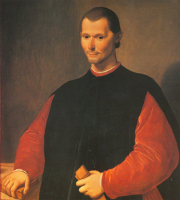 A test for university presidents, deans, department heads, center directors, etc. (via Anu).
(Yes, of course, there are management and leadership literatures on old Niccolò. Don’t act surprised!)
My Favorite New-Media Entrepreneur
| Peter Klein |
It’s Ben Huh, the brains behind FAIL Blog, Engrish Funny, and, of course, I Can Has Cheezburger. The best of the user-generated-content sites. Huh is profiled here in Fast Company. Interestingly, he’s a quant guy:
[W]e rely on the tools of the Internet — metrics and measurements and stuff like that — to help us decide what to post. We don’t have some guy somewhere deciding, “Oh, I think this it funny. I’m going to post it on the homepage.” That actually fails 50% of the time, because people are very bad at understanding what’s funny for other people. Everything we promote is there for a logical reason.
Sampling on the Dependent Variable: French Peasant Edition
| Peter Klein |
A useful example of the methodological flaw that plagues the “great companies” and “great leaders” literature in management, from Graham Robb’s excellent The Discovery of France (Norton, 2007):
[N]early every autobiographical account of ordinary life in eighteenth- and nineteenth-century France comes from the early chapters of memoirs written by exceptional men who rose through the ranks of the army or the Church, woo wrote their way to fame or who were plucked from obscurity by a patron, a lover or, eventually, an electorate. Few men and even fewer women had the means or the desire to write a book on “How I failed to overcome my humble origins.” Apart from the countless riches-to-riches tales written by aristocrats, almost all the lives that we know about follow the same untypical upward trend: the farmer’s son Restif de la Bretonne, the cutler’s son Diderot, the watchmaker’s son Rousseau, the Corsican cadet Napoleone Buonaparte.
These spectacular success are more typical of long-term trends than of individual lives. Categorical terms like “peasants,” “artisans,” and “the poor” reduce the majority of the population to smudges in a crowd scene that no degree of magnification could resolve into a group of faces. They suggest a large and luckless contingent that filled in the background of important events and participated in the nation’s historical development by suffering and engaging in a semblance of economic activity.
Likewise, business and entrepreneurial strategies can be understood by studying not only firms that tried them and succeeded, but also those that used the same strategies and failed. Reducing the majority of companies to smudges in an industry-wide or economy-wide crowd scene tells us little about what does and doesn’t work.





 Organizations and Markets
Recent Comments