Posts filed under ‘Strategic Management’
The Economic Organization of Disaster Relief
| Peter Klein |
J. Vernon Henderson and Yong Suk Lee have released a fascinating study of the make-or-buy decision in the provision of disaster relief. “We distinguish four organizational structures by implementation method. . . . (1) donor-implementers who are NGO donors who do their own implementation in villages, (2) international implementers who represent different donors who choose not to do their own implementation, (3) domestic implementers hired by donors which have chosen neither to do their own implementation nor to hire an international implementer, and (4) a country level governmental organization . . . used primarily by domestic and foreign governments.” Henderson and Lee find that donor-implementers offer the highest-quality aid, and the government agency the lowest, with the contract implementers in-between. The framework is agency theory, not transaction cost economics, but there may be a role for asset specificity as well, particularly in cases where a longer-term commitment is required. In any case, this is an interesting and important application of organizational economics to an unconventional setting.
More on Counterfeiting
| Peter Klein |
We asked in an earlier post if counterfeiting is good for business. Fakes may compete with the real thing, but having them around may also constitute free advertising that boosts demand for the original. Rubik’s Cube distributor Seven Towns Ltd. faces this conundrum, as a WSJ front-pager demonstrates:
One reason . . . a new generation of Rubik’s fanatics can solve the notoriously difficult puzzle in record time: They don’t use Rubik’s Cubes at all, instead substituting souped-up Chinese knockoffs engineered for speed.
The spread of these black-market cubes challenges the London-based company with a marketing brain teaser. Should Seven Towns crack down on the pirated toys? Or piggyback on the phenomenon of competitive speed-cubing?
I for one am happy to have all those cheap knockoffs of my articles and books flooding Chinese markets. Not everyone can afford a Klein® original, after all.
Strategy and Regulatory Uncertainty
| Peter Klein |
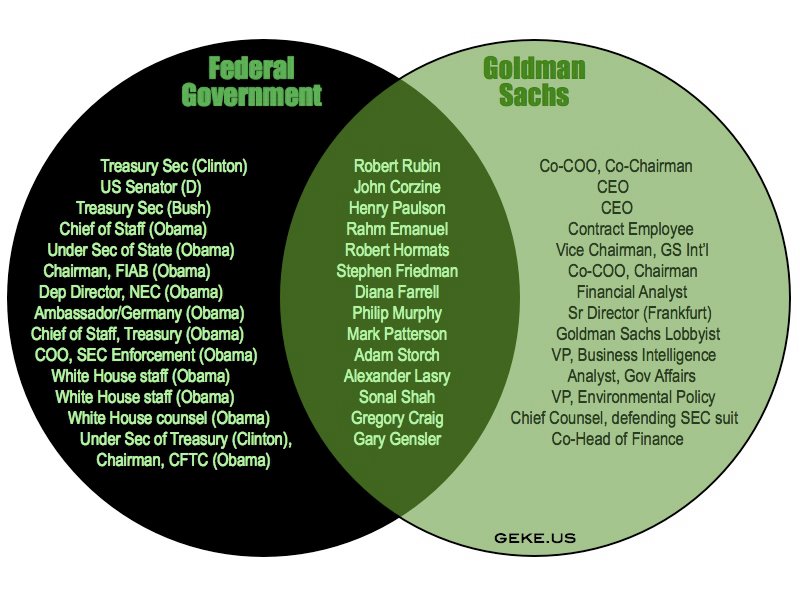
 The Fall 2011 issue of California Management Review is a special issue on “Environmental Management and Regulatory Uncertainty.” I don’t think the authors have been reading Robert Higgs but they nonetheless offer some interesting perspectives on nonmarket strategy and political entrepreneurship. I look forward to future issues on Enron and Goldman Sachs (is it yet considered a branch of the Federal government?).
Hotelling Model
| Peter Klein |
I often use the Hotelling model in class to illustrate the frequent clustering of firm and product characteristics. The example of firms locating on a street is boring, so I show the student’s Wired’s classic “Battle for Blue.” I think I’ll start using this one now (via Scott Rouse).

Is Jim Collins Reading O&M?
| Peter Klein |
 Über-guru Jim Collins has taken more than his share of hits here at O&M, mainly for lack of attention to experimental design (1, 2, 3). It appears that his new book, Great by Choice: Uncertainty, Chaos, and Luck: Why Some Thrive Despite Them All (Harper, 2011), finally tries to address this issue with an attempt at causal identification. If the dust-jacket blurb is to be believed, Great by Choice introduces to the Collins project the concept of treatment and control:
With a team of more than twenty researchers, Collins and Hansen studied companies that rose to greatness — beating their industry indexes by a minimum of ten times over fifteen years — in environments characterized by big forces and rapid shifts that leaders could not predict or control. The research team then contrasted these “10X companies” to a carefully selected set of comparison companies that failed to achieve greatness in similarly extreme environments.
This looks like a step in the right direction, but Collins is still selecting on the dependent variable — in a quasi-experimental design one normally chooses the treatment and control groups based on behaviors, not outcomes. (You don’t compare 100 healthy people to 100 sick people, you compare 100 smokers to 100 otherwise similar nonsmokers or 100 people on a medication to 100 similar people on a placebo to see which get healthy or sick.
For more, see Collins in the NYT or this interview from Knowledge@Wharton. I don’t have the actual book but I tried searching keywords from the Amazon “Look Inside,” and didn’t get any hits for “Knight,” “Schumpeter,” “dynamic capabilities,” or other appropriate key words, so I’m not expecting much theory here.
Are We Quacks?
| Lasse Lien |
Rich Bettis makes an important point in a forthcoming issue of SMJ. Bettis points out how two unfortunate practices interact with each other to create a very serious and fundamental problem for knowledge accumulation in (strategic) management.
One is the widespread practice of running numerous regressions on a given dataset and subsequently adapting (or in milder cases “tuning”) hypotheses or theory to fit the data. By itself this practice is quite unfortunate, since data patterns can and will occur by chance, and the more regression models one tries the more likely that one will “find” something. We obviously do not want such random patterns to influence either theory building or our catalog of empirical findings. However, this problem would be a great deal less serious if replication studies were common and we gladly published non-findings. Random correlations in the data would not survive replication tests, and would be eliminated fairly quickly.
As we all know, in management, replication studies cannot get published and are basically just not done. To make matters worse, we don’t publish non-findings either. This is the second unfortunate practice. Taken together these two practices may in the worst case indicate that much of what we think we know in management are just random data patterns, discovered through data mining, and protected by our lack of replication studies and refusal to publish non-findings. This is a sobering thought. As Bettis points out, we should all be very thankful that replication studies are more common in medical research than in management.
What is the solution? Well, a first step might be to launch the Journal of Managerial Replication Studies and give it the prestige it deserves. Either SMS or AOM should see the launch of such a journal as a crucial responsibility. I mean, we really don’t want to be quacks, do we?
HT: Helge Thorbjørnsen
Entrepreneurial Paradoxes and Simulations
| Peter Lewin |
Back from the SEA meetings in Washington DC, the venue for our annual SDAE conference and membership meeting. At the annual banquet we honored Leonard Liggio for his contribution to the teaching of Austrian economics. Dick Wagner gave the presidential address. Both received a standing ovation.
The panels were well attended and, from what I could tell, the quality very high. I presented my paper on Entrepreneurial Paradoxes (which has been around for a while). Young Bak Choi commented on it and presented an interesting paper on the role of entrepreneurship in economic development and development policy. David Harper and Anthony Endres presented a paper on another variation on the theme of heterogeneous capital and its structure. Perhaps most interesting was a paper by a strategic management Ph.D candidate at York University, Mohammad Keyhani (co-authored with Moren Lévesque), on “The Role of Entrepreneurship in the Market Process: A Simulation Study of The Equilibrating and Disequilibrating Effects of Opportunity Creation and Discovery.” Randy Holcombe commented. Interesting that the issue of equilibration is considered important enough to investigate with simulations. But it raises some important questions. My own current view, having spent a lifetime contemplating the issue, is that we are no nearer an answer than we ever were, and that perhaps the more important distinction is between entrepreneurial actions that add value and those that do not.
Next year’s meetings will be in New Orleans. The president-elect of the SDAE is Larry White. He will be putting together the panels. So if you have an interest in presenting a paper, discussing one, or chairing a panel, let him know (lwhite11@gmu.edu).
A Turkey of a Thanksgiving Post
| Peter Klein |
 Many US bloggers try to post something clever on Thanksgiving about religious freedom, agricultural productivity, colonialism, property rights, immigration, etc. We’ve done it ourselves. But this year I thought I’d share something different: nerdy academic stuff about — what else? — the economic organization of the turkey industry. Tomislav Vukina’s 2001 paper on vertical integration in poultry is instructive. For example:
The pattern of vertical integration is less uniform in the turkey industry than in the broiler industry. A turkey company is less likely to own its own hatchery but is more likely to have company owned production farms (Martin et al. 1993). There is also more variation among production contracts in terms of division of risks and profits from growing turkeys than in the broiler industry. The processing plant is the center for control of placement.
A processor may contract directly with farmers or contract with a feed supplier who in turn contracts with farmers. In the turkey industry, there are still some independent producers with formal marketing contracts with processors. Such marketing contracts do not always provide any price or margin guarantees to producers. (more…)
A Formal Model of Experimentation in Firms
| Peter Klein |
Following Knight, Mises, and Lachmann, we have often characterized entrepreneurship on this blog (and the McQuinn blog, which should be on your reading list) as experimentation with combinations of heterogeneous capital resources. Experimentation itself is relatively understudied in the entrepreneurship and strategy literature — we have general theories about the nature and effects of experimentation, indirect empirical evidence on competition as experimentation (e.g., my relatedness stuff with Lasse), case-study evidence about experimentation and innovation within firms, but don’t fully understand the exact mechanisms.
Here’s a new paper that will not be to everyone’s taste, but tries to get at these issues in a formal model of interaction between experimenting firms:
The Role of Information in Competitive Experimentation
Ufuk Akcigit, Qingmin Liu
NBER Working Paper No. 17602, November 2011Technological progress is typically a result of trial-and-error research by competing firms. While some research paths lead to the innovation sought, others result in dead ends. Because firms benefit from their competitors working in the wrong direction, they do not reveal their dead-end findings. Time and resources are wasted on projects that other firms have already found to be dead ends. Consequently, technological progress is slowed down, and the society benefits from innovations with delay, if ever. To study this prevalent problem, we build a tractable two-arm bandit model with two competing firms. The risky arm could potentially lead to a dead end and the safe arm introduces further competition to make firms keep their dead-end findings private. We characterize the equilibrium in this decentralized environment and show that the equilibrium necessarily entails significant efficiency losses due to wasteful dead-end replication and a flight to safety — an early abandonment of the risky project. Finally, we design a dynamic mechanism where firms are incentivized to disclose their actions and share their private information in a timely manner. This mechanism restores efficiency and suggests a direction for welfare improvement.
Complete Contracts: Roomate Agreement Edition
| Peter Klein |
Contractual completeness is a core issue in organizational economics. A colleague helpfully suggested this illustration of a nearly complete contract. Note the deliberate omission of language dealing with an extreme low-probability event (time for Nicolai and Scott to resume their debate over bounded rationality?).
CFP: ISNIE 2012
| Peter Klein |
 The Call for Papers for the 2012 ISNIE conference, 14-16 June 2012 at the University of Southern California, is now posted. Proposals are due 30 January 2012, so start working on those abstracts!
I have been involved with ISNIE for many years and currently serve as the organization’s treasurer. The conferences are terrific, with a variety of papers, panels, and keynotes spanning the broad range of institutional and organizational social science research.
Trivia: I first met the good Professor Foss at the inaugural ISNIE conference in 1997 in St. Louis So if it weren’t for ISNIE, this blog might not exist. . . .
Causal Identification in Management Research
| Peter Klein |
Mike Ryall writes about the 2011 HBS strategy conference:
Of the empirical papers, almost half incorporated some method aimed at causal identification. My sense is that such identification strategies will soon become a fairly standard requirement for publication in a top management journal (“soon” being measured in academic time, of course).
We’ve discussed this issue several times, including a 2008 post on the potential tradeoffs between choosing problems that are well-identified and choosing problems that are important. I agree with Mike that the management and entrepreneurship literatures — at least the quantitative empirical part of those literatures — are catching up the economists here. But consider the advantages of backwardness: can management research learn to take identification seriously without falling into the Freakonomics trap? (Please, no Freakostrategy or Super-Freakopreneurship!)
Of course, management and entrepreneurship researchers, unlike most economists, tend to sympathize with (or at least tolerate) qualitative methods, and one legitimate means of generating causal inference is careful, detailed, historical investigation, case work, ethnography, analytical narrative, and so on. I suspect, though, that the trend Mike describes will tend to push these approaches to the side as well.
CFP: “Managing Wicked Problems: The Role of Multi-Stakeholder Engagements”
| Peter Klein |
O&M friend Brent Ross sends along this CFP for a track session of the 2012 Wageningen International Conference on Chain and Network Management. The session, “Managing Wicked Problems: The Role of Multi-Stakeholder Engagements for Resource and Value Creation,” is linked to a special issue of the International Food and Agribusiness Management Review. Info below the fold: (more…)
Papers of Interest from the NSF’s Call for Long-Term Research Agendas
| Peter Klein |
The NSF recently commissioned a set of papers on long-term research agendas in economics:
This is a compendium of fifty-four papers written by distinguished economists in response to an invitation by the National Science Foundation’s Directorate for the Social, Behavioral and Economic Sciences (NSF/SBE) to economists and relevant research communities in August 2010 to write white papers that describe grand challenge questions in their sciences that transcend near-term funding cycles and are “likely to drive next generation research in the social, behavioral, and economic sciences.” These papers offer a number of exciting and at times provocative ideas about future research agendas in economics. The papers could also generate compelling ideas for infrastructure projects, new methodologies and important research topics.
Here are a few of particular interest for O&Mers:
Challenges for Social Sciences: Institutions and Economic Development
Daron AcemogluMaking the Case for Contract Theory
Oliver HartResearch Opportunities in Social and Economic Networks
Matthew O. JacksonThe Economics of Digitization: An Agenda for NSF
Shane M. Greenstein, Josh Lerner, and Scott SternThe Productivity Grand Challenge: Why Do Organizations Differ so Much?
John Van Reenen
You can find the whole set at SSRN.
strategyprofs.net
| Peter Klein |
At O&M we’ve long prided ourselves on being one of the top academic group strategy blogs. We believed this with great confidence, mainly because we were the only academic group strategy blog. Other blogs deal with strategic issues — Dick Rumelt’s blog, Knowledge Problem, Managerial Econ, Digitopoly, and of course the Good Twin, among others — but the Herfindahl index for academic group strategy blogs has been pretty close to 1.0.
We’re happy now to introduce a new entrant, strategyprofs.net, brainchild of Freek Vermeulen, Karim Lakhani, Mike Ryall, Russ Coff, Steve Postrel, and Teppo Felin. The first posts are already up, and the discussion is extremely interesting. Welcome to the blogosphere, Strategy Profs!
Strategic Entrepreneurship Conference Starts Today!
| Peter Klein |
 The SMG-McQuinn conference, “Multi- and Micro-Level Issues in Strategic Entrepreneurship,” starts today. Not sure if live-blogging will be feasible (“Nicolai Foss has stepped to the podium. Blue tie, white shirt. Scans the crowd….”) but we’ll post information when we can. The program is here. Some reflections on last year’s conference are here. Naturally Nicolai and I will be in book-promotion mode, hopefully not obnoxiously so.
Update: Per Bylund is doing some live blogging at the McQuinn blog.
Now Ready for Pre-Order!
| Peter Klein |
This is a placeholder page without much detail, but you can pre-order today! The best news is the price: just £55.00 for the hardback and a mere £19.99 for the paperback — less than a family outing to the cinema, and far more rewarding!
Digitopoly
| Peter Klein |
A new group blog by Erik Brynjolfsson, Joshua Gans, and Shane Greenstein. Should be interesting and informative. The authors
noticed that there were many blogs devoted to digital developments and consumer products but the selection focussing on economic and business aspects of the digital world was very limited. Digitopoly’s mission is to provide an economic and strategic management perspective on digital opportunities, trends, limits, trade-offs and platforms; expanding commentary in this important space.
The blog’s name — Digitopoly — reflects our broad interests in the impact of digital technology on competition. While, in some cases, our concern is the preservation of competition in the face of pressures toward monopoly, in others we see opportunities for greater competition and welfare benefits.
Our logo is deliberately iconic. The heavy set line in the graph could represent Moore’s Law (for processing power as time progresses) or Metcalfe’s Law (for the value of networks as more join). It overtakes the simple linear trend represented by thin, broken line. This reflects the idea that linear ways of thinking rarely serve us well in the digital economy.
In the Journals
| Peter Klein |
Three newly published papers of likely interest to O&Mers:
- Jeffrey L. Furman and Scott Stern, “Climbing atop the Shoulders of Giants: The Impact of Institutions on Cumulative Research,” American Economic Review 101, no. 5 (August 2011).
While cumulative knowledge production is central to growth, little empirical research investigates how institutions shape whether existing knowledge can be exploited to create new knowledge. This paper assesses the impact of a specific institution, a biological resource center, whose objective is to certify and disseminate knowledge. We disentangle the marginal impact of this institution on cumulative research from the impact of selection, in which the most important discoveries are endogenously linked to research-enhancing institutions. Exploiting exogenous shifts of biomaterials across institutional settings and employing a difference-in-differences approach, we find that effective institutions amplify the cumulative impact of individual scientific discoveries.
- Antti Kauhanen, “The Perils of Altering Incentive Plans: A Case Study,” Managerial and Decision Economics 32, no. 6 (September 2011).
This paper studies a retail chain that introduced a sales incentive plan that rewarded for exceeding a sales target and subsequently cut the incentive intensity in addition to increasing the target. Utilizing monthly panel data for 54 months for all 53 units of the chain the paper shows that the introduction of the sales incentive plan increased sales and profitability, whereas the changes in the plan lead to a marked drop in sales and profitability. Thus, modifying the incentive plan proved costly for the firm. The results are consistent with the gift-exchange model of labor contracts.
- Oriana Bandiera, Iwan Barankay, and Imran Rasul, “Field Experiments with Firms,” Journal of Economic Perspectives 25, no. 3 (Summer 2011).
We discuss how the use of field experiments sheds light on long-standing research questions relating to firm behavior. We present insights from two classes of experiments—within and across firms—and draw common lessons from both sets. Field experiments within firms generally aim to shed light on the nature of agency problems. Along these lines, we discuss how field experiments have provided new insights on shirking behavior and the provision of monetary and nonmonetary incentives. Field experiments across firms generally aim to uncover firms’ binding constraints by exogenously varying the availability of key inputs such as labor, physical capital, and managerial capital. We conclude by discussing some of the practical issues researchers face when designing experiments and by highlighting areas for further research.
HR News of the Day
| Peter Klein |
A somewhat disheartening report on US workplace safety:
The Bureau of Labor Statistics has its fascinatingly morbid fatality census report out! Are you a manager of some sort? Watch your back, because the study says if you die on the job, there’s a 10% chance it’s murder.
That’s correct. Out of the 4,547 workplace deaths in 2010, 10% of the kaput management was a direct result of homicide. Gulp.
Gizmodo has all the macabre details. If you prefer bureaucratese, head right to the BLS press release. But what about the stock-price reactions?





 Organizations and Markets
Recent Comments