Posts filed under ‘Teaching’
“I, Pencil,” Updated
 | Peter Klein |
Like many instructors, I rely on Leonard Read’s classic “I, Pencil” to illustrate the vast network of impersonal, voluntary exchanges that make up the market system. One problem, however, is that many of today’s students have never seen a yellow wooden pencil. Thanks to Ed Lopez, I now have an updated version.
The Backchannel
| Peter Klein |
Cliff Atkinson’s new book (summarized here) makes me think I should use a private Twitter window during lectures. “Presenters can use the backchannel to extend a presentation and engage the audience inside and outside of the room. The backchannel can also destroy a presentation when the audience posts negative feedback online for the world to see, or changes the mood in the room entirely.” Maybe I should rethink my policy against tweeting in class?
Opening Lines You’re Glad You Didn’t Write
| Dick Langlois |
Now here is an opening line you will be glad you didn’t write. (From our local newspaper, the Willimantic Chronicle, November 25, 2009.)
WINDHAM — After being vacant for six years, former Windham First Selectman Jean de Smet appointed two co-town historians to preserve and share their knowledge about the town.
This is especially funny in light of the controversial character of de Smet’s administration, although vacancy wasn’t among the complaints, and indeed increased vacancy actually might have improved things. (She was elected on the Green Party slate.)
I have added this article to my file of amusing pedagogical examples of faulty agreement and misplaced clauses. Here are two of my favorites from that file, one from the UConn Daily Campus and another from the Chronicle.
Opening Lines I Wish I’d Written
| Peter Klein |
Last week was tough for Shakespeare scholars who wear tweed jackets with leather elbow patches and sip sherry in the faculty lounge. You know, the people otherwise known as Saab drivers.
That’s from a Friday WSJ piece on GM’s attempt to dump its Saab subsidiary. Readers outside the US may not get the joke. Trust me, it’s funny.
The article is actually pretty interesting, an illustration of Williamson’s “impossibility-of-selective-intervention” thesis. “The Saab saga also demonstrates how hard it is for a boutique company to retain its special appeal after being bought by a corporate goliath. GM did make some good Saabs over the years (the midsize 9-5 model of a decade ago was one), but they didn’t seem as special as the pre-GM Saabs, even though the key stayed in the floor.” Maybe, but it isn’t obvious why the mismanagement of the Saab brand (in the US) was GM’s fault, rather than that of Saab’s division heads. Saab may have tanked anyway. Anyway, I did learn a good line from Sir John Egan, the last independent CEO of Jaguar before its acquisition by Ford, that I’ll use the next time I’m teaching about selective intervention: “When an elephant gets in bed with a mouse, the mouse gets killed and the elephant doesn’t have much fun.” Oh, and the article ends well too: “As for those sherry-sipping profs, maybe they should consider buying Chevy Silverado pickups with all the trimmings: Mars lights, gun racks and monster-truck tires. Iconoclasm can take different forms, and the talk in the faculty lounge will never be the same.”
Bonus: That same issue of the Journal also contained a strange piece by John Cassidy praising Pigou, on the grounds that Pigou’s analysis of externalities gives us unique insight into the financial crisis. “Thus, for example, a blow-up in a relatively obscure part of the credit markets—the subprime mortgage industry—can undermine the entire banking system, which, in turn, can drag the entire economy into a recession, as banks refuse to lend.” Um, duh. “Externalities” are ubiquitous, and the idea of the general interdependence of markets has been discussed since, well, Bastiat, if not the Scholastics. Certainly Pigou didn’t offer any special insight into the interdependencies across financial markets or between financial markets and product markets. Writes Cassidy: “Economics textbooks have long contained sections on how free markets fail to deal with negative spillovers such as pollution, traffic congestion and the like. Since August 2007, however, we have learned that negative spillovers occur in other sectors of the economy, especially banking.” Since August 2007? Gee, before that, we all thought banking was an isolated sector of the economy with no connection to anything.
No Required Ethics Course at Chicago-Booth
| Peter Klein |
Bucking the trend, the Chicago-Booth MBA program will not offer required courses in business ethics (via Cliff). The school “has no set standard for ethical case studies used in the classroom,” according to Executive Director of Faculty Services Lisa Messaglia,”but leaves it up to faculty, instead.”
[T]he business school is disciplined-based, meaning that classes are divided by disciplines such as sociology or psychology, rather than by industries. As a result, she said, professors may use different examples in their lectures, but Chicago Booth “[doesn’t] change required classes based on trends in the economy.”
I’m not keen on the way ethics is taught in most business schools so I’m sympathetic to the Chicago position. Some previous O&M posts on teaching ethics are here, here, here, here, here, and here.
Teaching Large Classes
| Peter Klein |
Advice on teaching large introductory classes, from a Facebook friend of a Facebook friend:
Stick with the stories! Walter Heller made it all the way through introductory macro at Minnesota entirely on stories from his days in the Kennedy Administration. I don’t recall him actually mentioning the word macroeconomics for the entire quarter. The class was so large a woman choked in the back without anyone noticing.
Williamson’s “Economics of Institutions” Syllabus
| Peter Klein |
I was pretty clueless when I started graduate school. I had good undergraduate training in economics, and had the privilege of attending my first Austrian seminar, where I met Murray Rothbard, Hans Hoppe, Roger Garrison, and David Gordon, before beginning graduate work. But I really didn’t know exactly what I wanted to study. Like most economics PhD students, I wasn’t exactly turned on by the core theory and econometrics classes. Then I took Williamson’s course ECON 224, “Economics of Institutions,” and it was a revelation. The syllabus dazzled me, with readings from Coase, Simon, Hayek, North, Arrow, Chandler, Alchian, Demsetz, Ben Klein, and many other brilliant and thoughtful economists, along with sociologists, political scientists, historians, and others. I decided then that institutions and organizations would be my area, and I’ve never looked back.
Since Monday I’ve been digging through my files trying to find a copy of that syllabus. I found my folder for that course, containing notes, readings, and exams (no, you can’t see my test scores), but for some reason the syllabus has disappeared. I must have taken it out to study, perhaps when designing my own course in institutions and organizations, and it didn’t make its way back into the file. But I did find an older copy, the Fall 1988 edition. That was, I believe, Williamson’s first year at Berkeley, after arriving from Yale (where he didn’t teach PhD courses, his main appointment being in the law school). I took the course in 1989, but the syllabi are very similar. So here it is. Note the range of authors, journals, subject areas. Not at all like the typical economics PhD course!
Need Examples of Subversive Behavior in M&A
| Russ Coff |
I just finished teaching a simulation exercise to BBA students on the politics of post-acquisition integration. I was surprised that students had a great deal of trouble believing that managers would be subversive even in that kind of setting. If there are specific examples of such subversive behavior that you know about, I’d appreciate it if you would post here or email them to me.
Here are some details about the exercise (and a Dilbert cartoon) in case anyone is interested. (more…)
Masters of Finance
| Peter Klein |
The American Finance Association has assembled a terrific set of video interviews and lectures with eminent financial economists including Markowitz, Sharpe, Samuelson, Merton, Scholes, Arrow, Fama, and Myers. (HT: Fama/French.)
The Soviets Really Did Have a Doomsday Machine
| Peter Klein |
 According to the new issue of Wired (via the Economist), the Soviets really did have a doomsday machine and, as in Dr. Strangelove, didn’t tell anyone about it. Interestingly, the interpretation is that the Soviets, like Schelling’s rational addict, were directing the credible commitment not toward their opponents, but toward themselves:
The silence can be attributed partly to fears that the US would figure out how to disable the system. But the principal reason is more complicated and surprising. According to both Yarynich and Zheleznyakov, Perimeter was never meant as a traditional doomsday machine. The Soviets had taken game theory one step further than Kubrick, Szilard, and everyone else: They built a system to deter themselves.
By guaranteeing that Moscow could hit back, Perimeter was actually designed to keep an overeager Soviet military or civilian leader from launching prematurely during a crisis. The point, Zheleznyakov says, was “to cool down all these hotheads and extremists. No matter what was going to happen, there still would be revenge. Those who attack us will be punished.”
This wouldn’t deter a Jack D. Ripper type, I suppose. Still, fascinating discussion for those who teach about strategic commitment.
Uncle Miltie on Economic Communication
| Peter Klein |
No, not Milton Friedman, but John Milton. See “Areopagitica: Milton’s Influence on Classical and Modern Political and Economic Thought” by Isaac M. Morehouse in the excellent new online journal Libertarian Papers. Says Morehouse:
Milton’s work has something to teach economists not only in its content but in its style and strategy. Milton did not restrict his theories on free speech to scholarly journals. Though his rhetorical style hardly seems accessible to the masses today, he intentionally wrote a short pamphlet with conscious allusions to popular sentiment in order to communicate rather complex ideas to the body politic. Economists who lament the lack of economic knowledge among the “man on the street” and the preponderance of antigrowth economic policy which result have much to learn from Milton. He wrote his work because he truly wanted change. For that reason, he made it accessible to the people whose hearts and minds he would have to win to see change come about. Modern economists would do well to more frequently attempt communication with more than a handful of scholars.
Along these lines I have to admit that I admire Paul Krugman, not because of the substance of arguments, which I find puerile and unformed, or his writing style, which is haughty and shrill, but because he tries to write for a popular audience, not just to his fellow specialists. (OK, actually, Krugman seems to have quit doing or writing about serious economic research, and doesn’t seem to have read a journal article in the last 15 years, but you get my point.)
Update: See also “Heroic Milton, Happy Birthday” from the NYRB.
Bayes of Our Lives
| Peter Klein |
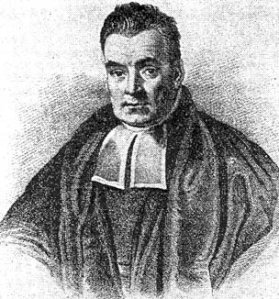 I’ve already shared my Bayesian anecdote. On a more serious note, Andrew Gelman is asked (by Bill Harris) to recommend overviews of Bayesian methods for practitioners (analysts, managers). Andrew provides several helpful suggestions. Any others? Any recommendations for teaching Bayesian (or classical) statistics to MBAs, executives, even undergraduate business majors?
Will Mitchell’s Comments on Receiving the BPS Irwin Award
| Russ Coff |
A big congratulations to Will for winning this prestigious award. It is really something to hear a person’s students describe how their mentor has altered their lives. Many misty eyes in the room…
Embedded in Will’s comments after receiving the award was an observation that in many business settings, such as in developing countries, effective business decisions cannot be made using the risk-based tools (like NPV) that are so often taught in business schools. He argued that, in the face of Knightian uncertainty, these tools fail miserably.
So what would be a set of tools to address uncertainty? The closest that I teach would be scenario analysis and real options. Here, one still needs to estimate parameters like the volatility of the investment or probabilities of outcomes (for decision trees or binomial trees). Of course, the assumption that these parameters could be known still suggests reflect risk rather than uncertainty. However, I emphasize sensitivity analysis (such as simulations, etc.) on these parameters to address the fact that they cannot be known.
First, is this the best set of tools available for Knightian uncertainty?
Second, is Will right that these are left out of most strategy courses? Perhaps we need to re-think the curriculum a bit…
“Unskilled and Unaware of It”
| Nicolai Foss |
In general I enjoy teaching and interacting with students. But some students can be a pain, particularly those who are too intellectually challenged to realize the nature of their predicament. They don’t accept (their low) grades (particularly not the grade of “i” ;-)), and blame the professor/instructor for their own low achievement. Here is why.
Teaching Generation Me
| Peter Klein |
Thanks to Maria Rodriguez for passing along this gem: Jean M. Twenge, “Generational Changes and their Impact in the Classroom: Teaching Generation Me,” Medical Education 43(5): 398-405. From the abstract:
Methods: This paper reviews findings from a number of studies, most of which rely on over-time meta-analyses of students’ (primarily undergraduates’) responses to psychological questionnaires measuring IQ, personality traits, attitudes, reading preferences and expectations. Others are time-lag studies of nationally representative samples of high school students.
Results: Today’s students (Generation Me) score higher on assertiveness, self-liking, narcissistic traits, high expectations, and some measures of stress, anxiety and poor mental health, and lower on self-reliance. Most of these changes are linear; thus the year in which someone was born is more relevant than a broad generational label.
In the immortal words the Bette Midler character from Beaches: “But enough about me, let’s talk about you. . . . What do you think of me?”
Slides from Foss-Klein PhD Course
| Peter Klein |
Slides from the PhD course, “The Theory of the Firm and Its Applications in Management Research I,” are now available on the course webpage (scroll down to the bottom).
PS: Did you notice the course title ends with “I,” implying there will be a II and maybe a III? Gotta love that precommitment device. It’s as if Stallone had named his first film “Rocky I.”
Events @CBS
| Peter Klein |
I’ve just arrived in Copenhagen, where I’m spending a month as a visiting professor at the SMG. Copenhagen Business School has become one of the most intellectually exciting places in Europe. This week alone the school is hosting the DRUID summer conference which features people like Anita McGahan, Sid Winter, Will Mitchell, Russ Coff, Mike Ryall, and many others, along with a workshop on corporate governance with keynotes by Mark Roe, Randall Morck, Annette Poulsen, and Florencio Lopez-de-Silanes Molina. Of course these are only appetizers for the next week’s main course, the PhD seminar on The Theory of the Firm and Its Applications in Management Research conducted by Professors F. and K. Truly an embarrassment of riches!
A Reason To Keep Laptops Out of the Classroom
| Peter Klein |
I missed this Doonesbury strip when it came out in 2007 (click to enlarge). Made me cringe. (HT: John Drobak)

Skepticism and Greed
| Dick Langlois |
One of my University colleagues, who works in instructional technology, sent a few of us a post from a mailing list-blog at Stanford called Tomorrow’s Professor. The site has a lot of interesting stuff on teaching and the academy, which O&M readers may find interesting. But this particular post, reprinted from a blog at the Carnegie Foundation for the Advancement of Teaching, prompted me to send in a response. Here is what I said. (Take a look at the original post, but I think you can get the idea from my comment.)
I certainly endorse what I take to be the central idea of post 944 — that students of business and economics would benefit from a liberal education.
Having said that, however, let me also note that I think the post gets things exactly — and perhaps dangerously — backwards in many ways. It is a constant trope in the popular press that the idea of “free markets” is some kind of dogma among economists (and perhaps society more broadly). In fact, economists believe that markets exist only within institutional structures, and economics — even so-called free-market economics — is actually about getting the institutions right, not about letting people do whatever they want.
In my view, moreover, economists are the real skeptics in the academy. Despite his (marketing) claim to being a “rogue” economist, Steve Levitt of Freakonomics fame is actually a better model of what most economists do than is Ben Bernanke or Alan Greenspan. Unlike most other academics, economists are rewarded for taking skeptical and iconoclastic positions, at least when they can back those positions up with hard data and clear analysis.
By contrast, few people outside of economics departments or business schools have any understanding whatever about how and when — or even whether — individual action can lead to beneficial unintended consequences. Economics is actually counter-intuitive in many ways. Humans evolved in small bands of hunter-gatherers, and as a result our intuitions about how a large open society operates are often wrong or backwards.
For all these reasons, it seems to me odd to suggest that economists (and students of economics) are dogmatic and would be made more skeptical and thoughtful about the economy by studying other liberal fields. In my experience, it’s rather the opposite. (Which is not to say, of course, that students won’t benefit in many ways from studying other fields.)
The post itself is a case in point. It starts out in the right direction with a marvelous story from Keynes about the nature of the money supply. But then it goes on to talk about “greed” as the central issue, ending with a quote from Roosevelt that “heedless self-interest” is bad economics. In fact, however, it is pointing to “greed” that is unexamined dogma. Why exactly has the level of greed changed over time? Is that really an explanation of anything? In stark contrast, many professional economists (including such serious scholars of the crisis as John Taylor and Karl Case) would point out that the most fundamental cause of the crisis was the expansive monetary policy of the Fed, which pumped money into the system and caused an asset bubble. Our hunter-gatherer ancestors endowed us with intuitions about greedy individuals; but they didn’t leave us intuitions about how a fiat money system works in a huge economy of non-face-to-face exchange. That we have to learn in an economics course.





 Organizations and Markets

Recent Comments