PENSA 20th Anniversary
| Peter Klein |
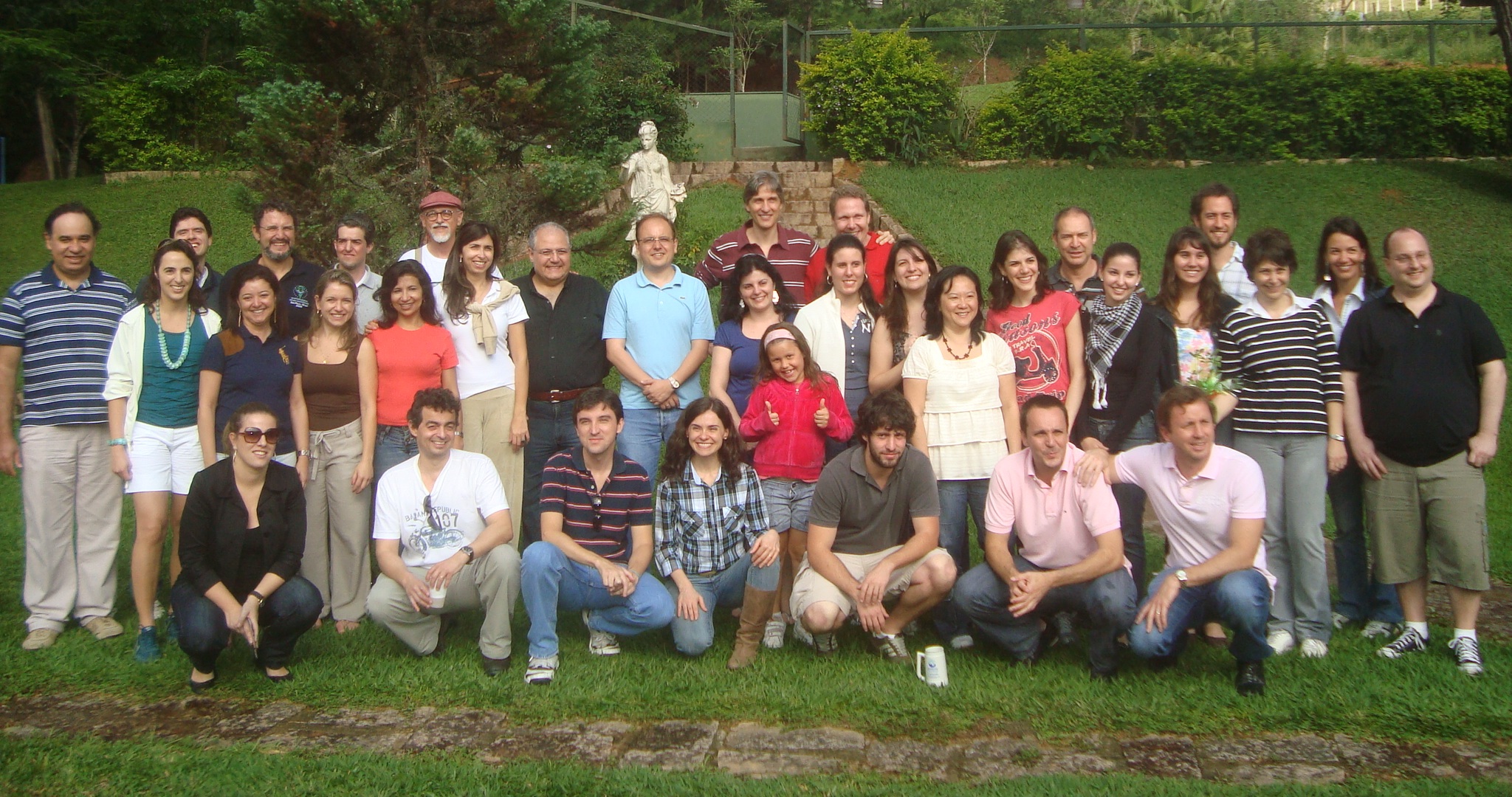
Congratulations to Decio Zylbersztajn and the rest of the group at PENSA on their 20th anniversary. PENSA, a research center within the University of São Paulo, is the home of New Institutional Economics research and teaching in Brazil (and Latin America more generally), producing papers, training graduate students, hosting international conferences, and other activities. The group celebrated its 20th year with a party this past weekend. You can see current and former PENSA personnel in the photo below, including Decio, my Missouri colleague Fabio Chaddad (to Decio’s right), Luciana Florencio de Almeida (just in front of Decio), Paulo Furquim de Azevedo (back row), Sergio Lazzarini (front row), Sylvia Saes (middle row, right side), and other well-known New Institutional Scholars.
The current issue of the Revista de Administração da Universidade de São Paulo has an article on financial constraints and agricultural contracting in Brazil by Decio, Luciana, and me.
Teaching Analytical Writing
| Peter Klein |
More on academic writing: This paper by Wayne Schiess, “Legal Writing Is Not What It Should Be,” deals specifically with law students, but applies in many ways to academic writing more generally. Quoting from the introduction:
The writing required of students in high school and college is often what I call “self-expression writing” rather than expository writing. Self-expression writing tends to be writer-focused, not reader-focused.That is, self-expression writers focus primarily on expressing their own ideas. This is surely a necessary developmental step for improving writing skill, but it is two steps removed from the skill of analytical legal writing. Once high school and college writers move beyond self-expression, they usually produce writing that can be called “knowledge-telling” or conveying information.
But legal writing is not self-expression, and it is another step beyond knowledge telling. One author has referred to the skill of analytical legal writing as “knowledge transforming.” Thus, legal writing is a form of expository writing in which the focus should be on the reader‟s ability to understand. This is in contrast to self-expression writing, where clearly and effectively conveying information to the reader is secondary to expressing one’s self the way one desires. And it is in contrast to knowledge-telling, in which the primary purpose is conveying information, not analyzing a problem.
Of course, self-expression and knowledge-telling are necessary steps, as I’ve acknowledged. But I can report, based on anecdotal evidence, that some students get little training even in these two developmental steps. Some college curricula do not require much writing at all. For example, in my teaching of the required, first-year legal writing course, I often have students who studied science or engineering in college. Many of these students arrive at law school and tell me they have never written a paper in college.
The kind of writing required for good social science is also what Schiess calls “analytical writing,” and my sense is that few graduate students have any experience with or training in this kind of writing. How to teach it is another question. Schiess has several suggestions that are specific to law schools; how can they be applied to economics or sociology or business administration?
Man Bites Dog …
| Scott Masten |
. . . and government swears it acts politically and is incompetent.
This might just be worth the cost to the U.S. taxpayer of bailing out GM. From GM’s prospectus for its upcoming IPO (via NPR):
…to the extent the UST [United States Treasury] elects to exert such control in the future, its interests (as a government entity) may differ from those of our other stockholders. In particular, the UST may have a greater interest in promoting U.S. economic growth and jobs than our other stockholders. For example, while we have repaid in full our indebtedness under our credit agreement with the UST that we entered into on the closing of the 363 Sale, a continuing covenant requires that we use our commercially reasonable best efforts to ensure, subject to exceptions, that our manufacturing volume in the United States is consistent with specified benchmarks. (p. 6)
We have determined that our disclosure controls and procedures and our internal control over financial reporting are currently not effective. The lack of effective internal controls could materially adversely affect our financial condition and ability to carry out our business plan. (p.29)
Now, the next time anyone says otherwise, you have can point to this.
CRSP 50th Anniversary
| Peter Klein |
Maybe you knew this already, but the Center for Research on Security Prices (CRSP) — the provider of most of the stock-price data used in academic and practitioner research on financial markets — is celebrating its 50th anniversary this year. The center has put up a fancy website, full of interesting factoids, to commemorate the occasion. Did you know, for example, that the first CRSP computer was a UNIVAC, donated by Sperry-Rand though the intervention of Leslie Groves? That the initial data collection effort came in three years late and 200% over budget? (Makes me feel better about some of my own projects.) That CRSP hasn’t used tapes for years, though people still refer to the master file as the “CRSP tapes”? (HT: Gregg Gordon.)

CFP: Searle Center Conference on Entrepreneurship and Innovation
| Peter Klein |
I’m a big fan of the Searle Center conferences on entrepreneurship and innovation, organized by Dan Spulber. The Call for Papers for the fourth annual conference, 16-17 June 2011, has just been distributed. “The goal of this conference is to provide a forum where economists and legal scholars can gather together with Northwestern’s own distinguished faculty to present and discuss high quality research relevant to entrepreneurship and innovation.” Details below the fold. (more…)
Entrepreneurial Paradoxes
| Peter Klein |
A new working paper from the always-interesting Peter Lewin: “Entrepreneurial Paradoxes: Implications of Radical Subjectivism.” Sample paradoxes:
- Entrepreneurial opportunities are complicated by uncertainty but would not exist without uncertainty.
- An entrepreneurial opportunity for everyone is an opportunity for no one in particular.
- Entrepreneurial opportunities are subjective and objective; discovered and created.
See the paper for the full set of paradoxes and some informative and challenging discussion.
Entrepreneurial Firms and Job Creation: Size Matters Not
| Peter Klein |
 The view that small and new firms create a disproportionate share of new jobs is one of the most important stylized facts of the entrepreneurship literature. But, as always, the devil is in the details. Small and new firms naturally grow at a faster rate than their large, mature counterparts, ceteris paribus, simply because they have few employees to start with. But they differ on a number of other grounds and have a higher hazard rate. What’s the bottom line?
John Haltiwanger, Ron Jarmin, and Javier Miranda have taken a close look at the US data and conclude that age, not size, is what matters.
There’s been a long, sometimes heated, debate on the role of firm size in employment growth. Despite skepticism in the academic community, the notion that growth is negatively related to firm size remains appealing to policymakers and small business advocates. The widespread and repeated claim from this community is that most new jobs are created by small businesses. Using data from the Census Bureau Business Dynamics Statistics and Longitudinal Business Database, we explore the many issues regarding the role of firm size and growth that have been at the core of this ongoing debate (such as the role of regression to the mean). We find that the relationship between firm size and employment growth is sensitive to these issues. However, our main finding is that once we control for firm age there is no systematic relationship between firm size and growth. Our findings highlight the important role of business startups and young businesses in U.S. job creation. Business startups contribute substantially to both gross and net job creation. In addition, we find an “up or out” dynamic of young firms. These findings imply that it is critical to control for and understand the role of firm age in explaining U.S. job creation.
Another Proud Non-Voter
| Peter Klein |
It’s Larry Ribstein. Will he get the same treatment I received a few years ago?

Congratulations to J. C. Won
| Peter Klein |
Congratulations to University of Missouri PhD student Jong Chul Won for being one of three Don Lavoie Memorial Essay Competition Winners for 2010. His paper is “The Emergence, Limit, and Distortion of the Firm: The Entrepreneurship Approach.” The contest is sponsored by the Society for the Development of Austrian Economics. Details are below the fold.
Missouri student Per Bylund was a 2009 winner at the Austrian Student Scholars Conference for his paper “The Theory of the Firm: Coasean Misconceptions and Austrian Solutions.” If you’re interested in entrepreneurship and the theory of the firm, particularly from an Austrian perspective, the University of Missouri is the place to be! (more…)
A POMO Picture is Worth a Thousand Words
| Peter Klein |
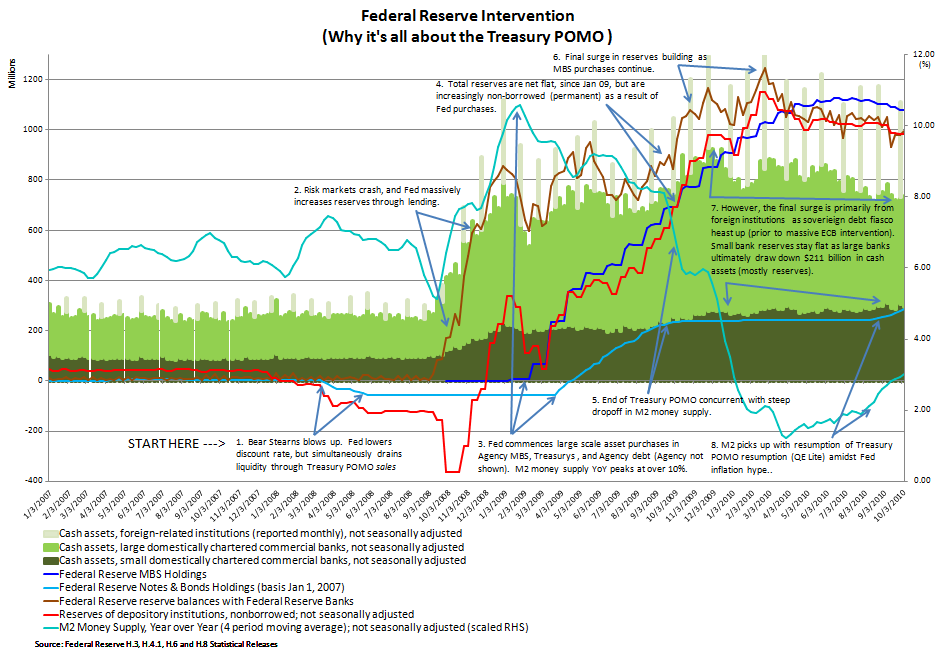
Not “pomo” as in Pomo Periscope, but “POMO” as in Permanent Open Market Operations. A fascinating graphic from Bob English (via EB) showing how the Fed is using its new tool (click to enlarge). In case you were worrying about the Fed “standing idly by” . . . .
The Legacy and Work of Douglass North
| Peter Klein |
Washington University, St. Louis is hosting a major international conference, 4-6 November, on the Legacy and Work of Douglass North. The all-star panel includes Lee Alston, Robert Bates, Joel Mokyr, Elinor Ostrom, Ken Shepsle, Barry Weingast, and many others. The conference is organized by Wash U’s Center for New Institutional Social Science.
In other conference news, the CFP for next year’s Atlanta Competitive Advantage Conference, 17-19 May 2011, has been posted. Featured presenters include Jay Barney, Joel Baum, and Rebecca Henderson.
Influences
| Scott Masten |
Oliver Williamson has obviously had an enormous influence on my research and career, but I encountered Olly only fairly late in my education; in fact, I didn’t take Olly’s Industrial Organization course until my last semester of course work, in the fall of my third year in graduate school. Prior to that, my primary field had been comparative economic systems or, as it was called at Penn, comparative economic planning. My interest in the latter field and, indeed, my decision to go to graduate school in the first place I owe to Edwin Dolan. I had entered college intending to go to law school and enrolled in Dolan’s Economic Analysis of Law seminar in the winter of my sophomore year. That course was eye-opening for me in two respects. First, after spending long days in the library stacks reading law cases (when the next best alternative activity was skiing), I decided that that was not what I wanted to do for the rest of my life. Second, I learned that I could engage the “fun” (that is, the analytical) part of law by continuing in economics, which I already found appealing. (more…)
Survivor Bias: WW2 Edition
| Lasse Lien |
During World War 2 the British Royal Air Force (and Navy) pioneered the use of empirical and statistical analysis to improve performance — laying the foundation for the field we now know as Operations Research.
One fascinating anecdote is how these pioneers used data on damage from German air defense fire. The RAF collected large amounts of data on exactly where returning aircraft had received damage. The intuitive recommendation would be to reinforce the aircraft were the data indicated they took the most damage. However, realizing that they only had data from surviving aircraft, the OR group under leadership of Patrick Blackett recommended that they reinforce the aircraft in the sections where no damage was recorded in the data. Clever chaps, I dare say.
Assorted Links
| Peter Klein |
- A new paper by Randall Morck and Bernard Yeung, “Agency Problems and the Fate of Capitalism.” A very good comparative-institutional analysis of shareholder democracy and its benefits and costs relative to “stakeholder” models.
- A Washington Post story on “moral licensing” (via Sheen Levine) — suggesting that some people view ethical behavior, like goods and services, in terms of trade-offs at the margin!
- A call for contributions to The Ethics and Economics of Agrifood Competition, a Springer volume in preparation by my colleague Harvey James.
- Videos and papers from the Coase centenary conference held last year at the University of Chicago Law School.
Cui Bono Blues
| Scott Masten |
No, not some long lost Robert Johnson classic. I’m referring to the Justice Department’s suit filed earlier this week against Blue Cross Blue Shield of Michigan, with “hints” from the Justice Department that more health industry suits are in the pipeline. The allegation is that BCBCM used most-favored nation agreements with hospitals to reduce “competition in the sale of health insurance in markets throughout Michigan by inhibiting hospitals from negotiating competitive contracts with Blue Cross’ competitors.”
I don’t know enough about the case to say anything about its merits at this point. But I do find curious the DOJ’s choice of a nonprofit for its demonstration project on controlling healthcare costs through the antitrust laws. It reminds me of [uh-oh, here it comes — Ed.] (more…)
Earning My Keep. . . .
| Scott Masten |
I would post something on this morning’s Wall Street Journal article, “Putting a Price on Professors,” but (i) I risk becoming the obsessed, repetitous guest who spoils the party for everyone else (it’s not my fault this stuff is showing up a lot in the news right now!), and (ii) I have 163 midterms to grade and, having read the article, I need to make sure that I earn my compensation. [That shouldn’t require much work — Ed.]
Update: Go read Craig Pirrong’s post on the WSJ article at Streetwise Professor. That’s an order.
Using Content Analysis to Measure Scholarly Impact
| Peter Klein |
Two Princeton computer scientists have developed an algorithm for measuring scholarly impact based on content analysis, not citation data. Here’s the paper, and here’s a summary. I pay attention to impact factors (not as closely as some people) but am open to alternative measures — particularly any that might make me look better.
Missouri Information Encountering Workshop
| Peter Klein |
Sorry for the late notice, but my local readers may be interested in a two-day workshop today and tomorrow on the Opportunistic Discovery of Information, a version of information encountering with close parallels to Israel Kirzner’s concept of entrepreneurial discovery. Sanda Erdelez can provide more information.

The Five Stages of Grading
| Peter Klein |
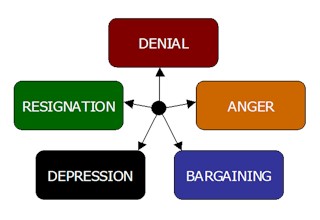
A nice complement to Daniel Solove’s classic guide to grading: “The Five Stages of Grading” at notthatkindofdoctor.com (via David Croson). “Everyone is familiar with Elisabeth Kübler-Ross and her stage model of coping with grief popularly known as the five stages of grief. What you may not know is that Kübler-Ross actually developed her theory as a graduate student, basing her conception of the process of loss on the experiences one goes through over a grading weekend.”
“The Meanest and Most Contemptible Persons in Society”*
| Scott Masten |
*That would be Peter, Dick, Lasse (I think), and me, but not Nicolai. (See below.)
I haven’t posted anything on higher education governance in a couple of weeks, so I guess it is about time. My excuse will be an Instapundit link to an opinion column titled “End Our ‘Multiuniversities’.”
The author, David Warren, complains that the “great majority of the universities — founded since the Second World War to bureaucratically process and credentialize a large part of the general population, as a matter of ‘right’ and regardless of their intellectual capacities — are in effect ‘community colleges’ or trade schools,” a condition that he attributes in the main to public funding. (Warren is writing from Canada but a related piece makes clear his reprobation is catholic.) I am broadly sympathetic with his lament, though I am less confident that public funding is the ultimate culprit. What I want to comment on, however, is his (possibly facetious) solution: (more…)





 Organizations and Markets
Recent Comments