What’s Wrong Here?
| Lasse Lien |
A rich tourist came to a small town in the middle of the financial crisis. He went into the local hotel, placed a 200-dollar bill on the counter and went upstairs to check out what kind of rooms the hotel had to offer. In the meantime the hotel manager grabbed the bill, walked over to the butcher and used the bill to pay his debt. The butcher then took the bill to the cattle farmer and paid his debt to him. Next, the cattle farmer took the bill to the cattle feed supplier and paid his debt there. The cattle feed supplier then paid his debt to the local prostitute. The local prostitute brought the bill back to the hotel and paid her debt to the hotel manager. The hotel manager put the bill back on the counter. Then the rich tourist returns down the stairs and proclaims that he didn’t like the any of the rooms. He grabs the bill and leaves the city. A pity, but more importantly, the town was now debt free and optimism was back.
Source unknown. HT: Tore Hillestad.
Rankings and Journal Competition
| Lasse Lien |
Like many other B-schools, mine has a bonus system for publications in top journals. Every so often this list gets revised, which generates heated debate as each academic discipline tries to get more of “its” journals on the bonus list. One recent suggestion was to drop all the in-fighting and just use the journal list the Financial Times uses in constructing its B-school rankings. This seems like a good way to get rid of a lot of influence costs, and at the same time link the bonus to something that is important for the school: the FT rankings. The potential problem is that if all B-schools start thinking like this, what will happen to the competition between journals? Won’t the FT-list incumbents be a little too safe?
Not Even the Slightest Soupçon of Correlation
| Dick Langlois |
Another interesting article from the Journal of Wine Economics:
The lead article is again by Robert T. Hodgson, who analyzes the reliability of Gold medals awarded at 13 California Wine Fairs. “An analysis of over 4000 wines entered in 13 U.S. wine competitions shows little concordance among the venues in awarding Gold medals. Of the 2,440 wines entered in more than three competitions, 47 percent received Gold medals, but 84 percent of these same wines also received no award in another competition. Thus, many wines that are viewed as extraordinarily good at some competitions are viewed as below average at others. An analysis of the number of Gold medals received in multiple competitions indicates that the probability of winning a Gold medal at one competition is stochastically independent of the probability of receiving a Gold at another competition, indicating that winning a Gold medal is greatly influenced by chance alone.” The full article can be accessed free of charge at Abstract Full Text (PDF).
Bayes of Our Lives
| Peter Klein |
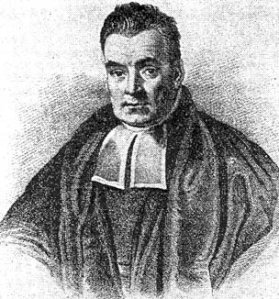 I’ve already shared my Bayesian anecdote. On a more serious note, Andrew Gelman is asked (by Bill Harris) to recommend overviews of Bayesian methods for practitioners (analysts, managers). Andrew provides several helpful suggestions. Any others? Any recommendations for teaching Bayesian (or classical) statistics to MBAs, executives, even undergraduate business majors?
Wanted: Human Capital Research(ers)
| Russ Coff |
Human Capital Interest Group? First a self-serving announcement. I’m part of an effort to create a new SMS interest group on Human Capital & Competitive Advantage (HC&CA). I need to gauge interest and identify people who would want to be involved if the proposal moves forward. We need people who are interested in: 1) Program Chair or Associate Program Chair, 2) Launch Planning Committee, or 3) Friends of HC&CA (email list). Please nominate yourself or others here.
General Human Capital and Competitive Advantage. Now for the meat: Why I think human capital is such fertile ground. Strategy research tends to adopt very unrealistic assumptions about markets for human capital. As a result, shorthand like “firm-specific” human capital inaccurately reflects its strategic potential. (more…)
Chalk or Dry-Erase Markers?
| Peter Klein |
I just committed a rookie teacher faux pas: wearing a black shirt to class in a room equipped with old-fashioned chalk and chalkboards. I do PowerPoint, but use the boards to make additional points and to guide Socratic discussion. Now I look like Woody Allen in the cocaine scene from Annie Hall. O Whiteboard with Black Dry-Erase Markers, Where Art Thou?
Now, I’m sure some professors and teachers among our loyal readership will have strong opinions on the chalk-versus-dry-erase controversy. Chalk generates more dust than markers, but the dust is easily washable and gives that disheveled, absent-minded professor look that many of us crave (especially when combined with tweed and elbow patches). Dry-erase boards are usually cleaner, but the dust and stray markings can ruin your clothes and make you look like a tattoo-school drop-out. What do you think?
NB: My favorite example of an academic Extreme Makeover relates to this discussion. When I was in grad school Andrei Shleifer came out to give a seminar, sometime around 1989 or 1990. He had the quintessential professor look — tousled hair, shirttail hanging out, chalk marks everywhere. I’m pretty sure there were no transparencies or PowerPoint slides, just Three Equations and a Cloud of Dust. Several years later, in the mid-2000s, I saw him give the keynote address for the ISNIE annual conference. This was after the Late Unpleasantness in Russia. In the transition to public servant, Shleifer had been completely transformed, now sporting a fashionable haircut, perfectly tailored Armani suit, bright purple tie, and legible PowerPoint slides (not up to Teppo’s standard, but a big leap for Shleifer nonetheless). Quelle difference!
How to Publish a Scientific Comment in 123 Easy Steps
| Peter Klein |
This is floating around the web and good for a chuckle. The situation in social science is in some ways better and in other ways worse than that described here (the author claims it’s based on a true story). Our journals are not quite as space constrained, on average, but our publication lags are typically much longer.
Be sure to read all the way through to the Addenda, in which the author makes interesting and important suggestions for revising the system. (HT: Randy.)
The Amish Internet
| Peter Klein |
It’s the Budget, a 119-year-old Amish weekly newspaper published in Sugarcreek, Ohio. “The Budget is the dominant means of communication among the Amish, a Christian denomination with about 227,000 members nationwide who shun cars for horse-drawn buggies and avoid hooking up to the electrical grid,” says an AP story. The national edition, which has a strong following in the US and Canada, simply aggregates dispatches produced by local writers. “People call the Budget the Amish Internet,” says its publisher. “It’s non-electric, it’s on paper, but it’s the same thing.”
The example highlights the benefits and costs of different types of networks. Open-access, open-source networks governed by just a few simple protocols like TCP/IP and HTML are not necessarily the best solution for every problem. Sneakernet is more secure, for example. In the Amish case, according to the AP story, the Budget’s customers limited access, threatening a rebellion when the newspaper recently announced plans to produce an online edition. “The writers, known as scribes, feared their plainspoken dispatches would become fodder for entertainment in the ‘English,’ or non-Amish, world.”
History of Economic Thought Boot Camp
| Peter Klein |
A message from Bruce Caldwell:
I am pleased to announce that the Center for the History of Political Economy at Duke University has been awarded a grant by the National Endowment for the Humanities to support a Summer Institute to be held at Duke June 6 – 25, 2010. The institute will bring 25 faculty members from colleges and universities in the US with no previous experience teaching history of economic thought to Duke for a three week “Boot Camp,” with the goal that the participants will go back to their home institutions both prepared and eager to teach an undergraduate course in the field. A number of HES members (past or present Society presidents all, in fact) will serve as lecturers and discussion leaders, including Brad Bateman, Bruce Caldwell, Craufurd Goodwin, Kevin Hoover, Steve Medema, Sandy Peart, and Roy Weintraub. We are hopeful that this institute, if successful, will be continued in future years, and that if alternative sources of funding become available, could be opened up to include graduate students and non-US citizens. (The current constraints on eligibility are due to NEH rules.)
You can contact Bruce for more information.
Interviews with Nobel Laureates
 | Peter Klein |
I just discovered that the official Nobel site has a multimedia section, with interviews, videos of the ceremonies and acceptance speeches, and so on. Most of the recent economics Laureates are included. Interesting stuff.
Bonus Nobel material: Josh Wright makes a good case for an economics prize honoring the UCLA tradition in the theory of the firm, property rights, and transaction costs. Josh himself is an excellent representative of that tradition. And here’s an old post on the prospects for a Nobel prize in organizational economics.
Williamson is still my favorite dark horse candidate, for obvious personal reasons, but I’d be delighted to see Klein, Alchian, Demsetz, or even Barzel and Cheung recognized for their contributions.
Even Stanley Fish . . .
| Peter Klein |
. . . recognizes that politicizing the basic English composition classes — one of the crowning achievements of literary and cultural postmodernism, the movement once championed by Fish himself — wasn’t such a good idea (via George Leef):
A few years ago, when I was grading papers for a graduate literature course, I became alarmed at the inability of my students to write a clean English sentence. They could manage for about six words and then, almost invariably, the syntax (and everything else) fell apart. I became even more alarmed when I remembered that these same students were instructors in the college’s composition program. What, I wondered, could possibly be going on in their courses?
I decided to find out, and asked to see the lesson plans of the 104 sections. I read them and found that only four emphasized training in the craft of writing. Although the other 100 sections fulfilled the composition requirement, instruction in composition was not their focus. Instead, the students spent much of their time discussing novels, movies, TV shows and essays on a variety of hot-button issues — racism, sexism, immigration, globalization. These artifacts and topics are surely worthy of serious study, but they should have received it in courses that bore their name, if only as a matter of truth-in-advertising.
As I learned more about the world of composition studies, I came to the conclusion that unless writing courses focus exclusively on writing they are a sham, and I advised administrators to insist that all courses listed as courses in composition teach grammar and rhetoric and nothing else. This advice was contemptuously dismissed by the composition establishment, and I was accused of being a reactionary who knew nothing about current trends in research.
Quelle ironie!
The Pretense of Bernanke’s Knowledge
| Peter Klein |
Chairman Bernanke, in his own words:
July 2005: “[U]nquestionably, housing prices are up quite a bit; I think it’s important to note that fundamentals are also very strong. We’ve got a growing economy, jobs, incomes. We’ve got very low mortgage rates. We’ve got demographics supporting housing growth. We’ve got restricted supply in some places. So it’s certainly understandable that prices would go up some. I don’t know whether prices are exactly where they should be, but I think it’s fair to say that much of what’s happened is supported by the strength of the economy.”
July 2005: “[Recession is] a pretty unlikely possibility. We’ve never had a decline in house prices on a nationwide basis. So what I think is more likely is that house prices will slow, maybe stabilize: might slow consumption spending a bit. I don’t think it’s going to drive the economy too far from its full employment path, though.”
February 2007: “Our assessment is that there’s not much indication at this point that subprime mortgage issues have spread into the broader mortgage market, which still seems to be healthy. And the lending side of that still seems to be healthy.”
July 2007: “The pace of home sales seems likely to remain sluggish for a time, partly as a result of some tightening in lending standards, and the recent increase in mortgage interest rates. Sales should ultimately be supported by growth in income and employment, as well as by mortgage rates that, despite the recent increase, remain fairly low relative to historical norms. . . . Overall, the U.S. economy seems likely to expand at a moderate pace over the second half of 2007, with growth then strengthening a bit in 2008 to a rate close to the economy’s underlying trend.”
July 2009: “Overall, the Federal Reserve has many effective tools to tighten monetary policy when the economic outlook requires us to do so. As my colleagues and I have stated, however, economic conditions are not likely to warrant tighter monetary policy for an extended period. We will calibrate the timing and pace of any future tightening, together with the mix of tools to best foster our dual objectives of maximum employment and price stability.”
The Economist Going Austro-Demsetzian?
| Nicolai Foss |
Most observers of industrial organization will readily agree that so-called “predatory pricing” is a rare phenomenon. Nevertheless, it remains one of the most hotly debated topics in industrial organization theory and in practical competition policy, probably because it is a particularly conspicuous example of the “abuse of a dominant position” (to use EU competition policy lingo).
In its most recent issue, The Economist has a nice discussion of predatory pricing, prompted by the recent EU Intel case. The article opens by citing Coase, but in actuality its owes much more to Harold Demsetz (cf. this classic paper) as well as Austrian writers on industrial organization such as Dominick Armentano (cf. this paper). The article is excellent as a basis for discussion in classes on industrial organization.
A Hopeful Sign
| Peter Klein |
At least one major US bank is advertising the fact that it refused TARP funds. Bernanke and Co. must be unhappy, as they insisted that all large banks take the money to avoid tainting those that actually needed it. Wouldn’t it be great if the largest bailout recipients became tarred as Welfare Bums (just as people call G.M. “Government Motors”)? (HT to Lisa Fairfax.)
The irony in all this is that government intervention in financial markets is usually justified by claims about asymmetric information: consumers can’t distinguish reliable from unreliable banks, insurers can’t tell healthy from unhealthy people, and so on, leading to a rash of adverse-selection problems that market mechanisms cannot solve. Actually the reverse is true: low-quality but politically connected financial institutions rely on government intervention to enforce a pooling equilibrium, preventing the market signaling and screening that would otherwise take place.
Discipline-Based Policy Advice
| Peter Klein |
As noted before, the economist long ago replaced the fortune teller as the most popular kind of policy adviser. The US, for example, has a Council of Economic Advisers but no Council of Anthropological Advisers or Council of Critical Literary Theorist Advisers (thank goodness). Now the sociologists want a piece of the action. And, as Rajshree Agarwal, Jay Barney, Nicolai, and I have argued, management scholars (a partially overlapping set with economists, it should be noted) may also have something to offer in understanding the current economic mess.
Here’s Richard Posner making a pitch for legal scholars: “with a few notable exceptions, such as Lucian Bebchuk, Edward Morrison, and Steven Schwarcz, academic lawyers (and Bebchuk and Morrison have Ph.Ds in economics, as well as law degrees) have not made a contribution to the understanding and resolution of the current economic crisis, even though it bristles with legal questions.” But he isn’t sure that academic legal training is currently very useful. Kenneth Anderson is more optimistic:
I think that legal academics will have much to contribute in the reform of finance in the remaking of institutions and markets with fewer panglossian assumptions about how they will find optimal solutions on their own, and with fewer panglossian assumptions that they will do so as a matter of natural necessity. But I also think, even more strongly, and will raise it in some subsequent posts, that lawyers will bring to the table an understanding of the unquantified risks and uncertainties that are written into financial contracts — derivatives, securitizations, etc. — that financial analysts, economists, many other non-lawyer actors, took for granted as not having any effect.
Who else wants a seat at the table?
Idea for Historical Law and Economics Thesis
| Nicolai Foss |
Apropos the always-topical issue of the efficacy of the death penalty, I was recently told by Siegwart Lindenberg that one of Gordon Tullock’s characteristically quirky proposals for reform was to institute the death penalty as the sanction that any crime would meet in the criminal justice system. However, there was a twist, because although any criminal would receive a death penalty, not all criminals would actually be executed. Specifically, all criminals would be strapped to the chair, but there was only a probability that the button would be pressed, the probability depending on the severity of the crime. Because of risk aversion and a tendency to overestimate probabilities (and for the Draconian symbolic value), this scheme would put an effective end to much crime. (I haven’t been able to find a reference for this idea; perhaps it exists only in the oral tradition that surrounds the Tullock figure).
It is easy to dismiss the Tullock scheme as “cruel,” “inhuman,” “far out,” “not practicable,” etc. But perhaps it does have a historical precursor. At its height the criminal law of England (the “Bloody Code”) included more than 220 crimes that were punishable by death, including “being in the company of gypsies for more than one month” (here is the Wiki). Other countries have had similar broad approaches to which crimes were punishable by death, though perhaps few as Draconian as England’s. However, one has to bear in mind that there generally was a pardon system, and that it is quite likely that some of the weirder crimes leading to death sentences were more likely to be pardoned than the really serious ones (e.g., a pardon may have been more likely in the case of the “crime” of being in the company in gypsies than outright murder). Could it be that this pardon system functioned in such a way that the probabilities of actual execution directly reflected the real severity of the crime? It seems likely. The data are definitely there. It is just collecting them and doing the analysis.
What Does the Rule of Law Variable Measure?
| Peter Klein |
Bill Easterly poses this question, referring to his NYU colleague Kevin Davis’s work on law and development. Davis has several papers criticizing economists’ use of rule-of-law variables in development research (1, 2, 3). As summarized by Easterly:
Kevin points out that two current measures of “rule of law” used by economists in “institutions cause development” econometric research are by their own description a mixture of some characteristics of the legal system with a long list of non-legalistic factors such as “popular observance of the law,” “a very high crime rate or if the law is routinely ignored without effective sanction (for example, widespread illegal strikes),” “losses and costs of crime,” “corruption in banking,” “crime,” “theft and crime,” “crime and theft as obstacles to business,” “extent of tax evasion,” “costs of organized crime for business” and “kidnapping of foreigners.” Showing that this mishmash is correlated with achieving development tells you what exactly? Hire bodyguards for foreigners?
What if “institutions” are yet another item in the long list of panaceas offered by development economists that don’t actually help anyone develop?
Easterly opens with a clever example of a legal rule that doesn’t make sense outside an informal, non-rule context. But overall I think he’s a little unfair to the development and financial economists working in this area, many of whom are sensitive to these problems but are doing the best they can with the data available. It’s true, however, that much of the early work, particularly in the LLSV tradition, conflated de jure and de facto rules (particularly in over-emphasizing differences between common-law and civil-law countries). Benito Arruñada’s critique of the Doing Business Project is also informative in this regard.
Postrel on Competitive Advantage
| Peter Klein |
Former guest blogger Steve Postrel gave an interesting presentation at last week’s AoM Professional Development Workshop on competitive advantage: “Competitive Advantage: Can’t Live With It, Can’t Live Without It.” Steve sent me the slides and was happy to share them here. Add your questions and comments below.
Steve provides a set of conditions that must be met for competitive advantage to be internally consistent and operationally meaningful, then presents his own (unique) definition, a simple and precise formulation in terms of gains from trade:
Seller 1 has competitive advantage over Seller 2 with respect to a specific transaction if and only if the economic surplus (gains from trade = V – C) from a transaction between 1 and the buyer is greater than the surplus from a transaction between 2 and the buyer. The difference in surplus is the CA.
A series of implications, qualifications, and applications follows. What do you think?
Preaching from the Choir
| Dick Langlois |
It’s hard to top Bruce Kogut on the Daily Show. But by sheer coincidence I happened upon a video that offers a quite different perspective on corporate social responsibility.





 Organizations and Markets
Recent Comments