Author Archive
Law and Strategy
| Peter Klein |
Over at The Conglomerate, Gordon Smith asks:
Law professors teach and write about topics like public choice, agency capture, rent seeking, etc., but I don’t often hear law professors talking systematically about the use of law for strategic purposes. . . . In simplest terms, the study of law and strategy views the world from the perspective of a business and asks: how can we use law to gain a competitive advantage? This question ought to be of interest to lawyers, but does any law school teach a class on law and strategy?
The context is Richard Shell’s book Make the Rules or Your Rivals Will, which sounds interesting and important. Perhaps the O&M readership can help? The emerging field of non-market strategy (1, 2), led by people like David Baron, Vit Henisz, and the de Figueiredo brothers, studies how firms use not only law but also the regulatory system, bureaucracies, and other non-market features to achieve competitive advantage. The older economics literatures on public choice and rent-seeking of course deal with these issues as well, but typically from “society’s” point of view, rather than the firm’s. As for teaching, I see from a little Googling that John de Figueiredo is teaching law and strategy at Duke, and I suspect other members of the non-market strategy crowd housed at law schools do so as well. Suggestions for Gordon?
CFP: “Effects of Alternative Investments on Entrepreneurship, Innovation, and Growth”
| Peter Klein |
Along with Don Siegel, Nick Wilson, and Mike Wright, I am guest editing a special issue of Managerial and Decision Economics on the “Effects of Alternative Investments on Entrepreneurship, Innovation, and Growth.” Proposals are due 15 June 2011. A special issue conference for developing the papers is planned for 29 October 2011 at the SUNY Global Center in Manhattan. The conference is jointly sponsored by the SUNY-Albany School of Business, the Centre for Private Equity Research at Imperial College Business School, and the McQuinn Center for Entrepreneurial Leadership. Further details and submission guidelines are below the fold. (more…)
Finance and the Nature of the Firm
| Peter Klein |
Raghu Rajan’s AFA presidential address is now online as an NBER working paper:
The nature of the firm and its financing are closely interlinked. To produce significant net present value, an entrepreneur has to transform her enterprise into one that is differentiated from the ordinary. To achieve the control that will allow her to execute this strategy, she needs to have substantial ownership, and thus financing. But it is hard to raise finance against differentiated assets. So an entrepreneur has to commit to undertake a second transformation, standardization, that will make the human capital in the firm, including her own, replaceable, so that outside financiers obtain rights over going-concern surplus. I argue that the availability of a vibrant stock market helps the entrepreneur commit to these two transformations in a way that a debt market would not. This helps explain why the nature of firms and the extent of innovation differ so much in different financing environments.
Life in the Echo Chamber
| Peter Klein |
You’ve all heard the story of the Manhattan socialite who expressed shock at Nixon’s landslide 1972 victory because “nobody I know voted for him.” (Attributed variously to Pauline Kael, Katharine Graham, Susan Sontag, and others, and probably apocryphal, but who cares; it’s a great quote.) I was reminded of this by a line in Larry Summers’s confidential 2008 economic policy memo now making the rounds, courtesy of the New Yorker: “Greg Mankiw is the only economist we have consulted with [about the optimal stimulus package] who refused to name a number and was generally skeptical about stimulus.” How can a huge stimulus package be wrong — everybody I know favors it!
(For the record, the economists consulted — supposedly representing the full spectrum of legitimate opinion — were Robert Reich (recommended stimulus: $1.2 trillion over 2 years), Joe Siglitz ($1 trillion over two years), Paul Krugman ($600 billion in one year), Jamie Galbraith ($900 billion in one year), Dean Baker and colleagues ($900 billion), Marty Feldstein ($400 billion in one year), Larry Lindsey ($800 billion to $1 trillion), Ken Rogoff ($1 trillion over two years), Mark Zandi ($600 billion in one year), an unnamed group of Fed officials (over $600 billion), Adam Posen ($500-700 billion in one year), and an unnamed group at Goldman Sachs(!) ($600 billion). So, we’ve got left-wing Keynesians, right-wing Keynesians, moderate Keynesians, Robert Reich who wouldn’t know a Keynesian from a Kenyan, and Goldman Sachs. How’s that for diversity of opinion?)
Update: Mankiw agrees: “Of course, the fact that I was ‘the only economist’ expressing skepticism reflects the range of economists that Team Obama chose to consult.”
Charles Dickens, Capitalist
| Peter Klein |
Did you know 2012 is the centenary of Charles Dickens’s birth? Dickens is often lumped with Carlyle, Shaw, Ruskin, etc. as a Romantic, Victorian, literary anti-capitalist. (Carlyle indeed disliked capitalism, but not for the usual reasons.) But Dickens, as I originally learned from Paul Cantor, was a wildly successful capitalist and entrepreneur, a driving force behind the great nineteenth-century innovation of the serialized, commercial novel. Consider the following from one Dickens scholar:
Stephen Marcus has called Dickens “the first capitalist of literature” in the sense that he worked within apparently adverse conditions to take advantage of new technologies and markets, creating, in effect, an entirely new role for fiction. In Charles Dickens and His Publishers, Robert Patten quotes Oscar Dystel (president and chief executive of Bantam Paperbacks) on the three “key factors” in his development of a successful paperback line: availability of new material, introduction of the rubber plate rotary press, and development of magazine wholesalers as a distribution arm. As Patten points out, parallel factors operated in the Victorian era: a plethora of writers, new technologies, and expanded distribution. And as methods of papermaking, printing, and platemaking increased in efficiency, so did means of transportation. By 1836, a crucial network of wholesale book outlets in the Strand, peddlers, provincial shops, and the royal mailmade possible by the development of paved roads, fast coaches, and eventually the national railway systemhad been consolidated. The final task facing early publishers was, then, to develop the newly accessible market for their commodity. By lowering prices, emphasizing illustrations and sensational elements, and increasing variety of both form and content, publishers created readers within the largest demographic groups: the rising middle and working classes, where readers had essentially not existed before. . . . (more…)
Management in Popular Culture
| Peter Klein |
I recently read Planet of the Apes, the 1963 novel by Pierre Boulle that inspired the movie franchise. Not surprisingly, the book is far more interesting and intelligent than the films. In the novel (spoiler alert!), the ape planet isn’t a future Earth, but a distant world much like Earth in which apes gradually assimilated and displaced a former human civilization simply by imitating their masters. The discovery of this older civilization (confirmed by the remains a talking human doll, as in the 1968 movie) explains the mystery of why ape culture stagnated at the level of its former human model. The apes could imitate, but not innovate.
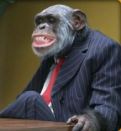 The human protagonist convinces himself that imitation could produce a reasonable quality of science and art, then turns to more mundane activities.
It seemed absolutely clear that industry did not require the presence of a rational being to maintain itself. Basically, industry consisted of manual laborers, always performing the selfsame tasks, who could easily be replaced by apes; and, at a higher level, of executives whose function was to draft certain reports and pronounce ceratin words under given circumstances. All this was a question of conditioned reflexes. At the still higher level of administration, it seemed even easier to concede the quality of aping. To continue our system, the gorillas would merely have to imitate certain attitudes and deliver a few harangues, all based on the same model.
Not a flattering portrait of management, but keep in mind that the protagonist (like the book’s author) is French.
Conference on the Law & Economics of Organization: New Challenges and Directions
| Peter Klein |
Via Scott Masten, an important call for papers:
The Walter A. Haas School of Business at the University of California, with support from the Alfred P. Sloan Foundation, is issuing a call for original research papers to be presented at the Conference on the Law & Economics of Organization: New Challenges and Directions. The conference will be held at the Haas School of Business in Berkeley, CA, on Friday, Nov. 30, and Saturday, Dec. 1, 2012. The purpose of the conference is to take stock of recent advances in the analysis of economic organization and institutions inspired by the work of 2009 Nobel Laureate Oliver Williamson and to examine its implications for contemporary problems of organization and regulation. Empirical research and research informed by detailed industry and institutional knowledge is especially welcome. Conference papers will be published in a special issue of the Journal of Law, Economics, & Organization. Submissions are due March 31, 2012. See the Call for Papers for details.

Kaplan on Private Equity
| Peter Klein |
Mitt Romney’s time as head of Bain Capital has put private equity in the public spotlight. Jonathan Macey gave a vigorous defense of PE in Friday’s WSJ. I am certainly a fan, though of course PE as a governance mechanism has benefits and costs, like all organizational structures. For a great overview of the industry and its role in job creation and economic growth, listen to last Thursday’s Diane Rehm show, where Steve Kaplan gave a terrific presentation emphasizing the data and challenging popular myths about takeovers and layoffs.
CFP: DRUID 2012
| Peter Klein |
This year’s DRUID conference, “Innovation and Competitiveness: Dynamics of Organizations, Industries, Systems and Regions,” is 19-21 June 2012 in Copenhagen. See the call for papers below the fold. Submission deadline is 29 February. (more…)
Request for Test Questions
| Peter Klein |
A friend writes:
I would very much appreciate if you help me in locating multiple choice exam questions for an “Organizations and Markets” course.
We are switching into a new teaching model and as part of that the course now has 400+ students, which make it necessary to have a least a part of automatic grading.
He has access to some publisher-provided testbanks from managerial economics textbooks, but these aren’t exactly on target. If you have any undergraduate- or MBA-level questions you’re willing to share, or leads on sources, please drop me a note. (Don’t post your questions in the comments — you never know what students might be reading this!)
The Science of Design
| Peter Klein |
Rob King’s 2011 AAEA Presidential Address, “The Science of Design,” takes its cue from Herbert Simon.
[M]uch of what we do as economists is akin to what Simon calls natural science. We develop theories about how the economy works, and we conduct empirical studies that test these theories or estimate the parameters of key economic relationships that explain how general results derived from our theories manifest themselves in a particular context.We strive for results that explain what is or that predict what will be. . . .
Economists also design economic artifacts (e.g., markets, contracts, organizational structures, public policies) that reshape economic systems in order to better meet human needs. This work, which I will call economic design, is complementary with but differs fundamentally from economic analysis. While economic analysis is motivated by a question or a puzzle and focuses on explaining what is and predicting what will be, economic design is motivated by a problem or opportunity and focuses on what can be and ought to be or on what will yield a satisfactory outcome. . . .
While we are comfortable in recognizing “good science” in economic analysis, I believe we have devoted less attention to developing a shared understanding of “good science” in economic design.
It is certainly true that economists are increasingly involved in economic design (a trend that accelerated around WWII) though I am less sure this is a good idea. A lot of economic design — specifying “optimal” contracts, for example — might be considered the domain of entrepreneurs, not social scientists. But applied policy work is certainly of this character, so the essay may be read as a call for applied economists to pay closer attention to issues like decomposability, modularity, search, creativity, etc. (See Dick’s work for rich discussions of these issues.)
Kudos to Rob for a thoughtful and intelligent piece. A friend calls it “perhaps the most interesting President’s Address from AAEA in the last 20 years.”
Interdisciplinarity Chart of the Day
| Peter Klein |
This is from a study of economics PhD dissertations at one French university, the EHESS (École des hautes études en sciences sociales).

In the 1960s, three-fourths of economics PhD dissertation committee members were from another discipline, and in the 1990s, less than 15 percent. Other disciplines have also become more self-reliant, but in much less dramatic fashion.
The paper, “The Mainstreaming of French Economics” by Olivier Godechot is here and the pointer goes to Art Goldhammer. The paper focuses on the transformation of the French profession led by US-trained or -oriented economists such as Jacques Mairesse, Jean-Jacques Laffont, and Robert Boyer. Godechot concludes that “scientific life in general and, moreover, paradigmatic change are not only a question of truth, of evidences, and of proofs but also of politics. Evaluating, influencing, building coalitions, voting, and selecting are regular practices both within disciplines and in wider interdisciplinary arenas when articles are submitted, grants are distributed (Lamont, 2009), positions are opened (Musselin, 2005), and candidates are selected.” Right on that.
The Sorry State of Economic Journalism
| Peter Klein |
Matthew Yglesias has found a killer argument against the Austrian theory of the business cycle:
[T]he Austrian story of investment booms and busts doesn’t actually explain recessions and unemployment. Spending patterns shift all the time without sparking a recession. People stop buying BlackBerrys and they buy iPhones instead. Or people stop buying boot-cut jeans and buy skinny jeans instead. Across sectors, maybe people go see fewer movies and with the money they save they eat out at nicer restaurants. A business that curtails its investment spending should have extra money to pay out as dividends. Or if they want to horde the cash, it sits in a bank for someone else to lend out.
I once heard a lecture by the sociologist Steven Goldberg about his work on male social dominance, expressed in his books The Inevitability of Patriarchy (1974) and Why Men Rule (1993). I remember him saying that whenever he presents his dominance thesis, someone invariably raises the objection, with a smug and self-satisfied expression, “What about Indira Gandhi?” or “What about Margaret Thatcher?” He went on (I’m paraphrasing): “Right. . . . Like I’m going to devote three years of my life to researching and writing a book called The Inevitability of Patriarchy, and someone’s going to say ‘What about Indira Gandhi,’ and I’m going to slap my forehead and say, ‘Oh, crap, why I didn’t think of that!'” Goldberg was a funny guy, with a great Brooklyn accent too. (His books point out that Gandhi-led India and Thatcher-led Britain were male-dominated societies, particularly in matters of state.)
This is the centennial year of Mises’s Theory of Money and Credit, published in German in 1912, the book that first presented the “Austrian” theory of business cycles. No doubt Yglesias is unaware that in the hundred years since, there have been dozens of books, hundreds of research papers, more than a few Ph.D. dissertations, and even one Nobel prize analyzing, developing, critiquing, and extending this theory. (Yglesias mistakenly attributes Hayek’s Nobel prize to his work on tacit knowledge, when in fact the prize was given for business-cycle theory.) And yet, these thousands of hours of scholarship can be blithely tossed aside because — wouldn’t you know it — people change their spending habits all the time, and it doesn’t cause a business cycle! Slap to the forehead. Why didn’t we think of that? Curse you, Matt Yglesias! (more…)
Applies to the Professoriate Too
| Peter Klein |
These remarks from Lord Uhtred, a character in Bernard Cornwell’s historical novel The Last Kingdom, caught my eye.
These days I employ poets to sing my praises, but only because that is what a lord is supposed to do, though I often wonder why a man should get paid for mere words. These word-stringers make nothing, grow nothing, kill no enemies, catch no fish, and raise no cattle. They just take silver in exchange for words, which are free anyway. It is a clever trick, but in truth they are about as much use as priests.
Adrian Belew understood.
Vive les French (Fries)!
 | Peter Klein |
Most people don’t know that France is McDonald’s second-most popular market, despite the presumed French distaste for les choses américaines. Knowledge@Wharton has a nice piece suggesting that the firm’s willingness to cater to French tastes explains its success over local and multinational rivals:
In France, barely 10% of meals are eaten outside the home, compared to nearly 40% in the U.S. and the U.K. Unlike their Anglo-Saxon counterparts, French consumers rarely snack between breakfast, lunch and dinner. As a result, French meal times also last longer, and more food is consumed through multiple courses, creating unique opportunities and challenges for fast-food dining. McDonald’s decided to capitalize on the opportunity. Rather than run promotions that encourage snacking, the company freed up valuable labor by installing electronic ordering kiosks, which are used by one out of every three customers in more than 800 of its restaurants. McDonald’s has capitalized on the French cultural preference for longer meals by using surplus labor to provide table-side service, particularly in taking orders from lingering diners inclined to order an additional coffee or dessert item. Thanks to such initiatives, the average French consumer spends about US$15 per visit to McDonald’s — four times what their American counterparts spend.
Adding the McCafé — featuring macaroons baked by the same company that supplies Ladurée — was another savvy move.
The Economic Organization of Disaster Relief
| Peter Klein |
J. Vernon Henderson and Yong Suk Lee have released a fascinating study of the make-or-buy decision in the provision of disaster relief. “We distinguish four organizational structures by implementation method. . . . (1) donor-implementers who are NGO donors who do their own implementation in villages, (2) international implementers who represent different donors who choose not to do their own implementation, (3) domestic implementers hired by donors which have chosen neither to do their own implementation nor to hire an international implementer, and (4) a country level governmental organization . . . used primarily by domestic and foreign governments.” Henderson and Lee find that donor-implementers offer the highest-quality aid, and the government agency the lowest, with the contract implementers in-between. The framework is agency theory, not transaction cost economics, but there may be a role for asset specificity as well, particularly in cases where a longer-term commitment is required. In any case, this is an interesting and important application of organizational economics to an unconventional setting.
Top Posts of 2011
| Peter Klein |
Here are our most popular posts published in 2011:
 The Value of Steve Jobs
- The Performative Effects of Social Constructionist Professors in Business Schools
- Creative Destruction, Music-Industry Edition
- The Organizational Structure of Al Qaeda
- The Confusing “Business Model” Construct
- Classic Professor Poses
- The Future of Managerial Economics
- The AER Canon
- Famous Quotations Taken Out of Context
- Why Do Firms Hire Management Consultants?
- What the Seminar Speaker Really Means
- Entrepreneurship Lives!
- Scientific Misconduct in Management Research
- The Downside of Case Studies
- Confusing Definitions of Entrepreneurship

Thanks to our readers, commenters, guests, and supporters for a great 2011. We’re looking forward to 2012!
“Illusions in Regression Analysis”
| Peter Klein |
Apropos Lasse’s post, check out Scott Armstrong’s “Illusions in Regression Analysis,” via Craig Newmark, who highlights passages like this:
This illusion [that correlation implies causality] has led people to make poor decisions about such things as what to eat (e.g., coffee, once bad,is now good for health), what medical procedures to use (e.g., the frequently recommended PSA test for prostate cancer has now been shown to be harmful), and what economic policies the government should adopt in recessions (e.g., trusting the government to be more efficient than the market).
And this:
Do not use regression to search for causal relationships. And do not try to predict by using variables that were not specified in the a priori analysis. Thus, avoid data mining, stepwise regression, and related methods.
Teaching in the 2010s
| Peter Klein |
A new University of Missouri policy. As the young people would say, this was so not a problem in my day:
2. Students may make audio or video recordings of course activity unless
specifically prohibited by the faculty member.a. To foster a safe environment for learning, however, the redistribution of audio or video recordings of statements or comments from the course to individuals who are not students in the course is prohibited without the express permission of the faculty member and of any students who
are recorded. Unauthorized distribution of such materials is a violation of academic standards and may violate copyright laws and/or privacy rights. Students found to have violated this policy are subject to discipline in accordance with the provisions of Section 200.020 of the Collected
Rules and Regulations of the University of Missouri pertaining to student conduct matters. Faculty and staff found to have violated this policy are subject to discipline in accordance with applicable University policies.





 Organizations and Markets
Recent Comments