Posts filed under ‘Education’
Advice For Junior Faculty
| Peter Klein |
Last Friday the Chronicle of High Ed published the first in a series of articles giving strategic advice for pre-tenure faculty. In “A Call for Clarity” Cathy Trower and Anne Gallagher identify four common pitfalls facing early-career professors:
- Vague and inconsistent tenure guidelines
- Lack of constructive feedback
- A culture of “don’t ask, don’t tell”
- Divergence between policy and practice
In response they suggest that universities adopt formal written policies, offer tenure workshops, and provide clear interpretation of tenure rules. Good advice. (Thanks to Fabio Chaddad for the pointer.)
Best Few Sentences I Read Today, University Edition
| Peter Klein |
Fred Schwarz, writing about University programs to have incoming freshmen read and discuss a particular book (usually a propaganda piece like Barbara Ehrenreich’s Nickel and Dimed but in this case Garry Wills’s tedious Lincoln at Gettysburg):
I dislike the whole idea of making everyone read the same book. . . . Why do college administrators persist with schemes like this? They usually say they’re meant to give students “something in common.” So administrators spend half their time dividing students into groups by race, sex, religion, and so forth, and emphasizing their differences; then they spend the other half devising programs, workshops, and silly ideas like this to help everyone overcome them. Nothing surprising there; running a university, like many jobs, is largely a matter of making work for oneself.
Wiki Textbooks
| Peter Klein |
I teach two graduate courses without textbooks, Economics of Institutions and Organizations and Entrepreneurship: Theory, Applications, Debate. Maybe I should ask the students to create a Wiki Textbook? Anybody out there in the blogosphere want to coordinate such a project? (Thanks to Molly Burress for the link.)
See also previous entries on Wikisummaries, the Global Text Project, wiki notes, and Wikiversity.
Top Management Scholars, Journals, and Universities
| Peter Klein |
Rankings, rankings, more rankings. . . . If you like to bibliometric analysis of individual researchers, journals, and universities you’ll find more than you can handle in “Scholarly Influence in the Field of Management: A Bibliometric Analysis of the Determinants of University and Author Impact in the Management Literature in the Past Quarter Century” by Philip Podsakoff, Scott MacKenzie, Nathan Podsakoff, and Daniel Bachrach (Journal of Management 34, no. 4 (2008): 641-720). Over 25,000 individual scholars are reviewed, their institutions evaluated, journal impact factors computed, and numbers crunched hither and yon. Some qualitative conclusions:
The findings showed that (a) a relatively small proportion of universities and scholars accounted for the majority of the citations in the field; (b) total publications accounted for the majority of the variance in university citations; (c) university size, the number of PhDs awarded, research expenditures, and endowment assets had the biggest impact on university publications; and (d) total publications, years in the field, graduate school reputation, and editorial board memberships had the biggest effect on a scholar’s citations.
Research and Teaching: Friends or Foes?
| Peter Klein |
Administrators at every research university know the mantra, repeated endlessly to parents, funders, and overseers: cutting-edge research and top-notch (undergraduate) teaching go hand-in-hand. But there is surprisingly little work, theoretical or empirical, investigating the relationship. Here is an edited transcript of a discussion between economists Jim Gwartney (Florida State), Dirk Mateer (Penn State), Rich Vedder (Ohio U), and Russ Sobel (West Virginia) about the relationship between research and teaching. They were asked (1) is research needed for good teaching, and (2) can research activity harm teaching?
Higher education has two key missions: transferring existing knowledge to students, and discovering new knowledge. While the two functions are not mutually exclusive, there is a growing awareness that trade-offs exist between them. Does an emphasis on research detract from undergraduate education? Are too much time and money spent on research rather than teaching? Is career advancement (such as tenure) too dependent on research, a la “publish or perish?”
We asked four noted university-based economists to discuss those issues. . . .
Hat tip to Vedder, whose higher ed blog is on my regular reading list.
Our Own Buzz, Continued
| Peter Klein |
Lasse’s post reminded me of the classic “What the Professor Really Means.” Students, take note. Graduate students, study this carefully for its pedagogical wisdom.
IRBs and Social-Science Research
| Peter Klein |
Most US research universities have an Institutional Review Board, or IRB, tasked with supervising “human-subjects” research. Unfortunately, the performance of the typical IRB is nothing short of disastrous, as we’ve noted before. IRB officials are trained to work with the physical and biomedical sciences, and have little knowledge of social-science research, though their mandate usually covers all research done at the university.
The July 2008 issue of Political Science & Politics, published by the American Political Science Association, contains a symposium on “Protecting Human Research Participants, IRBs, and Political Science Redux.” As editor Robert J-P. Hauck notes in his introduction:
By the 1990s, “IRBs had expanded their mission to include all research, not just research funded by the federal government, enhancing their scope of authority while slowing the timeliness of reviews. Similarly, and with the same result, IRBs were evaluating secondary research as well as primary research. Although the federal legislation provided for a nuanced assessment of risk, the distinction between potentially risk-laden research necessitating a full IRB review and research posing minimal or no risk that could be either exempted or given expedited review was disappearing. The length of the review process threatened the beginning or completion of course work and degree programs. IRBs were judging the merits of research projects rather than the risks involved. This trend was especially problematic because representation on many IRBs was skewed toward biological and behavioral scientists often unfamiliar with the methods and fields of political science and the other social sciences. And the list went on.
In the years that followed there have been several efforts to reform human subject regulation. . . . In the face of these and other efforts, are IRBs better able to effectively and efficiently protect human subjects in social science research?
Judging from the comments of the symposium authors, the answer is no. Now as in the past, IRBs have no consistently applied metric for measuring risk and corresponding levels of IRB review. Mitchell Seligson, Felice Levine and Paula Skedsvold, and Dvora Yanow and Peregrine Schwartz-Shea confirm that the review process has not and perhaps cannot accommodate survey methods and ethnographic and field research. The pace of the IRB review process continues to hinder undergraduate and graduate empirical research. IRBs’ rigid interpretations of requirements produce logically inconsistent directives such as when researchers are told to destroy data they diligently collected and anticipated sharing in order to protect research subjects’ anonymity (Seligson 2008; Yanow and Schwartz-Shea 2008; and Levine and Skedsvold 2008).
The pointer is from Zachary Schrag, who promises to comment on each article in the symposium.
Whither Chicago Economics?
| Peter Klein |
Steve Levitt, writing on the controversy surrounding the University of Chicago’s proposed Milton Friedman Institute, says this:
The Chicago economics department views the world differently than anyone else, even other economics departments. Having learned my economics at Harvard and M.I.T., I took my first teaching job at Chicago with the very explicit idea that I would spend two or three years in Chicago to get to “know the enemy.” After I figured out how they thought, I would escape back to more comfortable surroundings.
Well two things happened that I didn’t expect. First, it turned out that it wasn’t so easy to learn to think like a Chicago economist. I’ve been trying to learn for more than a decade and I still have learned only the rudiments. Every day my colleagues teach me something I should know, but don’t. Second, I decided that the Chicago approach to economics was the right one for me, even though I am not that good at it.
I wish Levitt would elaborate on the differences between contemporary Chicago economics and the economics of Harvard, MIT, Princeton, and Stanford, because I don’t see any. The Chicago economics of 1970 or even 1980 was distinct from that of its East and West coast rivals. The Journal of Political Economy, and even more so the Journal of Law and Economics, had a unique style and approach. Chicago-influenced economics departments at UCLA, Washington, Texas A&M, Clemson, and elsewhere were disseminating (and deepening) the brand. But that’s all gone. It’s hard to see any unique vision today. Indeed, the diversity among US economics departments seems a thing of the past, as I noted before. They are all mini-MITs. How, exactly, is Chicago economics any different?
Niche Business School Programs
| Peter Klein |
I’m surprised that the niche strategy isn’t used more in academia. Most economics departments at research universities strive to be the “MIT of [fill-in-the-blank].” Business schools tend to value the same set of academic journals, teach from the same set of cases, and hire faculty from the same set of top schools. Not only is this strategy unlikely to work for the typical mid-tier university, it has the undesirable social consequence of creating a bland conformism in which every department in Field X looks pretty much like every other department in Field X. The virtues of experimentation and learning are lost. Herd behavior is the order of the day.
Business Week recently ran an interesting piece about several undergraduate business programs that are trying the niche strategy. The University of Louisville runs a successful equine management program. Belmont University in Nashville offers a specialized music business degree. The University of Houston trains students for the energy industry. And Florida State University has a Professional Golf Management program.
What are your experiences with niche programs, where the niche is defined by applied focus (as in the above examples), by research method or approach, by a particular theoretical focus, or otherwise?
Tips for Presenting Your Research
| Peter Klein |
One of the most important skill young scholars must develop is the ability to give a technical presentation to a non-specialist audience. Everyone likes to strut his stuff but dissertation committee members, prospective academic employers, seminar audiences in various contexts, and others to whom you expose your work don’t necessarily want the gory details. Background, context, motivation, results, and implications are usually the most important parts of a presentation, but often the most neglected.
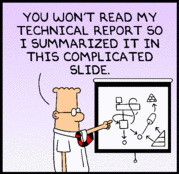 Two cartoons in my local paper today, this from Dilbert and this from Pickles, highlight that theme. Also, check out this article from Web Worker Daily, “10 Tips for Working with the Not-So-Tech-Savvy,” illustrated beautifully with an abacus. It’s written for techies working with regular folk, but many of the principles — avoid jargon, use analogies, include visuals, reference case studies, link to current events, be patient — apply to scholarly communication.
See also: Fabio’s Grad Skool Rulz.
Allen Nevins Dissertation Award
| Peter Klein |
I received an email the other day from the Economic History Association soliciting nominations for its dissertation prizes, the Allan Nevins Prize for best dissertation in U.S. or Canadian economic history and the Alexander Gerschenkron Prize for the best dissertation in the economic history of, you know, what our textbooks call ROW (the Rest of the World). This brought to mind a couple of personal connections:
1. Last year’s Nevins prize went to a University of Missouri student, Mark Geiger, who wrote on grassroots financing of the US Civil War.
2. My dad got his PhD in history at Columbia in the 1950s and, while teaching there as a lecturer, worked in Nevins’ office. Dad told an interviewer:
Allan Nevins had retired, but I was allowed by him to use a desk in his office. He had an office twice the size as this, which was filled with books from ceiling to floor and piled high. And if you were at Columbia you were immediately well known, you know. A newspaper or journal would call me up or a publisher, “Would you review this book for us?” And I wouldn’t know anything about it, “Yes Sir,” and I’d look on Nevins’ shelf and find three books on the subject. (Laughter)
Being at Columbia and around Nevins at that time was a great launching pad for an academic career. Dad, holding the rank of lecturer (lower than assistant professor), was invited to interview for the department head position at Long Island University, which he was offered and accepted. The job came with tenure and the rank of full professor. Dad’s the only person I’ve known to be a tenured full professor without ever having been an assistant or associate prof.!
Wikicheatia
| Peter Klein |
Facebook founder Mark Zuckerberg, reports the NY Times, skipped his college art history class:
When it came time for the end-of-term study period, he was too busy building the prototype of Facebook to bother to do the reading. So in an inspired last-minute save, he built a Web site with all of the important paintings and room for annotation. He then sent an e-mail to the students taking the class offering it up as a community resource.
In a half an hour, the perfect study guide had self-assembled on the Web. Mr. Zuckerberg noted that he passed the course, but he couldn’t remember the grade he received.
The pointer is from Joshua Gans, who calls this “an example of Wikicheatia or of Study Group 2.0.”
Disengaged Students
| Peter Klein |
To my colleagues who teach: how do you handle disengaged students? Paul Trout describes them thusly:
They do not read the assigned books, they avoid participating in class discussions, they expect high grades for mediocre work, they ask for fewer assignments, they resent attendance requirements, they complain about course workloads, they do not like “tough” or demanding professors, they do not adequately prepare for class and tests, they are impatient with deliberative analysis, they regard intellectual pursuits as boring, they resent the intrusion of course requirements on their time, they are apathetic or defeatist in the face of challenge, and they are largely indifferent to anything resembling an intellectual life.
I have known a few in my time. The pointer is from George Leef, who also provides this excerpt from Generation X Goes to College:
[B]y and large, students view themselves primarily as consumers who intend to study just a handful of hours a week for all their classes, and who expect, at a minimum, solid Bs for their efforts. . . . In short, they view themselves as consumers who pay their teachers to provide “knowledge,” regardless of how superficial that knowledge might be. After all, how hard should a consumer have to work to buy something?
See also: “In the Basement of the Ivory Tower” from the new Atlantic Monthly.
Interdisciplinary Degree Programs
| Peter Klein |
ANAKIN: How do you know the ways of the Force?
PALPATINE: My mentor taught me everything about the Force . . . even the nature of the dark side.
One of the great things about being Oliver Williamson’s PhD student is that he encouraged us to read widely outside our core discipline. His “Economics of Institutions” course included materials from political science, business history, cognitive science, and even . . . sociology! So while my primary training was in economics, I was exposed to some of the best thinkers in the “contiguous disciplines.” I even know about the dark side.
Nonetheless, I was enrolled in a traditional degree program and was credentialed in an established discipline (economics). Recently I’ve been talking to colleagues in several departments about the possibility of creating a truly interdisciplinary social-science degree program, one that would train students in two or more disciplines organized around core subject areas like organizational studies, entrepreneurship, regional development, and the like. This sort of curriculum has obvious potential advantages in fostering intellectual breadth, developing critical thinking skills, and encouraging relevance and accessibility beyond a handful of specialists. On the other hand, there are many potential hazards. The training may be broad but not deep; opportunities for narrow, technical advances may be missed; students may struggle to find academic placements; and so on.
I’d like to hear from readers who have experience with, or informed opinions on, such interdisciplinary programs. The best-known is probably Chicago’s Committee on Social Thought, which included T. S. Eliot, F. A. Hayek, Allan Bloom, Saul Bellow, Hannah Arendt, and Leo Strauss on its faculty and produced outstanding graduates such as Ralph Raico and Ronald Hamowy. Arizona State’s School of Global Studies is a more recent example. Vanderbilt recently started a PhD program in law and economics. What are some other programs I should be studying?
Edinburgh Business School to Buy Adam Smith’s House
| Peter Klein |
How would you like to take economics classes in Adam Smith’s house? Edinburgh Business School students will have the pleasure after the school completes its purchase of Panmure House, Adam Smith’s home from 1788 to 1790. Smith was born in nearby Kirkaldy and spent much of his academic career in Glasgow, but lived in Edinburgh on several occasions and was a prominent member of Edinburgh society.
Some commentators find it ironic that the house’s current owner, Edinburgh’s City Council, is selling to the university rather than accept a higher, competing bid from a private citizen. So much for the free market! But, as a careful reading of Smith reveals, Smith was hardly an advocate for unrestricted laissez-faire, supporting substantial public expenditures on infrastructure and education as well as the legal system and national defense (see David Gordon and Gavin Kennedy).
Greetings from Leuven
| Randy Westgren |
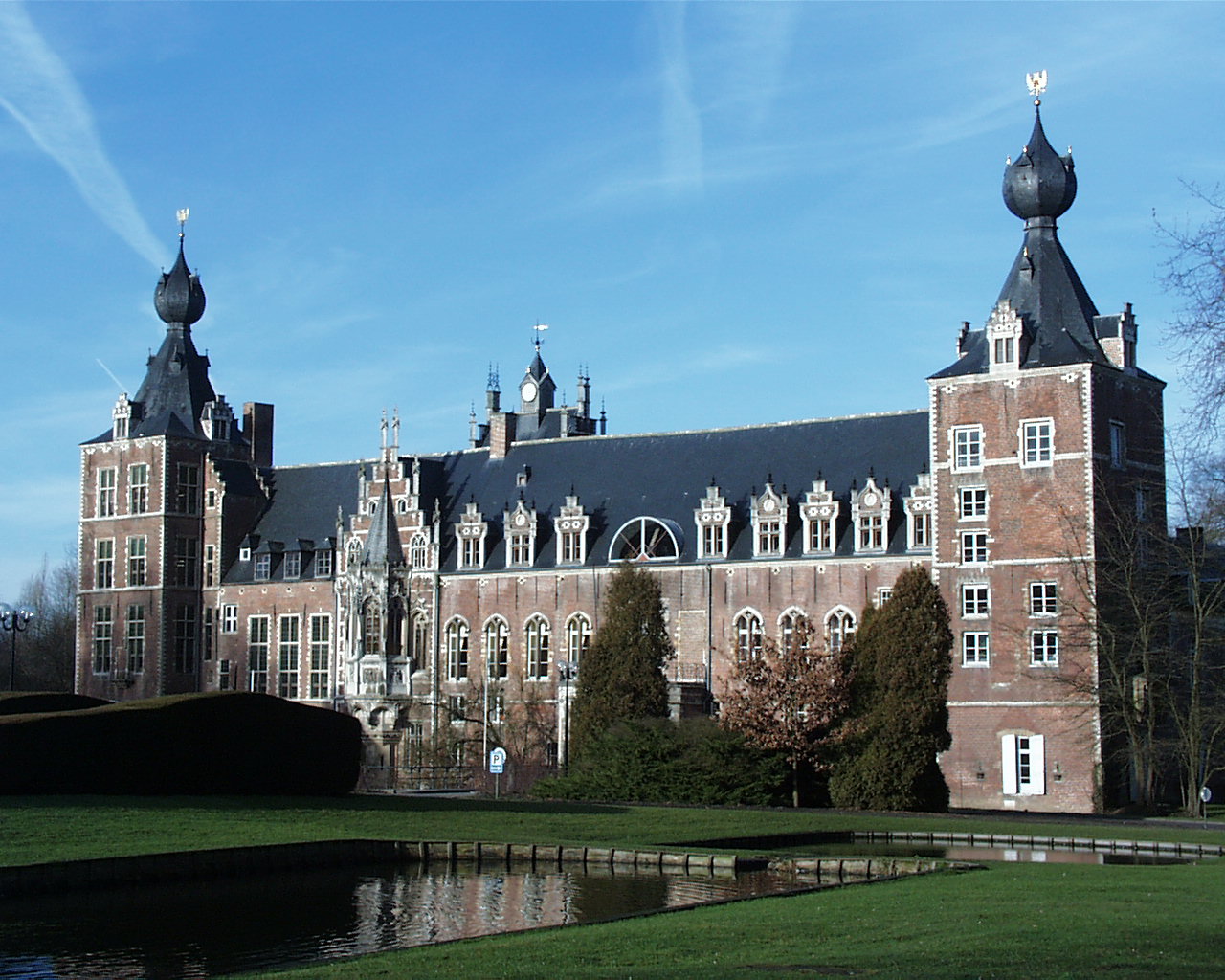 I am sorry to have been lax in fulfilling my (implicit) obligations as a guest blogger. I have been in Belgium for about 36 hours, centered at the Katholieke Universiteit Leuven, with 2 dozen undergraduates at the beginning of a two-week study tour which follows on from a semester-long course in the spring semester. The nonpecuniary transaction costs for getting myself from a Midwest university town to another university town 1/3 of the world away have caused me to self-medicate with several of the excellent Trappist brews from Flanders. As a consequence, (a) my attitude has improved greatly and (b) my productivity has plummeted. There are a couple of posts that are near the end of gestation and will follow soon. Alas, tomorrow (Thursday) will be a Brussels day — McDonald’s EU HQ, US Trade Rep assigned to the Mission, the DG for EU agricultural policy, and a reception at the Flemish industrialists’ club, De Warande. So, you’ll have to wait another day. . . .
P.S. Don’t tell anyone how hard professors work.
Manne on Ideology and the Law-and-Economics Movement
| Peter Klein |
Josh Wright has written a thoughtful and informative series on the future of law and economics (1, 2, 3, 4). Key issues include the increasing formalism of L&E scholarship, the place of L&E within law schools (as opposed to economics departments), and the influence of L&E on legal practice and public policy.
The latest entry focuses on a response to Josh by Henry Manne, the founder of the modern law-and-economics movement (and, I might add, a regular reader of O&M). Manne argues that ideology, more than genuine scientific disagreement, explains the often-hostile reaction to L&E within the legal establishment, a theme we’ve explored in several posts (1, 2, 3, 4, 5).
I think that the major issues are now, as they were fifty years ago, mainly ideological, and I believe that the causes forcing L&E out of the law schools today are the very same ones that operated to prevent my getting better jobs in the 1960s and for most senior law professors to think that what I was advocating was sheer nonsense, “to the right of Genghis Kahn,” as they used to be so stupidly amused at repeating ad nauseum. They were protecting their intellectual investment in skills and ideology against the threat of a new paradigm in which they could not share the rents, and I do believe that that is exactly what is still happening. While you and I see enormous social benefits from a legal system based on the idea of property rights and their protection, all they see is less role for the government and themselves. Perhaps this acts at an unconscious level, but it unmistakably is at work whatever the source of the peculiar leftist ideology of most academics.
What I am saying is that it is impossible to separate completely a discussion of the role of L&E in legal education from the ideological aspects of the subject. I honestly believe that at some level the turn of L&E to econometrics and empirical work is a flight from the implications of a thoroughgoing Alchianesque kind of economics. Perhaps that is even more clear with the current popularity of Behavioral Economics, and of late I even notice in the literature a somewhat open attack on the very idea of freedom of contract. I do not think these developments are accidental or random; I believe that they are inherent in the very structure of modern universities and law schools.
Hayek on Intellectuals
| Peter Klein |
It’s Hayek-Klein Day, and bloggers are sharing their favorite Hayek quotes (Boudreaux, Horwitz). Here’s one of mine:
The typical intellectual . . . need not possess special knowledge of anything in particular, nor need he even be particularly intelligent, to perform his role as intermediary in the spreading of ideas. What qualifies him for his job is the wide range of subjects on which he can readily talk and write, and a position or habits through which he becomes acquainted with new ideas sooner than those to whom he addresses himself.
That’s from “The Intellectuals and Socialism,” published in 1949. (See this for an elaboration of Hayek’s argument.) Substitute “blogger” for “intellectual” and the passage could have been written today!
Ethical Standards for Business Professors
| Peter KIein |
You may have heard about the campaign to have John Yoo, author of the infamous Bush Administration torture memo, fired from his (tenured) position as professor of law at UC Berkeley. Brad DeLong has blogged a lot about this. (Here is Yoo’s response, last week, in Esquire, and here is a statement from Yoo’s dean.) Brad quoted something interesting on Tuesday from James Wimberly:
[T]he relevant fact [is] that . . . Professor Yoo is employed to teach a vocational subject, law. This isn’t a prestige issue. Particle physics, cultural studies and remedial English fall on one side of the vocational/non-vocational distinction; law, medicine, nursing, flying training and plumbing school on the other.
All teaching carries with it a minimum set of professional standards on plagiarism, harassment, favoritism and so on. Nobody has suggested John Yoo has violated these. But vocational education should also inculcate the specific ethical standards of the trade in question. It seems at least arguable that Yoo’s probable professional misconduct as legal enabler of war crimes taints his ability to train future advocates and judges. Should a flying school for airline pilots keep an instructor guilty of reckless flying in his own weekend plane? But the same conduct would be irrelevant to the employment of a professor of surgery.
Business administration, like law, is a vocational subject (despite the top-notch scholarship conducted by some business professors). What are the ethical responsibilities of a business professor? Clearly someone who engages in unethical business practices, or encourages students to do the same, is in danger. But what about borderline issues — say, an accounting professor who favors the liberal use of special purpose entities? A critic might even claim that Henry Manne’s endorsement of insider trading is akin to Yoo’s endorsement of “harsh interrogation techniques.” (I think the comparison is ludicrous, but wouldn’t be surprised to hear it from the bashers.) What about business conduct? Certainly a failed entrepreneur can be an entrepreneurship professor; indeed, the experience may even be an advantage. Is a business professor’s consulting activity a purely private matter, or should it have some bearing on his or her professorial standing?
Mizzou J-School Centenary
| Peter Klein |
My colleague Steve Weinberg‘s new book on John D. Rockefeller and Ida Tarbell, Taking on the Trust, is reviewed in today’s Wall Street Journal. You can read an exerpt here (may be gated for non-subscribers). Steve has another new book, A Journalism of Humanity: A Candid History of the World’s First Journalism School, about the University of Missouri’s J-School, which is celebrating its centenary this year. As explained in the book the journalism school, like the first programs in business administration at Wharton, Tuck, HBS, and elsewhere, struggled to gain acceptance as a legitimate academic program and to escape the “trade-school” stigma.
While vocational programs in law and medicine have long been accepted as legitimate parts of the Academy, and engineering, agriculture, and architecture have been welcomed since at least the late 19th century (in the US, after the Morrill Act), business and journalism have faced particular difficulties becoming integrated into the academic mainstream. Actually, journalism today is even more of an outsider than business administration; for example, while many B-school faculty hold PhDs in economics, sociology, psychology, or other “traditional” disciplines, many J-school professors do not hold PhDs at all, with most being former industry professionals, more like B-school clinical professors. Those of you interested in the history and current problems of business schools might learn something from the experiences of journalism and other professional schools.





 Organizations and Markets

Recent Comments