Posts filed under ‘Ephemera’
Insert Your Own Punch Line Here
| Peter Klein |
Brian McCann describes recent experimental work on the ultimatum game:
Unlike humans, who have a tendency to make generous offers when they are the first player and to reject non-generous offers when they are the second players, chimpanzees exhibit the type of rational, profit-maximizing behavior economists would expect.
Celebrating the Index Card

 | Peter Klein |
Old-timers like me learned to write research papers by taking notes on index cards, spreading them out on a table, and placing them in a coherent sequence. Nowadays people just open up Word (or, for geekier types, 
One of my favorite tech blogs, Web Worker Daily, which features retro-analog stuff like the Hipster PDA, offers this list of things you can do with an index card. I’ve tried many of these (not #7 and #13) and have found them quite effective.
I guess you could use something like ndxCards, but would it be as much fun?
Nobel Nugget of the Day
| Peter Klein |
Mike Giberson: “In some respects the Nobel is just a beauty contest for academic economists without a swimsuit competition (thank the gods!).”
We do have trading cards and t-shirts, however.
Berkeley Online Classes
| Peter Klein |
UC-Berkeley is offering several Fall 2007 classes in free, online versions. Here are some that may interest O&M readers:
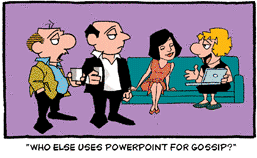
Another Use for PowerPoint
| Peter Klein |
From yesterday’s Lockhorns strip, for our fun with PowerPoint series.
NASA’s Ambitious Plans, Courtesy of the Onion
| Peter Klein |
It’s easy to poke fun at NASA. Has there every been a clearer example of Bastiat’s broken window fallacy? But I wish I could do it as cleverly as the Onion, which breathlessly reports NASA’s ambitious ambitious plan to install wi-fi by 2017. (Via Anthony Gregory)
A Nobel for Organizational Economics?
| Peter Klein |
The econo-blogosphere is atwitter in anticipation of Monday’s Nobel Prize announcement. (Yes, I know it’s the Sveriges Riksbank Prize in Economic Sciences in Memory of Alfred Nobel, not a “real” Nobel, but who cares? The money spends just the same.) Mankiw, Cowen, Boettke, and other bloggers have made their recommendations and issued their forecasts. Even the sociologists are getting into the act.
How about a prize for organizational economics? Coase, of course, whose 1937 paper is foundational to the field, has already won, as have Akerlof, Spence, Stiglitz, Mirrlees, Vickrey, Hayek, and others whose work has greatly informed the study of organizations. But, for a prize recognizing organizational economics per se, whom would you pick? Williamson, Holmström, Milgrom, Roberts, Hart, Tirole, Aghion? Perhaps Alchian, Demsetz, or Jensen. Maybe a personnel economist (Lazear) or someone in corporate finance or accounting (Bill Schwert, Stewart Myers, René Stulz, Raghuram Rajan, Cliff Smith, Milton Harris, Artur Raviv)? Suggestions?
Budapest: The Golden Years
| Peter Klein |
My paternal grandparents were Hungarian émigrés so I tend to take an interest in all things Magyar. I was pleased to hear (from Marshall Jevons) about “Budapest: The Golden Years,” a panel discussion at this year’s Neumann Memorial Lectures at Princeton. “The panel will use their familiarity with the life, times, and person of John von Neumann to explore the circumstances of his education and upbringing, as well as those of the many other creative and productive mathematicians and scientists from that time and place.” The discussion revolves around Tibor Frank’s paper on Hungarian exiles, “The Social Construction of Hungarian Genius, 1867–1930,” exploring the background of famous twentieth-century Hungarian scientists like von Neumann, Edward Teller, and Leo Szilard, along with Karl and Michael Polanyi and many others.
Hungary has produced some decent economists too: John Harsányi and Janos Kornai come to mind. George Stigler was half Hungarian, and both of Milton Friedman’s parents were born in Carpatho-Ruthenia, then part of Hungary (now in Ukraine).
Here’s a page celebrating Hungarian Nobel Laureates. Here are some von Neumann jokes. Here is Oskar Morgenstern’s account of his collaboration with von Neumann (but see this third-party account which gives Morgenstern a smaller role).
Spam Filtering and Academic Research
| Peter Klein |
You may or may not like the discussion of sexual identity spawned by Nicolai’s post, but our spam filter definitely does not like it. Quite a few of the comments on that thread have been recovered from the spam queue; presumably anything with the word “sex” or its derivatives is per se suspicious. (If you posted a serious comment and it didn’t appear, let me know; it may be stuck in the queue.)
So I’m wondering: What if someone is doing legitimate academic research on erectile dysfunction, refinancing, lottery tickets, or the inheritance practices of Nigerian dictators? How do such people communicate their research results to colleagues? How do they send emails to grant agencies, conference organizers, and journal editors? “Dear Bob: Here is the latest draft of my paper on Ci@li$.” Perhaps such papers deserve extra credit for degree of difficulty.
More Fun with Names
| Peter Klein |
Our silly posts (1, 2) are among our most popular, so let’s have more fun.
Whatever she does lies within her Kor competence.
His writings are all Peer reviewed.
Their paper covers everything from A to Z.
Separated at Birth, Management Professor Edition
| Peter Klein |
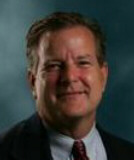
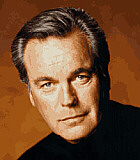
Bill Hesterly and Robert Wagner
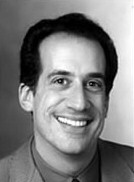
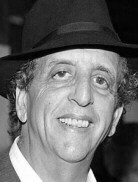
Steve Postrel and Vincent Schiavelli

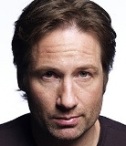
Jackson Nickerson and David Duchovny
Other suggestions?
Boskin Returns to CEA, Virtually
| Peter Klein |
Stanford’s Michael Boskin chaired the Council of Economic Advisers under George H.W. Bush. Yesterday we learned that Boskin will once again chair the CEA — for Gaia Online, not the United States. That’s right, Gaia, a teen-oriented role-playing site, has a Council of Economic Advisors.* It consists of Boskin, Stanford economics PhD candidate Saar Golde, and a member to be named later. No word if the members and their staff will be housed in a virtual Old Executive Office Building or will produce a virtual Economic Report of the President. (Thanks to Lynne for the pointer.)
* The real CEA, as former staffers (like me) know, spells its name “Advisers,” not “Advisors.” I’m sure Boskin will insist on the correction.
18 September 2007 at 11:41 am Peter G. Klein Leave a comment
Social Science Factoid of the Day
| Peter Klein |
Thomas Schelling wrote several chapters of The Strategy of Conflict while on sabbatical in London. He shared a typist with Agatha Christie, then working on her classic play The Mousetrap. Wonder if any pages got switched?
From Robert Dodge’s The Strategist: The Life and Times of Thomas Schelling (Hollis Publishing, 2006).
New Frontiers in Cross-Branding
 | Peter Klein |
You, too, can afford a Bugatti. This one, not this one. (Via Gizmodo.)
Hayek Orchid Bleg
| Nicolai Foss |
Want to impress that free-market girlfriend (or potential girlfriend) of yours? Buy a Paphiopedilum Friedrich von Hayek!
Who knows the story behind this? Hayek’s father was a Professor of Botany. Might he have named an orchid after his son? Or was it named by a later Hayek-admiring botanist? Or, are we talking about an altogether different Hayek (not likely)?
How to Give a Guest Lecture
| Peter Klein |
Steve Carrell shows how it’s done on one of my favorite episodes of The Office. Seeing him rip up an economics textbook is classic. And how often do you hear the words “Herfindahl Index” on prime-time TV?
Update (7 November 2007): NBC’s lawyers made YouTube take down the clip. But here’s another (albeit incomplete) version.
John Nash on YouTube
| Nicolai Foss |
Somewhat to my surprise I found clips with John Nash on YouTube. And I don’t mean trailers for A Beautiful Mind (but here it is), but the genuine article. Here and here he is.
Thank You, Steve
| Nicolai Foss |
Steve Postrel has served for more than half a year as O&M guest blogger, our longest-serving GB so far. Peter and I have been extremely happy for Steve’s long tenure here, for he has contributed some of the most profound posts on O&M. Not surprisingly, these posts have also been among the most popular O&M posts. Peter and I coined the internal notion of the “Postrel Effect” to refer to the surge of O&M views that has always followed a Postrel post. Luckily, Steve has promised to frequently visit O&M and comment, so perhaps this way we may still benefit from the Postrel Effect. Thanks, Steve, for your excellent work here!!
Fun Activities for B-School Geeks
| Peter Klein |
Found these in Wired 15.09 (October 2007):
- Pecha-kucha: a sort of PowerPoint haiku in which presentations of exactly 20 slides, displayed for 20 seconds each, compete for honor and glory.
- Miss Management, a simulation game that let’s you play middle manager. “You’ll have to juggle incoming work tasks, keep everyone from getting stressed out, and help the coworkers achieve their goals, from flirting at the watercooler to getting more work done than anyone else!” Oh boy.
- And by the way, here are some social networking sites to avoid. Example: Trek Passions. “What it is: Sci-fi personals for Star Trek fans. Who you’ll meet: Men — sad, lonely men.”





 Organizations and Markets
Recent Comments