Posts filed under ‘– Klein –’
The Sorry State of Economic Journalism
| Peter Klein |
Matthew Yglesias has found a killer argument against the Austrian theory of the business cycle:
[T]he Austrian story of investment booms and busts doesn’t actually explain recessions and unemployment. Spending patterns shift all the time without sparking a recession. People stop buying BlackBerrys and they buy iPhones instead. Or people stop buying boot-cut jeans and buy skinny jeans instead. Across sectors, maybe people go see fewer movies and with the money they save they eat out at nicer restaurants. A business that curtails its investment spending should have extra money to pay out as dividends. Or if they want to horde the cash, it sits in a bank for someone else to lend out.
I once heard a lecture by the sociologist Steven Goldberg about his work on male social dominance, expressed in his books The Inevitability of Patriarchy (1974) and Why Men Rule (1993). I remember him saying that whenever he presents his dominance thesis, someone invariably raises the objection, with a smug and self-satisfied expression, “What about Indira Gandhi?” or “What about Margaret Thatcher?” He went on (I’m paraphrasing): “Right. . . . Like I’m going to devote three years of my life to researching and writing a book called The Inevitability of Patriarchy, and someone’s going to say ‘What about Indira Gandhi,’ and I’m going to slap my forehead and say, ‘Oh, crap, why I didn’t think of that!'” Goldberg was a funny guy, with a great Brooklyn accent too. (His books point out that Gandhi-led India and Thatcher-led Britain were male-dominated societies, particularly in matters of state.)
This is the centennial year of Mises’s Theory of Money and Credit, published in German in 1912, the book that first presented the “Austrian” theory of business cycles. No doubt Yglesias is unaware that in the hundred years since, there have been dozens of books, hundreds of research papers, more than a few Ph.D. dissertations, and even one Nobel prize analyzing, developing, critiquing, and extending this theory. (Yglesias mistakenly attributes Hayek’s Nobel prize to his work on tacit knowledge, when in fact the prize was given for business-cycle theory.) And yet, these thousands of hours of scholarship can be blithely tossed aside because — wouldn’t you know it — people change their spending habits all the time, and it doesn’t cause a business cycle! Slap to the forehead. Why didn’t we think of that? Curse you, Matt Yglesias! (more…)
Applies to the Professoriate Too
| Peter Klein |
These remarks from Lord Uhtred, a character in Bernard Cornwell’s historical novel The Last Kingdom, caught my eye.
These days I employ poets to sing my praises, but only because that is what a lord is supposed to do, though I often wonder why a man should get paid for mere words. These word-stringers make nothing, grow nothing, kill no enemies, catch no fish, and raise no cattle. They just take silver in exchange for words, which are free anyway. It is a clever trick, but in truth they are about as much use as priests.
Adrian Belew understood.
Vive les French (Fries)!
 | Peter Klein |
Most people don’t know that France is McDonald’s second-most popular market, despite the presumed French distaste for les choses américaines. Knowledge@Wharton has a nice piece suggesting that the firm’s willingness to cater to French tastes explains its success over local and multinational rivals:
In France, barely 10% of meals are eaten outside the home, compared to nearly 40% in the U.S. and the U.K. Unlike their Anglo-Saxon counterparts, French consumers rarely snack between breakfast, lunch and dinner. As a result, French meal times also last longer, and more food is consumed through multiple courses, creating unique opportunities and challenges for fast-food dining. McDonald’s decided to capitalize on the opportunity. Rather than run promotions that encourage snacking, the company freed up valuable labor by installing electronic ordering kiosks, which are used by one out of every three customers in more than 800 of its restaurants. McDonald’s has capitalized on the French cultural preference for longer meals by using surplus labor to provide table-side service, particularly in taking orders from lingering diners inclined to order an additional coffee or dessert item. Thanks to such initiatives, the average French consumer spends about US$15 per visit to McDonald’s — four times what their American counterparts spend.
Adding the McCafé — featuring macaroons baked by the same company that supplies Ladurée — was another savvy move.
The Economic Organization of Disaster Relief
| Peter Klein |
J. Vernon Henderson and Yong Suk Lee have released a fascinating study of the make-or-buy decision in the provision of disaster relief. “We distinguish four organizational structures by implementation method. . . . (1) donor-implementers who are NGO donors who do their own implementation in villages, (2) international implementers who represent different donors who choose not to do their own implementation, (3) domestic implementers hired by donors which have chosen neither to do their own implementation nor to hire an international implementer, and (4) a country level governmental organization . . . used primarily by domestic and foreign governments.” Henderson and Lee find that donor-implementers offer the highest-quality aid, and the government agency the lowest, with the contract implementers in-between. The framework is agency theory, not transaction cost economics, but there may be a role for asset specificity as well, particularly in cases where a longer-term commitment is required. In any case, this is an interesting and important application of organizational economics to an unconventional setting.
Top Posts of 2011
| Peter Klein |
Here are our most popular posts published in 2011:
 The Value of Steve Jobs
- The Performative Effects of Social Constructionist Professors in Business Schools
- Creative Destruction, Music-Industry Edition
- The Organizational Structure of Al Qaeda
- The Confusing “Business Model” Construct
- Classic Professor Poses
- The Future of Managerial Economics
- The AER Canon
- Famous Quotations Taken Out of Context
- Why Do Firms Hire Management Consultants?
- What the Seminar Speaker Really Means
- Entrepreneurship Lives!
- Scientific Misconduct in Management Research
- The Downside of Case Studies
- Confusing Definitions of Entrepreneurship

Thanks to our readers, commenters, guests, and supporters for a great 2011. We’re looking forward to 2012!
“Illusions in Regression Analysis”
| Peter Klein |
Apropos Lasse’s post, check out Scott Armstrong’s “Illusions in Regression Analysis,” via Craig Newmark, who highlights passages like this:
This illusion [that correlation implies causality] has led people to make poor decisions about such things as what to eat (e.g., coffee, once bad,is now good for health), what medical procedures to use (e.g., the frequently recommended PSA test for prostate cancer has now been shown to be harmful), and what economic policies the government should adopt in recessions (e.g., trusting the government to be more efficient than the market).
And this:
Do not use regression to search for causal relationships. And do not try to predict by using variables that were not specified in the a priori analysis. Thus, avoid data mining, stepwise regression, and related methods.
Teaching in the 2010s
| Peter Klein |
A new University of Missouri policy. As the young people would say, this was so not a problem in my day:
2. Students may make audio or video recordings of course activity unless
specifically prohibited by the faculty member.a. To foster a safe environment for learning, however, the redistribution of audio or video recordings of statements or comments from the course to individuals who are not students in the course is prohibited without the express permission of the faculty member and of any students who
are recorded. Unauthorized distribution of such materials is a violation of academic standards and may violate copyright laws and/or privacy rights. Students found to have violated this policy are subject to discipline in accordance with the provisions of Section 200.020 of the Collected
Rules and Regulations of the University of Missouri pertaining to student conduct matters. Faculty and staff found to have violated this policy are subject to discipline in accordance with applicable University policies.
Another Job Opening
| Peter Klein |
Following up Nicolai’s post, here’s another job listing for O&M readers interested in vertical integration and supply-chain issues in food, fiber, and natural resources (forwarded at the request of Karin Hakelius). Feel free to share similar listings with us and we’ll post them here. (We assume most of you already see the announcements posted at JOE, the BPS and ENT lists of AoM, etc.). (more…)
What Did Keynes Mean by “Animal Spirits”?
 | Peter Klein |
Keynes’s idea that investors are motivated by “animal spirits” has come back into vogue with the recent Keynesian revival, but the term is often misunderstood. Keynes referred not to psychological factors that make investors reluctant to invest, but those that make them invest at all — in the face of deep uncertainty, he thought, only a manic, driven, strong-willed person would put capital at risk. When animal spirits are strong, investment is sufficient to maintain aggregate demand; when they lag, aggregate demand falls, and the economy lapses into depression. (Lord Skidelsky approvingly calls this the “mood swings theory” of business cycles — an idea just crazy enough to spawn a recent NBER paper.)
The new issue of Capitalism and Society features a piece on What Keynes Really Meant on this issue, and it’s a good read:
Alexander Dow, Glasgow Caledonian University
Sheila C. Dow, University of StirlingThe term ‘animal spirits’ has returned to academic and public discourse in a way which departs significantly from the original use of the term by Keynes. The new behavioural economics literature uses the term to refer to a range of behaviour which falls outside what is normally understood as rational. This treatment follows from the mainstream dichotomisation between rationality and irrationality. However, Keynes explained that, given fundamental uncertainty, rationality alone was insufficient to justify action. Animal spirits was the name he gave to the (psychological) urge to action which explained decisions being taken in spite of uncertainty; animal spirits for him were neither rational nor irrational. Nor are they beyond analysis. We explore how the nature and role of animal spirits can vary according to context (as between different sectors, types of firm and within firms). This analysis indicates ways in which policy can promote structural change to strengthen animal spirits in the long term as well as offset short-term weakening in animal spirits.
Professor Secrets
| Peter Klein |
Their odd appearance is public, but they have secrets too. Some dislike students. Many wish they ran a really cool Center. And one has a secret identity!

Classic Professor Poses
| Peter Klein |
I need a new head-and-shoulders shot for my webpage, and am trying to choose among the classic professorial poses. See samples below. What do you recommend?
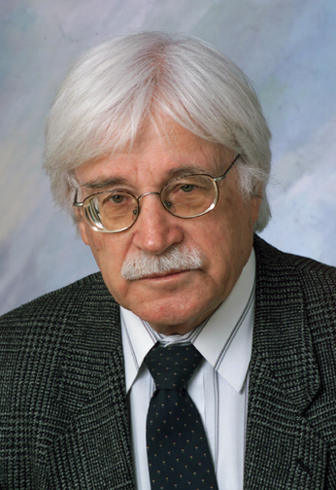
Classic
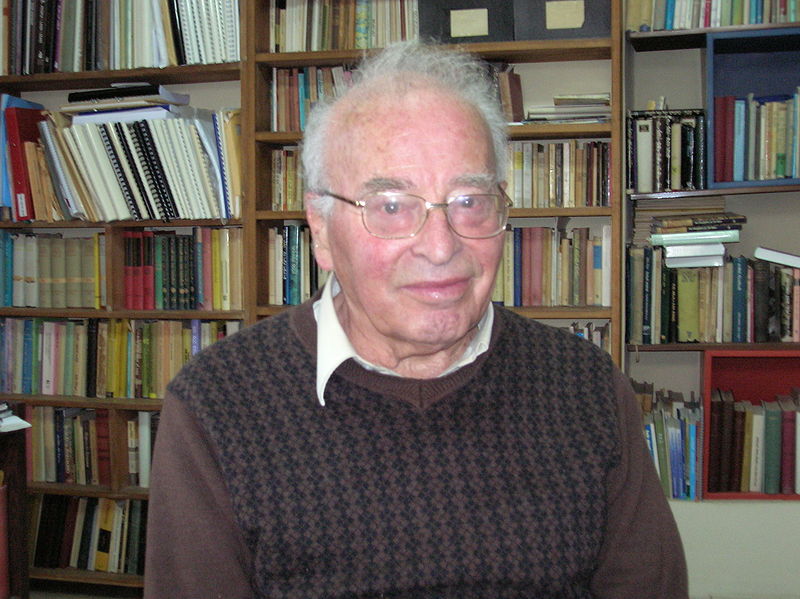
In front of books
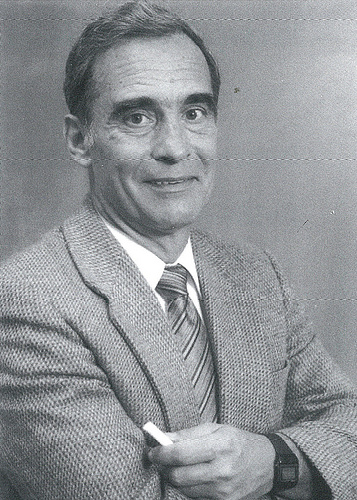
Holding chalk
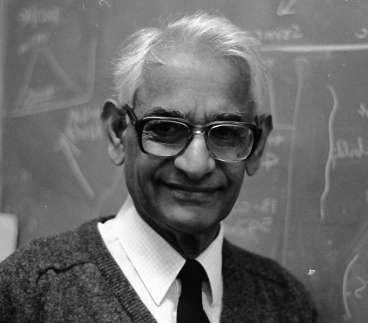
In front of chalkboard
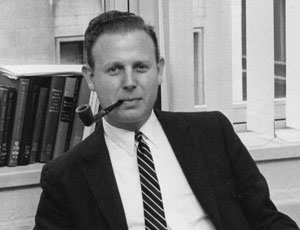
Pipe

Arms folded

At computer
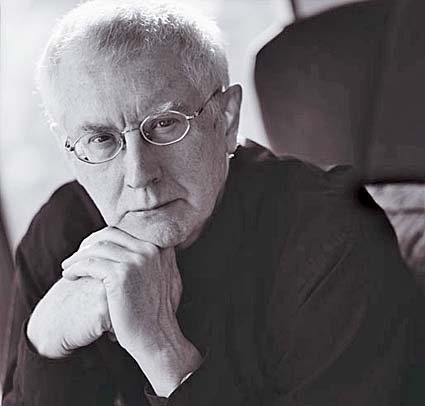
Hands folded

Hands folded (profile)

Holding book

Stern look (keeps 'em away at office hours)

Finger on side of head
Too Freaky
| Peter Klein |
We’ve been somewhat critical on this blog of the Freakonomics approach, but not as critical as Andrew Gelman. Here’s his latest (with Kaiser Fung) in the American Scientist:
On the heels of Freakonomics, the pop-economics or pop-statistics genre has attracted a surge of interest, with more authors adopting an anecdotal, narrative style.
As the authors of statistics-themed books for general audiences, we can attest that Levitt and Dubner’s success is not easily attained. And as teachers of statistics, we recognize the challenge of creating interest in the subject without resorting to clichéd examples such as baseball averages, movie grosses and political polls. The other side of this challenge, though, is presenting ideas in interesting ways without oversimplifying them or misleading readers. We and others have noted a discouraging tendency in the Freakonomics body of work to present speculative or even erroneous claims with an air of certainty. Considering such problems yields useful lessons for those who wish to popularize statistical ideas.
Here’s some additional commentary from Andrew.
My unease with Freakonomics is not its anecdotal, narrative style, but the emphasis on clever puzzles rather than substantive problems, over-reliance on weird instrumental variables, and belief that one can tackle almost any phenomenon with only the barest knowledge of its history and prior literature. Economic theory is indeed quite general and powerful, but not to be thrown around willy-nilly. After all, with great power comes great responsibility.
More on Counterfeiting
| Peter Klein |
We asked in an earlier post if counterfeiting is good for business. Fakes may compete with the real thing, but having them around may also constitute free advertising that boosts demand for the original. Rubik’s Cube distributor Seven Towns Ltd. faces this conundrum, as a WSJ front-pager demonstrates:
One reason . . . a new generation of Rubik’s fanatics can solve the notoriously difficult puzzle in record time: They don’t use Rubik’s Cubes at all, instead substituting souped-up Chinese knockoffs engineered for speed.
The spread of these black-market cubes challenges the London-based company with a marketing brain teaser. Should Seven Towns crack down on the pirated toys? Or piggyback on the phenomenon of competitive speed-cubing?
I for one am happy to have all those cheap knockoffs of my articles and books flooding Chinese markets. Not everyone can afford a Klein® original, after all.
Theory Construction Bleg
| Peter Klein |
A friend writes:
I am trying to improve the theory writing skills of my doctoral students. . . . [In my field] we don’t often build complicated mathematical models; our theory tends to be more story telling. But nevertheless there is good and bad theory. I have found some papers that discuss how to write theory and what constitutes a theoretical contribution. But I really would like for you to recommend a book on the theory of theory construction. I want to assign chapters from it to my students as well as learn something myself. Since the principles of theory construction are generic, I don’t care what literature the author comes from . The insights will be useful regardless.
What would you suggest?
Strategy and Regulatory Uncertainty
| Peter Klein |
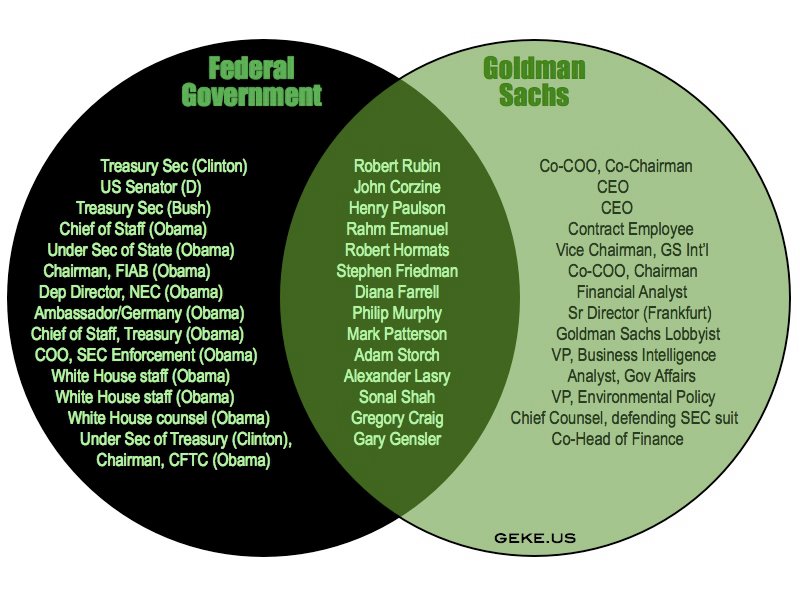
 The Fall 2011 issue of California Management Review is a special issue on “Environmental Management and Regulatory Uncertainty.” I don’t think the authors have been reading Robert Higgs but they nonetheless offer some interesting perspectives on nonmarket strategy and political entrepreneurship. I look forward to future issues on Enron and Goldman Sachs (is it yet considered a branch of the Federal government?).
Hotelling Model
| Peter Klein |
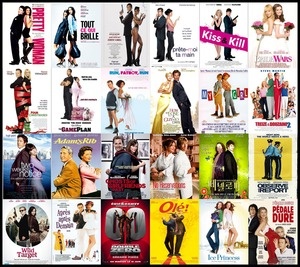
I often use the Hotelling model in class to illustrate the frequent clustering of firm and product characteristics. The example of firms locating on a street is boring, so I show the student’s Wired’s classic “Battle for Blue.” I think I’ll start using this one now (via Scott Rouse).
Disaggregation
| Peter Klein |
The idea that mainstream macroeconomic thinking focuses at too high a level of aggregation is a frequent complaint on this blog (e.g., here, here, here, and here). Our recent Strategic Organization paper hammers home this point. The level of aggregation is of course a fundamental difference between Keynesian and Austrian theorizing about economic fluctuations. But Keynesian economists don’t seem to recognize this.
The other day I posted a snarky blog entry at The Beacon, responding to a Krugman smear of Hayek (yawn). Today Mario Rizzo pens a more thoughtful response, emphasizing exactly this level-of-analysis issue:
I think the real issue is this. Hayek’s approach attacks, root-and-branch, the macroeconomic way of thinking. It is not simply a challenge to a particular theory of the determinants of mass unemployment, inflation, business cycles and the like. Hayek is not accepting the rules of the game or the parameters of the sub-discipline of modern macroeconomics. Hayek does not want to argue that the government expenditure multiplier is 0.5 instead of 2.0, for example. He does not want to discuss just how much fiscal stimulus should be undertaken and what form it should assume.
In short, he does not want to focus on aggregate spending and aggregate consequences. Hayek’s approach says: Let us pierce the veil of aggregates and look at the distortive effects on relative prices and relative output produced by boom-time credit expansions. Let us look at the distortive effects that booms leave us as we work our way through a recession. Let us concentrate on sustainable lines of expenditure both during the boom and during the road out from the bust.
Is Jim Collins Reading O&M?
| Peter Klein |
 Über-guru Jim Collins has taken more than his share of hits here at O&M, mainly for lack of attention to experimental design (1, 2, 3). It appears that his new book, Great by Choice: Uncertainty, Chaos, and Luck: Why Some Thrive Despite Them All (Harper, 2011), finally tries to address this issue with an attempt at causal identification. If the dust-jacket blurb is to be believed, Great by Choice introduces to the Collins project the concept of treatment and control:
With a team of more than twenty researchers, Collins and Hansen studied companies that rose to greatness — beating their industry indexes by a minimum of ten times over fifteen years — in environments characterized by big forces and rapid shifts that leaders could not predict or control. The research team then contrasted these “10X companies” to a carefully selected set of comparison companies that failed to achieve greatness in similarly extreme environments.
This looks like a step in the right direction, but Collins is still selecting on the dependent variable — in a quasi-experimental design one normally chooses the treatment and control groups based on behaviors, not outcomes. (You don’t compare 100 healthy people to 100 sick people, you compare 100 smokers to 100 otherwise similar nonsmokers or 100 people on a medication to 100 similar people on a placebo to see which get healthy or sick.
For more, see Collins in the NYT or this interview from Knowledge@Wharton. I don’t have the actual book but I tried searching keywords from the Amazon “Look Inside,” and didn’t get any hits for “Knight,” “Schumpeter,” “dynamic capabilities,” or other appropriate key words, so I’m not expecting much theory here.
Rafe Champion at Missouri
| Peter Klein |
 It’s been fun hosting Australian writer (and frequent O&M commenter) Rafe Champion at Missouri the last couple of days. Rafe spoke to the economists about the philosophy of science (handout here), and to the graduate philosophy seminar of my colleague André Ariew on current research topics in the philosophy of biology. We’ve had many talks about Hayek, Mises, Popper, Parsons, and our mutual friend Bill Bartley, among others. Rafe blogs at Catallaxy Files and the Critical Rationalist blog, and his website The Rathouse contains a treasure-trove of writings by, and commentary on, the most important twentieth-century philosophers of science.
Urban Meyer’s Contract
| Peter Klein |
As sports-crazed American readers know, Urban Meyer was today named Ohio State University’s head football coach. The money’s not bad — $4 million per year. The contract itself, which you can find here, is pretty interesting (HT: Skip Oliva). There are lots of performance bonuses ($100k for winning the Big 10; $150k for making a BCS bowl; $250k for making the national title game), even some for academic achievement (e.g., $150k for an 80% player graduate rate — hmmm, no pressure on OSU professors here). Transportation will be by private jet; coach gets lots of free tickets; and the university will pay dues at “a mutually agreed-upon golf course.” I guess these are included in lieu of cash for tax purposes. The university also commits “to working with Coach to create the Urban Meyer Fellowship for Ethics and Leadership in Sports.”





 Organizations and Markets
Recent Comments