Posts filed under ‘– Klein –’
Elgar Companion to Transaction Cost Economics
| Peter Klein |
Mike Sykuta and I are editing a volume for the Elgar Companion series, The Elgar Companion to Transaction Cost Economics. The volume is currently in production with an expected publication date in mid-2010. We’ve created a page here on O&M with more information, including a table of contents and some sample chapter drafts. Enjoy!
The Most Interesting Scholar in the World
| Peter Klein |
With apologies to Dos Equis:
His work would pass peer review . . . if he had peers.
Students take his classes, just because they find them interesting.
His main intellectual predecessor . . . is himself.
His Erdős number is negative.
He once rejected one of his own articles, just to see how it felt.
He reads Sanskrit . . . in mathematics.
A man came out of a coma after touching one of his books.
Football players at his university have season tickets to his lectures.
Stay thirsty for knowledge, my friends.
Alchian and Demsetz (1972), Dallas Cowboys Edition
| Peter Klein |
In Alchian and Demsetz’s (1972) nexus-of-contracts approach to the firm, bosses don’t necessarily hire workers; workers may just as easily hire bosses. Recall Cheung’s (1983, p. 8) famous illustration: “My own favorite example is riverboat pulling in China before the communist regime, when a large group of workers marched along the shore towing a good-sized wooden boat. The unique interest of this example is that the collaborators actually agreed to the hiring of a monitor to whip them.” In Alchian and Demsetz’s example, the employee can “fire” his employer by quitting, just as I can “fire” my grocer by shopping at a different store.
Here’s the Onion applying this logic to the NFL’s Dallas Cowboys:
IRVING, TEXAS — In an attempt to cut the franchise’s losses and “move forward in a positive direction,” the Dallas Cowboys severed ties with controversial owner Jerry Jones Monday, ending their tumultuous 20-year relationship with the divisive figure.
According to sources within the Cowboys organization, the decision to release Jones was influenced by the lack of any playoff victories in more than 12 years, the owner’s distracting sideline antics, and his selfish, “me first” attitude, which many said was having a cancerous effect on the clubhouse.
“We value Jerry’s contributions to the Cowboys over the past two decades, but it has become painfully clear that we just don’t share the same priorities,” Cowboys public relations director Richard Dalrymple said. “This wasn’t an easy choice to make, but we’re confident it is a decision that can only make our team better.”
I can see it now: “An NFL owner has no power of fiat, no authority, no disciplinary action any different in the slightest degree from ordinary market contracting between any two football players. . . .”
Nerd Rap
| Peter Klein|
Weird Al’s version — already deconstructed by our friends at orgtheory.net — has style, but the CERN Rap has substance. As do these econ vids.
The Soviets Really Did Have a Doomsday Machine
| Peter Klein |
 According to the new issue of Wired (via the Economist), the Soviets really did have a doomsday machine and, as in Dr. Strangelove, didn’t tell anyone about it. Interestingly, the interpretation is that the Soviets, like Schelling’s rational addict, were directing the credible commitment not toward their opponents, but toward themselves:
The silence can be attributed partly to fears that the US would figure out how to disable the system. But the principal reason is more complicated and surprising. According to both Yarynich and Zheleznyakov, Perimeter was never meant as a traditional doomsday machine. The Soviets had taken game theory one step further than Kubrick, Szilard, and everyone else: They built a system to deter themselves.
By guaranteeing that Moscow could hit back, Perimeter was actually designed to keep an overeager Soviet military or civilian leader from launching prematurely during a crisis. The point, Zheleznyakov says, was “to cool down all these hotheads and extremists. No matter what was going to happen, there still would be revenge. Those who attack us will be punished.”
This wouldn’t deter a Jack D. Ripper type, I suppose. Still, fascinating discussion for those who teach about strategic commitment.
Page and Reference Counts: AER versus AJS
| Peter Klein |
Thanks to Teppo for linking to these interesting graphs. Since 1960, the page count and reference list of the average American Journal of Sociology article have risen dramatically, while those for the American Economic Review have remained about the same. I’d be curious to see these figures for the Academy of Management periodicals as well. What explains these trends? Are sociologists simply more verbose than economists?
Update: Here are some more graphs, this time including ASQ and Management Science, as well as some additional sociology journals. ASQ and MS appear to be somewhere in the middle.
John Gray on the Greenspan-Bernanke Economy
| Peter Klein |
From Gray’s April 2009 NYRB review of Margaret Atwood’s Payback: Debt and the Shadow Side of Wealth:
Concepts of debt figure centrally in Western religion, while the notion that debt is something to be avoided, or incurred with caution, has long been important in Western capitalism. Without institutions facilitating borrowing, capitalism would not have developed to the degree that it has; but the belief that debt could be dangerous was until recently also an important part of capitalism. It is only lately, Atwood notes, that debt has been celebrated as positively benign, “a thing we’ve come to feel is indispensable to our collective buoyancy.” From being a necessary tool in productive enterprise, debt came to be viewed as an instrument of wealth creation. Using cheap credit, hedge funds and investment banks were able to multiply their profits, while society at large — including some in its poorest groups — came to see taking on large amounts of debt as a way of building up capital. Now that this structure of debt is unwinding, older ideas may be on their way back: “We seem to be entering a period in which debt has passed through its most recent harmless and fashionable period, and is reverting to being sinful.”
Latest news from Washington: “The Federal Reserve said Wednesday that it would keep short-term interest rates near zero for the foreseeable future, even though the central bank acknowledged that the economy was recovering from its long downturn.”
Uncle Miltie on Economic Communication
| Peter Klein |
No, not Milton Friedman, but John Milton. See “Areopagitica: Milton’s Influence on Classical and Modern Political and Economic Thought” by Isaac M. Morehouse in the excellent new online journal Libertarian Papers. Says Morehouse:
Milton’s work has something to teach economists not only in its content but in its style and strategy. Milton did not restrict his theories on free speech to scholarly journals. Though his rhetorical style hardly seems accessible to the masses today, he intentionally wrote a short pamphlet with conscious allusions to popular sentiment in order to communicate rather complex ideas to the body politic. Economists who lament the lack of economic knowledge among the “man on the street” and the preponderance of antigrowth economic policy which result have much to learn from Milton. He wrote his work because he truly wanted change. For that reason, he made it accessible to the people whose hearts and minds he would have to win to see change come about. Modern economists would do well to more frequently attempt communication with more than a handful of scholars.
Along these lines I have to admit that I admire Paul Krugman, not because of the substance of arguments, which I find puerile and unformed, or his writing style, which is haughty and shrill, but because he tries to write for a popular audience, not just to his fellow specialists. (OK, actually, Krugman seems to have quit doing or writing about serious economic research, and doesn’t seem to have read a journal article in the last 15 years, but you get my point.)
Update: See also “Heroic Milton, Happy Birthday” from the NYRB.
Another Economist Gets a Genius Award
| Peter Klein |
This year it’s Esther Duflo, leader in the experimental approach to poverty reduction. She joins past economist-MacArthur fellows Matt Rabin, Avner Greif, Kevin Murphy, Nancy Folbre, Michael Kremer, and (way back in 1983, Alice Rivlin).
Niche Markets for Obsolete Technologies
| Peter Klein |
 One of the most interesting papers I saw presented at this year’s ACAC meeting was Ron Adner and Daniel Snow’s “‘Old’ Technology Responses to ‘New’ Technology Threats: Demand Heterogeneity and Graceful Technology Retreats.” They show how incumbents sometimes react to disruptive innovation by repositioning the old technology as a niche product, aimed at specialized users or enthusiasts. Their examples are fascinating. One-way pagers, for example, are still popular in hospitals because their low-powered signals work better around, and interfere less with, complex medical equipment. Many audiophiles prefer vinyl records, with their rich, analog sound, to digital media. (Needles for high-end turntables sell for thousands of dollars.) Calligraphers prefer fountain pens to ball-point pens. And so on. Adner and Snow present a taxonomy of “reactive” strategies by incumbents facing innovative entrants and characterize the benefits and costs of each strategy. Here’s the abstract:
We explore the implications of a real and common alternative to attempting the transformation required to embrace a new, dominant, technology — the choice to maintain focus on the old technology. In considering this choice we distinguish between ‘racing’ strategies, which attempt to fight off the rise of the new technology by extending the performance of the old technology, and ‘retreat’ strategies, which attempt to accommodate the rise of the new technology by repositioning the old technology in the demand environment. Underlying our arguments is the observation that the emergence of a new technology does more than just create a substitute threat — it can also reveal significant underlying heterogeneity in the old technology’s broader demand environment. This heterogeneity is a source of opportunities that can support a new position for the old technology, in either the current market or a new one. Using this lens we explore the decision to stay with the old technology as a rational, proactive choice rather than as a mark of managerial and organizational failure. We then consider the distinctive challenges and organizational dynamics that arise in technology retreats, and their implications for the ways in which managers and scholars should approach questions regarding the management of capabilities, lifecycles, and ecosystems.
I came across another example this summer, in a NY Times piece on a Dutch firm resurrecting the Polaroid camera. And there was the 2006 Darren Aronofsky film The Fountain, which used a low-tech combination of soap bubbles, oils, and other liquids rather than digital technology to create its unusual visual effects.
Famous Misquotes
| Peter Klein |
What are your favorite famous misquotes in social science? E.g., everybody knows Lord Acton’s dictum: “Power corrupts, and absolute power corrupts absolutely.” Except he actually wrote “power tends to corrupt, and absolute power corrupts absolutely.” Likewise, Adam Smith didn’t say that the merchant is led “as if by an invisible hand” to promote an end not his intention; he said the merchant “is in this, as in many other cases, led by an invisible hand. . . .” And, to get to the really deep thinkers, Gordon Gekko didn’t say “greed is good,” but “greed, for lack of a better word, is good. Greed is right. Greed works. Greed clarifies, cuts through and captures the essence of the evolutionary spirit. . . .” I love you, man!
On a related note, David Levy and Sandra Peart explain that Thomas Carlyle’s description of economics as the “dismal science” had nothing to do with Malthusian overpopulation. Carlyle actually despised the economists because they supported the emancipation of slaves and believed, in Levy and Peart’s words, “it was institutions, not race, that explained why some nations were rich and others poor.”
Introducing Guest Blogger Glenn MacDonald
| Peter Klein |
It’s a pleasure to welcome Glenn MacDonald as our newest guest blogger. Glenn is the John M. Olin Distinguished Professor of Economics and Strategy at the Olin Business School, Washington University in St. Louis, and Director of the Center for Research in Economics and Strategy. His recent research has focused on optimal compensation in competitive product markets, the impact of investor protection on entrepreneurship and economic growth, industry dynamics, and coalitional game theory foundations for strategy. His work has appeared in many journals including the Journal of Political Economy, Econometrica, American Economic Review, Quarterly Journal of Economics, and Management Science. He’s also an Associate Editor of Management Science. Welcome Glenn!
Two Quotations on Profits
| Peter Klein |
Henry Hazlitt, from Economics in One Lesson:
In a free economy, in which wages, costs and prices are left to the free play of the competitive market, the prospect of profits decides what articles will be made, and in what quantities — and what articles will not be made at all. If there is no profit in making an article, it is a sign that the labor and capital devoted to its production are misdirected: the value of the resources that must be used up in making the article is greater than the value of the article itself.
One function of profits, in brief, is to guide and channel the factors of production so as to apportion the relative output of thousands of different commodities in accordance with demand. No bureaucrat, no matter how brilliant, can solve this problem arbitrarily. Free prices and free profits will maximize production and relieve shortages quicker than any other system. Arbitrarily fixed prices and arbitrarily limited profits can only prolong shortages and reduce production and employment.
The function of profits, finally, is to put constant and unremitting pressure on the head of every competitive business to introduce further economies and efficiencies, no matter to what stage these may already have been brought.
Barack Obama, from last week’s address on healthcare:
I’ve insisted that like any private insurance company, the public insurance option would have to be self-sufficient and rely on the premiums it collects. But by avoiding some of the overhead that gets eaten up at private companies by profits and excessive administrative costs and executive salaries, it could provide a good deal for consumers, and would also keep pressure on private insurers to keep their policies affordable and treat their customers better. . . .
So, (a) profits and executive salaries are part of (avoidable) overhead, and (b) government agencies have lower administrative costs than private firms. Who knew? (Thanks to Gary for the quote.)
The Onion or Reality: Ron Kirk Edition
| Peter Klein |
Today’s installment of our series featuring statements so self-evidently absurd you wonder how anyone could have made them with a straight face focuses on US Trade Representative Ron Kirk. Here’s Captain Kirk failing Economics 101:
Following an announcement by the White House, United States Trade Representative Ron Kirk released the following statement today on the U.S. decision to impose remedies under Section 421 of the 1974 Trade Act to stop a harmful surge of imports into the U.S. of Chinese tires for passenger cars and light trucks. Following what the ITC determined was a surge, production of similar products in the U.S. dropped, domestic tire plants closed, and Americans lost their jobs. Today’s steps are designed to level the playing field for American workers in the tire market.
The three-year remedies, consisting of an additional tariff of 35 percent ad valorem in the first year, 30 percent ad valorem in the second, and 25 percent ad valorem in the third year, are being imposed after a finding by the United States International Trade Commission that a harmful surge of imports of Chinese tires disrupted the U.S. market for those products. . . .
“This Administration is doing what is necessary to enforce trade agreements on behalf of American workers and manufacturers. Enforcing trade laws is key to maintaining an open and free trading system.”
Christie Romer, where are you? Larry Summers? Austan Goolsbee? Does any economically literate person have a voice in Obama’s White House?
Mr. Kirk, please go read “Saving the X Industry” 500 times. This may help.
Professorial Role Models
| Peter Klein |
Mine is of course Professor Kingsfield from “The Paper Chase”:
Best line: “Loud! Fill the classroom with your intelligence.”
My co-bloggers are of course warm-and-fuzzy types. Anybody have a clip of the scene from One True Thing where the Renee Zellweger character remembers visiting her father’s classroom as a child? “So, I guess this is the last class of the semester. Thank you for taking this journey with me.” (Students all stand up and applaud, shake his hand as he walks down the aisle, etc.) Then there’s the scene from Better Off Dead with the high-school math teacher played by Vincent Schiavelli. Classic!
Corporate Diversification Humor
| Peter Klein |
As someone who works in the corporate diversification area I enjoyed this Onion piece on Yamaha:
Despite concerns over the recent global recession, Yamaha Corporation president Mitsuru Umemura announced last week that he was content with the current level of production of Jet Skis, alto saxophones, snowmobiles, power generators, scooters, and golf carts. “Initially we thought that the declining global market would result in overproduction of synthesizers, PA systems, DVD players, tone generators, and motocross bikes, but in fact our production quotas were almost perfectly attuned to the market in power amplifiers, heart-rate monitors, signal processors, analog mixers, engine oil, microphones, HiFi systems, and grand pianos,” said Umemura, who stressed that his company prides itself on attention to detail. “At the Yamaha Corporation we’re focused on one thing and one thing alone — quality sound chips, ceiling brackets, editing software, race-kart engines, sport boats, flugelhorns, ATVs, sequencers, outboard motors, conference systems, golf clubs, projectors, MIDI controllers, lamp cartridges, portable recorders, subwoofers, component systems, and motorcycles.”
I remember while doing my dissertation research coming across a mid-1960s cartoon from Fortune or Business Week showing Santa’s elves whispering nervously as Santa meets with a slick-looking conglomerator in the background. One elf to another: “I think we’re becoming a division of Gulf & Western!” Robert Sobel also tells a story (I think in The Rise and Fall of the Conglomerate Kings) about the conglomerate CEO who specializes in acquisition by stock-swap. One day his son announces that he’s sold the family dog for $1,000. “You got cash for that old pooch?” “No, I traded him for two $500 cats.”
And there’s the great line from Fortune about Peter Grace, whose famous acquisition sprees transformed W. R. Grace from a mundane shipping company into “a purveyor of everything from bull semen to grilled cheese sandwiches.”
Blogging About the Academic Job Market
| Peter Klein |
Political science profs don’t like it. The passage on job-market-rumor sites caught my eye in this Inside Higher Ed piece on the poli sci market (via Randy).
One change in the hiring process that is clearly frustrating to many graduate directors and search chairs is the popularity of Web sites devoted to the latest news and rumors about the status of searches. . . . Some in the audience said that they should try to discourage graduate students from frequenting the sites, given that postings are not only of questionable accuracy but are sometimes “hateful,” as one political scientist said. . . .
PoliSciGuy, one of the anonymous editors of Political Science Job Rumors, reached via e-mail, defended the site. He noted that his e-mail is on the site so he can respond to complaints about postings, and said that there is some moderation to remove certain posts. But he said that there is a strong demand for the information — even unverified information — from job seekers. “If we tighten things down too much, then a new board will spring up without moderation. So, we try to strike a balance between allowing enough free flow of information that this board remains the focal point for all political science rumors, and still being responsible about what we allow to remain posted.”
He also said that grad students know how to place the site’s information in perspective. “I’m not sure if graduate students actually rely on this message board, per se,” he said. “I think that they likely take it as one data point along with information they gain from other graduate students, advisers, and the rumor mill that has always existed at every conference bar.”
Exactly. There has always been a job-market rumor mill, in academia as in every other profession. Until now, this information has been restricted to faculty and students at elite schools, in particular specialized networks, who happen to know the guy who knows the guy. . . . Rumor-mill websites simply democratize this information. Yet another example of the great keepers of the democratic flame opposing something that looks like actual democracy.
Update: Maybe the hiring schools should just tweet their openings (HT: Cliff).
Books About Work
| Peter Klein |
I blogged earlier about Matthew Crawford, whose book Shop Class as Soulcraft challenges our commonly held beliefs about white- and blue-collar work. In a feature in Saturday’s WSJ Crawford listed his five favorite books about work. It’s an unusual list: Harry Braverman’s Labor and Monopoly Capital, Alasdair MacIntyre’s After Virtue, Arlie Russell Hochschild’s The Managed Heart, Richard Sennett’s The Corrosion of Character, and Mike Rose’s The Mind at Work. After Virtue, for example, is well-known as an outstanding work in contemporary moral philosophy, but Crawford sees it in a different light:
Alasdair MacIntyre shows that the manager, that stock character in modern institutional life, is a moral relativist by stipulation — it’s just part of the job. Unlike an entrepreneur, a hired manager must accept the ends of an organization as given — as unavailable for rational scrutiny. His task is to adjust others, and indeed himself, to the realization of those ends, by whatever means are effective. As the business section of any chain bookstore confirms, what is wanted are therapeutic techniques of “self transformation”; the manager becomes a sort of institutional pop psychologist.
What are your favorite books (and articles) about the workplace? Besides Dilbert. I’m partial to Donald Roy’s 1952 classic, “Quota Restriction and Goldbricking in a Machine Shop.”
Who Says Data-Visualization Tools Aren’t Useful?
| Peter Klein |
When they can produce beauties like this map of time-travel timelines from movies and TV? (Not quite as awesome as the Heavy Metal Band Names Flow Chart but still pretty cool.) HT: /Film.

Bonus: Here’s another one, from John Hagel, that many of you will appreciate.
Bayes of Our Lives
| Peter Klein |
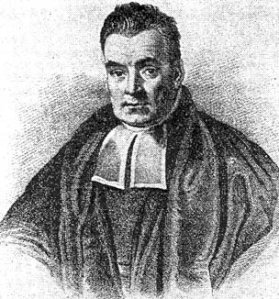 I’ve already shared my Bayesian anecdote. On a more serious note, Andrew Gelman is asked (by Bill Harris) to recommend overviews of Bayesian methods for practitioners (analysts, managers). Andrew provides several helpful suggestions. Any others? Any recommendations for teaching Bayesian (or classical) statistics to MBAs, executives, even undergraduate business majors?





 Organizations and Markets

Recent Comments