Posts filed under ‘– Klein –’
Nair, Trendowski, and Judge on Penrose
| Peter Klein |
The October 2008 AMR features an essay by Anil Nair, Joseph Trendowski, and William Judge on Edith Penrose’s seminal Theory of the Growth of the Firm (1959), written in the form of a book review. The essay is gated, but you can get a flavor from the conclusion:
Many economists call the unexplained variance in a regression equation the “Penrose effect.” According to Barney, it was left to strategy scholars to propose that the Penrose effect comprises the intangible resources and capabilities that are the source of sustained competitive advantage, and while these phenomena may be difficult to measure directly, the implications of these phenomena for firms’ operations and performance could be tested. After reviewing the passionate and prolific research that has attributed its intellectual roots to Penrose’s book, it is clear to us that her work was successful in rallying scholars who sought an alternative to the standard structure-conduct-performance model within strategy. However, scholars should be careful that Penrose’s theory (and the book) does not become a Rorschach blot on which they impose their own biases.
Here is a paper that links Penrose to Austrian concepts of subjectivism and capital heterogeneity. Penrose was of course a student of Fritz Machlup, himself a student of Mises. Apparently at one point the book was to be a joint project with Machlup; in Murray Rothbard’s papers is a memo Rothbard wrote for the Volker Fund evaluating a 1953 grant proposal by Machlup and Penrose for a “Growth of the Firm” project. (Rothbard’s assessment was unfavorable; he was, however, a fan of Penrose’s earlier paper on “Biological Analogies in the Theory of the Firm,” which he cites favorably in “The Mantle of Science.”)
Tooth-Fairy Economics
| Peter Klein |
Art Laffer offers this succinct summary of Bernankeconomics:
No one likes to see people lose their homes when housing prices fall and they can’t afford to pay their mortgages; nor does any one of us enjoy watching banks go belly-up for making subprime loans without enough equity. But the taxpayers had nothing to do with either side of the mortgage transaction. If the house’s value had appreciated, believe you me the overleveraged homeowner and the overly aggressive bank would never have shared their gain with taxpayers. Housing price declines and their consequences are signals to the market to stop building so many houses, pure and simple.
But here’s the rub. Now enter the government and the prospects of a kinder and gentler economy. To alleviate the obvious hardships to both homeowners and banks, the government commits to buy mortgages and inject capital into banks, which on the face of it seems like a very nice thing to do. But unfortunately in this world there is no tooth fairy. And the government doesn’t create anything; it just redistributes. Whenever the government bails someone out of trouble, they always put someone into trouble, plus of course a toll for the troll. Every $100 billion in bailout requires at least $130 billion in taxes, where the $30 billion extra is the cost of getting government involved.
If you don’t believe me, just watch how Congress and Barney Frank run the banks. If you thought they did a bad job running the post office, Amtrak, Fannie Mae, Freddie Mac and the military, just wait till you see what they’ll do with Wall Street.
Best-Selling Ivey Cases for 2007-08
| Peter Klein |
-
Starbucks, Mary M. Crossan, Ariff Kachra
-
Ellen Moore (A): Living and Working in Korea, Henry W. Lane, Chantell Nicholls, Gail Ellement
-
Ruth’s Chris: The High Stakes of International Expansion, Ilan Alon, Allen H. Kupetz
-
Eli Lilly in India: Rethinking the Joint Venture Strategy, Charles Dhanaraj, Paul W. Beamish, Nikhil Celly
-
Sabena Belgian World Airlines: Weytjens First Assignment, Mary M. Crossan, Barbara Pierce
-
Swatch and the Global Watch Industry, Allen Morrison, Cyril Bouquet
-
Cola Wars in China: The Future is Here, Niraj Dawar, Nancy Dai
-
Leo Burnett Company Ltd.: Virtual Team Management, Joerg Dietz, Fernando Olivera, Elizabeth O’Neil
-
Toyota: Driving the Mainstream Market to Purchase Hybrid Electric Vehicles, Jeff Saperstein, Jennifer Nelson
- Brand in the Hand: Mobile Marketing at Adidas, Andy Rohm, Fareena Sultan, David T. A. Wesley
The Ivey School, as you probably know, is second only to Harvard in the production of business cases.
Dan and Chip Heath on Presentations
| Peter Klein |
A new entry for our PowerPoint series: Dan and Chip Heath’s “How to Avoid Making a Bad Presentation,” from the current issue of Fast Company. They’re the Made to Stick guys, in case you forgot. (Not, sadly, the people behind my all-time favorite ice cream.)
New NBER Working Papers
| Peter Klein |
Three new NBER papers likely to interest the O&M crowd. (Aggressive Googlers can probably find ungated versions.)
Railroads and the Rise of the Factory: Evidence for the United States, 1850-70 by Jeremy Atack, Michael R. Haines, and Robert A. Margo
Over the course of the nineteenth century manufacturing in the United States shifted from artisan shop to factory production. At the same time United States experienced a transportation revolution, a key component of which was the building of extensive railroad network. Using a newly created data set of manufacturing establishments linked to county level data on rail access from 1850-70, we ask whether the coming of the railroad increased establishment size in manufacturing. Difference-in-difference and instrument variable estimates suggest that the railroad had a positive effect on factory status. In other words, Adam Smith was right – the division of labor in nineteenth century American manufacturing was limited by the extent of the market.
The Limited Partnership in New York, 1822-1853: Partnerships Without Kinship by Eric Hilt and Katharine O’Banion
In 1822, New York became the first common-law state to authorize the formation of limited partnerships, and over the ensuing decades, many other states followed. Most prior research has suggested that these statutes were utilized only rarely, but little is known about their effects. Using newly collected data, this paper analyzes the use of the limited partnership in nineteenth-century New York City. We find that the limited partnership form was adopted by a surprising number of firms, and that limited partnerships had more capital, failed at lower rates, and were less likely to be formed on the basis of kinship ties, compared to ordinary partnerships. The latter differences were not simply due to selection: even though the merchants who invested in limited partnerships were a wealthy and successful elite, their own ordinary partnerships were quite different from their limited partnerships. The results suggest that the limited partnership facilitated investments outside kinship networks, and into the hands of talented young merchants.
Inside the Black of Box of Ability Peer Effects: Evidence from Variation in Low Achievers in the Classroom by Victor Lavy, Daniele Paserman, and Analia Schlosser
In this paper, we estimate the extent of ability peer effects in the classroom and explore the underlying mechanisms through which these peer effects operate. We identify as low ability students those who are enrolled at least one year behind their birth cohort (repeaters). We show that there are marked differences between the academic performance and behavior of repeaters and regular students. The status of repeaters is mostly determined by first grade; therefore, it is unlikely to have been affected by their classroom peers, and our estimates will not suffer from the reflection problem. Using within school variation in the proportion of these low ability students across cohorts of middle and high school students in Israel, we find that the proportion of low achieving peers has a negative effect on the performance of regular students, especially those located at the lower end of the ability distribution. An exploration of the underlying mechanisms of these peer effects shows that, relative to regular students, repeaters report that teachers are better in the individual treatment of students and in the instilment of capacity for individual study. However, a higher proportion of these low achieving students results in a deterioration of teachers’ pedagogical practices, has detrimental effects on the quality of inter-student relationships and the relationships between teachers and students, and increases the level of violence and classroom disruptions.
Kirzner’s Tapestry
 | Peter Klein |
One of the points I make in my forthcoming SEJ paper is that Kirzner’s metaphor of entrepreneurial discovery is, like Freud’s cigar, just a metaphor. It’s invoked by Kirzner to explain the tendency of markets to clear, not to describe a particular behavior or personality type. Applied entrepreneurship studies aimed at identifying what kinds of people really “are” more alert to opportunities, in some sense we can measure with a survey or experiment, misses the point of the metaphor. Likewise, Kirzner does not mean that opportunities literally are given, objectively, in the environment, independent of human creativity. “Discovery” is an analytical construct, an instrumental device, not a description of behavior.
Kirzner explains all this in a 1997 interview:
Q: What do you mean in saying something is “waiting” to be discovered?
A: Philosophically, people have objected to that. I do not mean to convey the idea that the future is a rolled-up tapestry, and we need only to be patient as the picture progressively unrolls itself before our eyes. In fact, the future may be a void. There may be nothing around the corner or in the tapestry. The future has to be created. Philosophically, all this may be so. But it doesn’t matter for the sake of the metaphor I have chosen.
Ex post we have to recognize that when an innovator has discovered something new, that something was metaphorically waiting to be discovered. But from an everyday point-of-view, when a new gadget is invented, we all say, gee, I can see we needed that. It was just waiting to be discovered.
Q: Consumer demand was there, resources were there, and the technology was there. . .
A: Yes, so there was no reason why it wasn’t being done. The entrepreneur is alert to this reality, to the profit opportunity it represents, and responds creatively to it.
Notice the emphasis on opportunities “metaphorically waiting to be discovered,” not literally waiting to be discovered. Kirzner isn’t offering a particular ontology or epistemology, just proposing an analytical device, designed for a specific purpose (to understand market clearing). Some of the literature comparing “discovery” and “creation” as alternative conceptions of the entrepreneurial act seems to me to read too much into Kirzner.
Economic Notes From the Underground
| Peter Klein |
An interesting call for proposals from EconJournalWatch:
Fyodor Dostoevsky’s novella Notes from Underground (1864) is a classic of introspection and confession. The symposium takes its title from Dostoevsky’s work.
The prospective symposium will consist of confessional essays by economists about their existence as economists. Only genuine narrative and sincere reflection are welcome. However, essays may be anonymous.
Here are the kinds of confessions the editors have in mind:
- Building models one does not really believe to be useful or relevant.
- Making simplifications that obscure or omit important things.
- Using data one does not really believe in.
- Focusing on the statistical significance of one’s findings while quietly doubting economic significance.
- Engaging in data mining.
- Drawing “policy implications” that one knows are inappropriate or misleading.
- Keeping the discourse “between the 40 yard lines” so as to avoid being outspoken; knowingly eliding fundamental issues.
- Tilting the flavor of policy judgments to make a paper more acceptable to referees, editors, publishers, or funders.
- Disguising one’s methodological or ideological views, such as by omitting revealing activities or publications from one’s vitae.
- For government, institute, or corporate economists: Having to significantly play along with things one does not believe in.
My reaction: Can a single symposium issue possibly hold them all?
Who Invented the Internet?
 | Peter Klein |
OK, we now know it wasn’t Al Gore. (And John McCain didn’t didn’t invent the BlackBerry either.) But who did invent the internet? Physicists have long maintained that they did. Michael Nielsen (via Josh Gans) disagrees:
It’s true that the principal inventor of the web, Tim Berners-Lee, was a programmer working at CERN, the huge European particle accelerator. In 1988 he sketched out a way of hooking up hypertext ideas, developed by people like Ted Nelson and Bill Atkinson, to the internet, developed by people like Vint Cerf and Bob Kahn. He talked the idea up at CERN for a year, with no response. In 1989 he wrote up and circulated a formal proposal around CERN. Again, no response for a year. Finally, he coded up a prototype in his spare time. In this, he actually was helped by his manager, who said it was okay if he used one of CERN’s workstations to build the prototype. It was launched to the world about one year later.
Berners-Lee didn’t succeed because CERN was doing fundamental research. He succeeded in spite of it.
Nielsen goes on to make a more general claim about large organizations tending to stifle innovation, but that is a more complicated and difficult issue. Yesterday in my entrepreneurship class we discussed Zoltan Acs and David Audretsch’s 1990 book Innovation and Small Firms, which paints a more nuanced picture (e.g., the relationship between firm size, scope, complexity, etc. and innovation varies widely by industry, market structure, time, manufacturing technology, and the like).
Here is my take on the history of the internet, and here is an academic paper on internal capital markets and innovation.
Heckman on Academia
| Peter Klein |
Steve Levitt links to this update on the travails of the University of Chicago’s proposed Milton Friedman Institute. Jim Heckman, an Institute supporter who has recently expressed public doubts about its conception and development, is on the hot seat. Heckman makes an interesting observation, in passing, that relates to a previous discussion of research funding:
Heckman added that all institutes are affected by bias, citing hiring decisions as a source of bias throughout the University.
“I doubt there is a truly unbiased academic. Besides, most biased people don’t see themselves as biased. If you think the [Chicago Graduate School of Business] is an unbiased environment, think again. They are recruited for their views. I wonder also how many free marketers would get jobs in anthropology or sociology,” he said.
“It’s true for any institute. You state a mission, attract funders. They expect the mission to be fulfilled. Very rarely do people fund pure knowledge,” he said.
What Credit Crunch?
| Peter Klein |
I’ve talked before about the wild claims about credit markets being “frozen,” sound investment projects that can’t be funded, worthy borrowers who can’t get loans, and all the rest, claims that are totally unsupported by theory or empirical evidence. Nobody, least of all Paulson and Bernanke (or their ostensibly free-market supporters, such as Mankiw and Cowen), has bothered to provide any data to support these claims. A new paper by three Minneapolis Fed economists, “Four Myths About the Financial Crisis of 2008,” shows that the wild claims are virtually all false. The data show, for example, that despite a rise in inter-bank lending rates, actual lending between banks is about the same as before, and lending between banks and firms and individuals has risen, not fallen, during the crisis. (Loan volume is a better indicator than interest rates, which reflect default risk.) This analysis is based on publicly available data, the same sources I pointed to before. Why is nobody paying attention? (Thanks to Mike Moffatt for the link.)
Update: At least one Marginal Revolution blogger gets it.
Update 2: Bob Murphy writes (October 30):
I think the authors did a really bad job of it. Some other economists ridiculed it, and I think their criticism is valid. In particular, the Minn Fed paper shows charts that could just as well have come from Paulson showing why his interventions saved the day.
For example, see this at the Economist.com blog: http://www.economist.com/blogs/freeexchange/2008/10/analysis.cfm . . . .
So the problem is that the Minn. Fed authors didn’t do a very good job in picking their charts, I think. If you instead do year/year ones, then things look a lot better for the “there’s no crisis” argument: http://economistsview.typepad.com/economistsview/2008/10/four-myths.html
Even though Mark Thoma (in the link above) doesn’t agree, I think if you look at the charts in his post, you’ll see some pretty amazing things. For example, even *real estate loans* have had yr/yr growth rates in excess of 5% this whole time. I.e. the “credit crunch” just meant a slowdown in their rate of growth.
Some New Academic Bloggers
| Peter Klein |
The academic blogosphere becomes more densely populated every day. Please welcome these new (to me at least) citizens:
- Larry Ribstein, blogging at Ideoblog
- Casey Mulligan, blogging at Supply and Demand
- Diane Rogers, blogging at Economist Mom
Judgment, Luck, and Schultz
| Peter Klein |
Lasse raised an interesting point a while back about the Knightian concept of judgment, and how it differs from pure luck. Here’s a passage from T. W. Schultz that asks the same question:
[I]t is not sufficient to treat entrepreneurs solely as economic agents who only collect windfalls and bear losses that are unanticipated. If this is all they do, the much vaunted free enterprise system merely distributes in some unspecified manner the windfalls and losses that come as surprises. If entrepreneurship has some economic value it must perform a useful function which is constrained by scarcity, which implies that there is a supply and a demand for their services.
The key to understanding this passage is to recognize Schultz’s rejection, following Friedman and Savage (1948), of the concept of Knightian uncertainty. If all uncertainty can be parametrized in terms of (subjective) probabilities, then decision-making in the absence of such probabilities must be random. Any valuable kind of decision-making must be modelable, must have a marginal revenue product, and must be determined by supply and demand. For Knight, however, decision-making in the absence of a formal decision rule or model — what Knight calls judgment — isn’t random, it’s simply not modelable. It doesn’t have a supply curve, because it is a residual or controlling factor that is inextricably linked with resource ownership. It is a kind of understanding, or Verstehen, that defies formal explanation but is rare and valuable.
Without the concept of Knightian uncertainty, then, Knight’s concept of entrepreneurial judgment makes little sense.
Philosophy: Who Needs It?
| Peter Klein |
When Greenspan was appointed Fed chair in 1987 the New York Times Magazine ran a lengthy profile noting, among Greenspan’s other eccentricities, that he was a follower of Ayn Rand, generally regarded as a strong advocate of laissez faire. But Greenspan is doctrinaire only “at a high philosophical level,” wrote Leonard Silk, reassuringly. Murray Rothbard, who knew Greenspan in the 1950s, when both were friends with Rand, got a kick out of that line:
There is one thing, however, that makes Greenspan unique, and that sets him off from his Establishment buddies. And that is that he is a follower of Ayn Rand, and therefore “philosophically” believes in laissez-faire and even the gold standard. But as the New York Times and other important media hastened to assure us, Alan only believes in laissez-faire “on the high philosophical level.” In practice, in the policies he advocates, he is a centrist like everyone else because he is a “pragmatist.” . . .
Thus, Greenspan is only in favor of the gold standard if all conditions are right: if the budget is balanced, trade is free, inflation is licked, everyone has the right philosophy, etc. In the same way, he might say he only favors free trade if all conditions are right: if the budget is balanced, unions are weak, we have a gold standard, the right philosophy, etc. In short, never are one’s “high philosophical principles” applied to one’s actions. It becomes almost piquant for the Establishment to have this man in its camp.
Today Tyler Cowen, writing on Anna Schwartz’s very good interview with the WSJ, calls Bernanke a person “with libertarian sympathies,” which I find puzzling, since I can’t recall any evidence of this sympathy in Bernanke’s writings or policy actions. Perhaps he is a sympathetic libertarian “at a high philosophical level.”
Blame Basel, Not “Deregulation”
| Peter Klein |
Says Charles Calorimis in the Saturday WSJ. First, as Calorimis points out, there wasn’t any deregulation. (Jacob Weisberg, what part of this can’t you understand?) Indeed, by any reasonable measure, government has grown more under George W. Bush than under any administration since LBJ — after this month, perhaps since FDR. Specifically, Calomiris notes:
Financial deregulation for the past three decades consisted of the removal of deposit interest-rate ceilings, the relaxation of branching powers, and allowing commercial banks to enter underwriting and insurance and other financial activities. Wasn’t the ability for commercial and investment banks to merge (the result of the 1999 Gramm-Leach-Bliley Act, which repealed part of the 1933 Glass-Steagall Act) a major stabilizer to the financial system this past year? Indeed, it allowed Bear Stearns and Merrill Lynch to be acquired by J.P. Morgan Chase and Bank of America, and allowed Goldman Sachs and Morgan Stanley to convert to bank holding companies to help shore up their positions during the mid-September bear runs on their stocks.
Even more to the point, subprime lending, securitization and dealing in swaps were all activities that banks and other financial institutions have had the ability to engage in all along. There is no connection between any of these and deregulation. On the contrary, it was the ever-growing Basel Committee rules for measuring bank risk and allocating capital to absorb that risk (just try reading the Basel standards if you don’t believe me) that failed miserably. The Basel rules outsourced the measurement of risk to ratings agencies or to the modelers within the banks themselves. Incentives were not properly aligned, as those that measured risk profited from underestimating it and earned large fees for doing so.
That ineffectual, Rube Goldberg apparatus was, of course, the direct result of the politicization of prudential regulation by the Basel Committee, which was itself the direct consequence of pursuing “international coordination” among countries, which produced rules that work politically but not economically.
Update: Here’s Larry White on the phantom deregulation.
The Impotence of the Economists
| Peter Klein |
My friends in sociology don’t like being ignored by politicians and by the general public. Well, one thing we’ve learned over the last several weeks is that academic economics, too, has virtually no influence on public policy. It’s increasingly clear that the majority of academic economists oppose, often strongly, the AIG rescue, the Paulson plan, the Fed’s move into the commercial-paper market, the Treasury’s acquisition of equity stakes in large banks, and the new round of financial-market regulations that’s just around the corner. Even Greg Mankiw, who sort-of favors the bailout, worries that his pal Ben hasn’t worked hard enough to convince his fellow academic economists.
What do we learn from all this? That economists are poor communicators? That economics is an inherently difficult subject? Or that politicians and special-interest groups willfully ignore what economics teaches about scarcity, tradeoffs, incentives, and the general welfare?
Surely the poor state of economics education plays some role. I’m not an admirer of Paul Krugman’s newspaper columns, but I respect the fact that he’s willing to write for the general public. (If only his columns had some economics in them!) Very few elite economists concern themselves with public education. Ultimately, however, the blame rests with politicians — that uniquely vile breed of humanity — and the special interests they serve. Maybe Albert Jay Nock had it right after all. Economists keep thinking, writing, and teaching, not because anybody in power is listening, but in hope that somewhere out there is a Remnant, however small, keeping the flame alive.
Today’s Bailout Links
| Peter Klein |
Ok, so let me get this straight. Credit got all constipated from banks’ misguided feast on crappy assets. My thought (see, especially, the most recent posts in this archive) was that maybe bank managers need better incentives.
I guess I must have been wrong, because the government is now putting a quarter trillion in non-voting stock. Well, that’s one way to fix the misalignment of manager-shareholder incentives — undermine the shareholders’ incentives too.
The Banks get below cost capital grants. Loans would cost 11 to 12 percent. The government gives them cash at 5 percent for five years and 10 percent thereafter with optional repayment; it is senior preferred stock. Large banks cumulate foregone dividends on the preferred; small banks do not. Existing shareholders still get dividends at past levels (no increases) and the government cannot vote any of its stock. Why ever pay it back? . . .
Lehman, J.P. Morgan and AIG look like AAA suckers. They paid dearly for their capital infusions. Greenberg, the ex-CEO of AIG and a major shareholder, is, sensibly, asking the government to renegotiate the AIG bailout package. The lesson for future crises? Stall, stall, stall.
Peter Schiff (via Karen):
After supposedly bailing out the fat cats on Wall Street, no politician wants to be accused of evicting struggling families. Once you understand this, all of your anxiety should melt away. Why pay your mortgage if foreclosure is off the table, and if you know that lower payments, and possibly a reduced loan amount, would result? A tarnished a credit rating is a small price to pay for such a benefit.
Unfortunately, this boon will not extend to those foolish individuals who either made large down payments or resisted the temptation of cashing out equity. The large amount of home equity built up by these suckers, I mean homeowners, means that in the case of default foreclosure remains a financially attractive option. As a result, these loans will be much less likely to be turned over to the government.
Searle Center Symposium on Property Rights and Innovation
| Peter Klein |
It’s next month in Chicago. The high-powered lineup includes Joel Mokyr, Avner Greif, Robert Merges, Lynne Kiesling, Stan Liebowitz, Scott Stern, my old classmates Emerson Tiller and Rich Brooks, and many more. Harold Demsetz gives the keynote. Wish I were going.
Saddlebags
| Peter Klein |
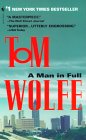 All this talk about bad loans reminds me of the famous “workout” scene from Tom Wolfe’s A Man in Full, better known as the “saddlebags” scene. It must be the most brilliant, accurate, and entertaining account of a bank calling a loan ever written. You can read most of the scene (from chapter 2) here; if you haven’t read it before, you’re in for a treat. (Unfortunately the excerpt ends before the climax of the scene in which Harry Zales, the bank’s workout specialist, ends his speech that reduces the hapless borrower, Atlanta real-estate mogul Charlie Croker, to a nervous, sweating wretch with his arm raised triumphantly, middle finger pointed to the skies.)
If that scene were to be written today, however, the ending would be different. Just before the workout is over the heroic central banker or Treasury secretary would bound into the room, explaining that the bank should restructure Croker’s loan after all (in the story, Croker has defaulted on a $515 million loan — a mere trifle), and that he will write the bank a check on the spot to cover Croker’s obligation. Gotta maintain adequate liquidity in the system, after all! Upon leaving the room, the central banker or Treasury secretary also extends his middle finger — this time in the direction of the taxpayer.
Krugman on the Hangover Theory
| Peter Klein |
More than one commentator has compared the economy in the current crisis to an alcoholic in the early stages of withdrawal. Going back on the bottle makes everything feel good again, but only puts off the inevitable. Ultimately, there can be no recovery without a painful rehab.
Keeping in mind Bob Higgs’s strictures about the misuse of metaphors, the illustration does serve a useful purpose. It helps demonstrate, as I’ve argued before, that the problem is not that overall lending is too low, but that the wrong loans were made by the wrong lenders to the wrong people (and, by extension, the wrong mortgage-backed securities boughy by the wrong investors, and so on). They key to recovery is not injecting “liquidity” into the system, but reallocating financial resources to the right borrowers and investors. In short, the worst thing we can be doing now is propping up the bad investments made during the boom, bailing out the unwise borrowers, lenders, and investors, putting off the liquidiation and reallocation that are ultimately necessary for recovery. All we have done over the last few weeks is give the alchoholic a few more drinks.
Paul Krugman’s Nobel citation, while focusing on his contributions to trade theory, mentions briefly his more recent work on financial crises. On this topic Krugman is more-or-less an unreconstructed, liquidity-trap Keynesian (Shawn Ritenour calls him a “paleo-Keynesian”). Krugman once wrote a popular piece about the Austrian approach to the business cycle, which he called the “hangover theory” of recessions. You can get a sense of how seriously Krugman takes the argument by his dismissive tone, writing for example about “those supposedly deep Austrian theorists” who failed to realize that total spending equals total consumption plus total investment. Clearly, he has read the Austrians as carefully as he has read Bertil Ohlin. Still, his essay gave Roger Garrison, John Cochran, and David Gordon the opportunity to respond with essays explaining the Austrian theory. (Krugman, characteristically, is unaware that the Austrian account of cycles is built on a particular theory of capital. If bad investments were made during the boom, he says, “Well, fine. Junk the bad investments and write off the bad loans. Why should this require that perfectly good productive capacity be left idle?” Um, Paul, it’s called asset specificity.)
Update: Here’s another response to Krugman (and Tyler Cowen) by Bob Murphy.
Krugman
| Peter Klein |
I don’t have time for a thoughtful and intelligent post on Paul Krugman’s Nobel Prize, so a few snippets from other commentators will have to do for now.
In a surprise twist, Paul Krugman (Princeton) was announced the winner of the 2008 Nobel Prize in economics. Surprise not because he does not deserve it — Krugman’s work on trade theory is widely acknowledged — but because the Nobel committee passed over Jagdish Bhagwati (Columbia), who has lobbied for it for years. As Professor Bhagwati’s main work is also on trade theory, it makes it unlikely he will get the Nobel any time soon. (Bhagwati was also Krugman’s teacher at MIT.) This announcement also dents the hopes of Anne Krueger, another top trade theorist.
What is perhaps most interesting about Krugman’s choice is that he stopped doing economics almost 10 years ago and has instead been a columnist for the New York Times. This is good news: shows that you can have a second life and still get dividends on the first.
Funny how most economist like Tyler [Cowen] are “most fond of Krugman’s pieces on economic geography, in particular on cities and the economic rationales for clustering” when in fact Krugman added very little to a body of knowledge that is more than a century old. But it was new to most economists.
An anonymous economic grographer:
I did my graduate school training in the mid 1990s when economic geographers and regional scientists would bitch slap Krugman behind closed doors, yet were grateful that he was bringing them respectability among mainstream economists. Interestingly, Krugman published his first significant piece of work on the issue (Geography and Trade, 1991) at about the same time that the University of Pennsylvania was shutting down its regional science department (1993). But in his modest opinion, Regional Science was just a bunch of techniques or tools lacking an integrative framework (one way to avoid looking bad by being so obviously ignorant about it when he first began writing on location theory and the like).
Paul Krugman, speaking at a 1999 conference in honor of Bertil Ohlin (HT to Neel):
Let me begin with an embarrassing admission: until I began working on this paper, I had never actually read Ohlin’s Interregional and International Trade. I suppose that my case was not that unusual: modern economists, trained to think in terms of crisp formal models, typically have little patience with the sprawling verbal expositions of a more leisurely epoch. To the extent that we care about intellectual history at all, we tend to rely on translators — on transitional figures like Paul Samuelson, who extracted models from the literary efforts of their predecessors. And let me also admit that reading Ohlin in the original is still not much fun: the MIT-trained economist in me keeps fidgeting impatiently, wondering when he will get to the point — that is, to the kernel of insight that ended up being grist for the mills of later modelers.





 Organizations and Markets
Recent Comments