Posts filed under ‘People’
Words of Wisdom from Williamson’s Banquet Speech
| Peter Klein |
The transcript is here. My favorite bit, which can be read as a response to the econ-bashers:
Being hard-headed means that we aspire to tell it like it is — be it good news or bad. Although we take no joy in the downside, it is our duty candidly to confront all circumstances whatsoever. Our abiding concern is with improving the condition of mankind. Myopia, denial, and obfuscation are the enemy.
Only as we admit to and, of even greater importance, come to understand the problems that confront us — be they current or impending, obvious or obscure, real or imagined — by identifying and explicating the mechanisms that are responsible for these problems, can we expect to make informed decisions. Since, moreover, things that we do not understand at the outset sometimes have redeeming purposes, such efforts to get at the essence will often uncover real or latent benefits. Altogether, our capacity to work in the service of mankind increases as complex contract and economic and political organization become more susceptible to analysis.
Tuesday’s Prize lecture, in case you missed my earlier link, is here. I don’t see a video of the banquet speech on the Nobel site, but maybe that’s coming later. (Thank goodness they found time to post the seating chart!)
One tiny nit-pick: Williamson quotes Carlyle’s famous “dismal science” line, implicitly equating “dismal” with “mean-spirited,” but of course Carlyle’s barb had nothing to do with Malthus or scarcity or trade-offs, but with the classical economists’ opposition to slavery, which Carlyle, Dickens, Ruskin, and other literary critics of capitalism strongly supported (1, 2).
Williamson Nobel Lecture Is Streaming Now
| Peter Klein |
Watch it here.

Money quotes so far:
- After questioning the design of the Department of Homeland Security: “The US has a Council of Economic Advisers; I look forward to the day when there’s also a Council of Organizational Advisers” [paraphrase].
- “That brings us to the ‘remediableness’ criterion. That word doesn’t exactly roll of the tongue. But my students have learned to say it after much repetition.”
Update: The stream is over, I’ll post a link to the archived file when I find it. Note that the ceremony is December 10, to be streamed here.
Update II: Via the ever-reliable Per Bylund, the archive link is here.
My Naïveté
| Peter Klein |
I hoped Christy Romer would be a voice of reason within Obama’s economic team. What was I thinking? If yesterday’s WSJ op-ed is any indication, her role has been reduced to that of cheerleader for the President’s preposterous “stimulus” program. The editorial is a string of banalities, unsupported by argument or evidence, about the wonderful effects of stimulus and the need to “confront the challenges” that remain. For example, noting that real GDP increased slightly in the third quarter of 2009, after a sharp fall in the first quarter, she says that the “vast majority of professional forecasters attribute much of this dramatic turnaround to the fiscal stimulus.” Professional forecasters? Of course, we have no idea what GDP would have been in the absence of stimulus. And what of the secondary consequences, both short- and long-term? What of the unseen? She even praises the cash-for-clunkers program, recently skewered by my old friend John Chapman.
She knows all this. As Christy’s teaching assistant at Berkeley I saw her explain, patiently and carefully, how government programs have side effects, often unintended (she specifically used the airplane-child-safety-seat example of the Peltzman effect). All forgotten now. Some version of Lord Acton’s dictum, I guess.
North on Ostrom and Williamson
| Peter Klein |
Douglass North welcomes fellow new institutionalists Elinor Ostrom and Oliver Williamson to the Nobel Club (via Jeffrey Huang):
Peter Bernstein Interview
| Peter Klein |
Speaking of Peters, the McKinsey Quarterly site has a video interview with the late Peter Bernstein on risk. Bernstein was a deep thinker and an excellent writer. I once found myself on a plane next to an investment banker who was reading Bernstein’s Against the Gods. I mentioned that I too was a fan, and he told me he re-read the book at least once each year, out of professional obligation.
Keynesian Anti-Economics
 | Peter Klein |
A reader objected to my recent portrayal of Keynes as a crank, as a man who never really studied economics or took it very seriously. Note that I never denied Keynes’s intellect, his great skill as a rhetorician, or his personal charm. But Keynesian economics is, in a sense, non-economics or even anti-economics, in that it ignores or contradicts many basic lessons about the allocation of scarce resources among competing ends. Mario Rizzo feels the same way:
Keynesianism is not concerned with the allocation of resources and related niceties. One can see this is the policy prescriptions of the stimulators. Just get people back to work. If a market is depressed: Prop it up. Labor, other resource-owners and entrepreneurs need to stop worrying about searching for the appropriate use of resources. Bankers have to stop fretting about to whom they should lend. They should abandon their ultra-restraint. Those who are holding money should invest; they should buy bonds. No need to worry about inflation because the potential output of “stuff” (however it is allocated across industries) is above the actual less-than-full-employment output.
Where did my microeconomics go?
Keynes and his followers proudly trumpeted his framework as a re-do of standard economics (what he called “classical,” though Keynes was not well versed in the history of economic thought). Standard economics is OK during periods of “full employment” (another aggregate concept, of course), but not in the “general” case, in which case the Keynesian magic comes into play. Credit expansion, according to Keynes, performs the “miracle . . . of turning a stone into bread.” As Mises noted, “Great Britain has indeed traveled a long way to this statement from Hume’s and Mill’s views on miracles.”
What Would Peter Say?
| Peter Klein |
 Peter Drucker, that is. The great management guru died in 2005 — and even then, he didn’t blog, unlike some other guys named Peter. If Drucker were alive today, what would he say about the financial crisis, health-care reform, climate change, and the other Big Issues of our day? Rosabeth Moss Kanter asks in the current issue of HBR, and thinks Drucker’s writings have important lessons for today’s problems. E.g.:
- Drucker would not have been surprised that incentives to take excessive risks contributed to the recent global financial meltdown. Back in the mid-1980s, he warned about a public outcry over executive compensation — a main theme on the U.S. government’s agenda following the fall of banks in 2008.
- Years ago, he warned of troubles ahead if GM executives remained stuck in memories of previous successes and failed to ask his famous “what to stop doing” question. GM was an iconic example of failure to see the need for significant innovation; its structure had become ossified, and its top management couldn’t consider a change.
- He focused on how organizations could best achieve their purpose, not on business per se or on profit as the main indicator of success. He championed a robust civil society of voluntary nonprofit organizations as an essential foundation on which business could thrive and people could prosper, because this sector plays a vital role in promoting health, education, and well-being. The role of government is fuzzier in Drucker’s writings, although it is clear that he mistrusted centralization of power and saw bureaucracy as a source of rigidity rather than innovation.
I hadn’t known before that Drucker’s father was friends with Schumpeter, often described as a major influence on Drucker’s thinking. “Regular guests of the Druckers included the economists Schumpeter, Hayek and Mises, with whom Drucker’s father had business relations in his function as director of the K.& K. trade museum,” according to Drucker’s official biography. Unfortunately the young Drucker was more attracted to Othmar Spann, described by Mises as an “anti-economist.”
The Amazing Krugman
| Peter Klein |
The man indeed has a unique talent, as described here by the witty and clever Steve Landsburg:
It’s always impressive to see one person excel in two widely disparate activities: a first-rate mathematician who’s also a world class mountaineer, or a titan of industry who conducts symphony orchestras on the side. But sometimes I think Paul Krugman is out to top them all, by excelling in two activities that are not just disparate but diametrically opposed: economics (for which he was awarded a well-deserved Nobel Prize) and obliviousness to the lessons of economics (for which he’s been awarded a column at the New York Times).
It’s a dazzling performance. Time after time, Krugman leaves me wide-eyed with wonder at how much economics he has to forget to write those columns.
The subject is Krugman’s latest proposal to combat unemployment, namely laws making it harder to fire workers, which of course increases the cost of labor, leading firms to hire less of it, increasing unemployment.
Cochrane on Krugman
| Peter Klein |
John Cochrane tackles Paul Krugman’s infamous essay (via Casey Mulligan). My own view of the crisis (and of macroeconomics) is different from Cochrane’s, but his skewering of Krugman is delightful, and there are many nuggets of wisdom. A few snippets:
Crying “bubble” is empty unless you have an operational procedure for identifying bubbles, distinguishing them from rationally low risk premiums, and not crying wolf too many years in a row. . . . This difficulty is no surprise. It’s the central prediction of free-market economics, as crystallized by Hayek, that no academic, bureaucrat or regulator will ever be able to fully explain market price movements. Nobody knows what “fundamental” value is. If anyone could tell what the price of tomatoes should be, let alone the price of Microsoft stock, communism and central planning would have worked. . . .
[T]he economist’s job is not to “explain” market fluctuations after the fact, to give a pleasant story on the evening news about why markets went up or down. Markets up? “A wave of positive sentiment.” Markets went down? “Irrational pessimism.” ( “The risk premium must have increased” is just as empty.) Our ancestors could do that. Really, is that an improvement on “Zeus had a fight with Apollo?” . . . (more…)
The MSM Rediscovers the Classics
| Peter Klein |
The rediscovery of Keynes is one of the official storylines of the financial crisis and global recession. The problem is that Keynes was, in my judgment, a charlatan, a clever man obsessed with his own cleverness who never paid serious, thoughtful attention to economics (or any subject). You have to learn a little about Keynes to be well-educated and — because of his vast influence — to understand contemporary macroeconomic thought, but otherwise there is little intrinsic value in his writings.
Happily, the mainstream media is rediscovering other writers too. Last week the WSJ ran a nice piece on Mises, “The Man Who Predicted the Depression,” focusing on Mises’s 1912 Theory of Money and Credit (the book dismissed by Keynes as unoriginal, with Keynes admitting, a few years later, that he understood German well enough to comprehend things he already knew, but not to grasp anything new). “With interest rates at zero, monetary engines humming as never before, and a self-proclaimed Keynesian government, we are back again embracing the brave new era of government-sponsored prosperity and debt,” writes Mark Spitznagel. “And, more than ever, the system is piling uncertainties on top of uncertainties, turning an otherwise resilient economy into a brittle one. . . . How curious it is that the guy who wrote the script depicting our never ending story of government-induced credit expansion, inflation and collapse has remained so persistently forgotten.” Yesterday, Reuters ran Rolfe Winkler’s piece urging readers to study Mises and Hyman Minsky while Investor’s Business Daily featured an item on Schumpeter.
Today, Don Sull’s Financial Times column focuses on Frank Knight, whom Sull calls “an American Socrates.” (OK, it’s a blog, not a column, and Sull is a management professor at LBS, not some hack journalist, but you get the point.) “In these unsettled times,” Sull writes, “it worthwhile revisiting the contribution of Frank Knight, an economist who was among the earliest and most penetrating analysts of what uncertainty and risk meant, and how they influenced a firm’s ability to make a profit.” Knight is one of the greats, a brilliant and idiosyncratic thinker who could be spectacularly right (on profit) and spectacularly wrong (on capital). Sull’s blog entry today is a teaser, with a promised follow-up to deal more specifically with the risk-uncertainty distinction (my take is here). Watch for it!
Teaching Large Classes
| Peter Klein |
Advice on teaching large introductory classes, from a Facebook friend of a Facebook friend:
Stick with the stories! Walter Heller made it all the way through introductory macro at Minnesota entirely on stories from his days in the Kennedy Administration. I don’t recall him actually mentioning the word macroeconomics for the entire quarter. The class was so large a woman choked in the back without anyone noticing.
How Machiavellian Are You?
| Peter Klein |
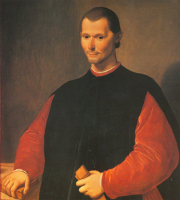 A test for university presidents, deans, department heads, center directors, etc. (via Anu).
(Yes, of course, there are management and leadership literatures on old Niccolò. Don’t act surprised!)
My Favorite New-Media Entrepreneur
| Peter Klein |
It’s Ben Huh, the brains behind FAIL Blog, Engrish Funny, and, of course, I Can Has Cheezburger. The best of the user-generated-content sites. Huh is profiled here in Fast Company. Interestingly, he’s a quant guy:
[W]e rely on the tools of the Internet — metrics and measurements and stuff like that — to help us decide what to post. We don’t have some guy somewhere deciding, “Oh, I think this it funny. I’m going to post it on the homepage.” That actually fails 50% of the time, because people are very bad at understanding what’s funny for other people. Everything we promote is there for a logical reason.
Other Brushes with Official Greatness
| Peter Klein |
In the spirit of Lasse’s post, here are stories about some of my other direct and indirect contacts with academic royalty, people whose achievements have nothing to do with anything I’ve ever said or done.
- As regular O&M readers know, there is a history of disagreement between Ronald Coase and Benjamin Klein over the GM-Fisher case, among other issues. A few years ago I spent some time with Coase during his visit to Missouri for the CORI Distinguished Lecture. He concluded one conversation by announcing, with evident satisfaction: “I see all Kleins are not alike.”
- One of the funniest, and most unusual, people I knew at Berkeley was Matthew Rabin, then a new assistant professor and now a chaired professor, John Bates Clark medalist, and probable future Nobel laureate in economics. He had a little construction-paper clock on his office wall with one hand tracking years until the tenure decision and another, going the opposite direction, counting publications. I was later his TA for the second PhD micro theory course. Sample test question: “I have the opportunity to lock you up. If I lock you up, you will scream for help with probability p, which gives me a benefit of minus 30. . . .” I laughed often.
- My Dad had this remarkable distinction: there were two future Nobel laureates in his high school class. (It was an unusual school.) Herbert Hauptman got the prize in chemistry and Julian Schwinger in physics. Ken Arrow went to the same school, which also produced six Pulitzer Prize winners. (more…)
Wodehouse
| Peter Klein |
We interrupt Williamson Week to remind you that today, 15 October, is the birthday of the great P. G. Wodehouse. If I were really clever I’d write something like “Principal-Agent Conflicts between Wooster and Jeeves” or “Lord Emsworth as Charismatic Leader,” but the best I can do is share some favorite Wodehouse quotes that might apply to writing, research, and university life:
“I pressed down the mental accelerator. The old lemon throbbed fiercely. I got an idea.”
“He had just about enough intelligence to open his mouth when he wanted to eat, but certainly no more.” [A university administrator? Journal reviewer?]
“I just sit at a typewriter and curse a bit.”
“I know I was writing stories when I was five. I don’t know what I did before that. Just loafed I suppose.”
Williamson Miscellany, Continued
| Peter Klein |
5. Many useful summaries of Williamson’s (and Ostrom’s) contributions are appearing online, such as those by Ed Glaeser, David Henderson, John Nye, Jeff Ely, and Alex Tabarrok. I think the first few pages of my “make-or-buy” chapter in the NIE Handbook provide a decent overview too. I also have some slides on transaction cost economics (part 1, part 2) that may be helpful for those seeking more detail.
6. Joshua Gans credits me with anticipating the award, which is nice, but undeserved — it was just wishful thinking on my part!
7. Oliver’s son Dean reports that he’s having trouble getting through to his folks: “The house in Berkeley had become such a media circus with every media entity from UPI to Al Jazeera trying to get through that I’ve been holding off with some of my own phone calls.” More important, Dean says his dad
has had a good attitude about these things. For years Berkeley would ask him to sign off on candidate press releases. But this would just get him a little worked up, and he might have a hard time getting to sleep. Could they stop that, please? On top of that, he appreciates that life has been good. No complaints, no reason to get worked up. Better to be Zen about the whole thing.
8. Scott Masten tells me O&M made a list of 100 best professor blogs. Scott and I agree that Williamson would gladly trade the Nobel prize for this honor instead. (more…)
Hoisted from the Comments: Hoopes on Williamson
| Peter Klein |
Former guest blogger David Hoopes’s comment deserves its own post:
So, we’re leaving the serious discussion to our goody two-shoes organizations twin? Was Will Mitchell a Williamson student? No one has said anything about Teece. Teece’s early JEBO articles did a great job talking about economies of scope and transaction cost influences on strategy.
Unmentioned yet, there has been some contentious discussion about the implications of TC economics on strategy and organization. Many including Connor and Prahalad consider the implications of TC to lead to bad management and bad strategy. However, our very own Steve Postrel wrote a great paper, “Islands of Shared Knowledge” that (esp in an earlier version) does a great job of comparing and contrasting the RBV and TC as theories of the firm.
Harold Demsetz weighed in on this earlier in his, “Theory of the Firm Revisited” (which is one of my favorite all time papers). Harold argues that firms would exist without governance problems. Steve has tried to get Harold to see the light (i’m not sure i do) but to no avail.
Of course, CERTAIN org theorists, whose names i do not mention think that Williamson’s logic, as does all competition-based economic theory, leads to evil and terrible results: unethical business students who become tomorrow’s headlines.
I’m very happy to see Williamson win. His influence on strategy and organization is immense. And, at this point, I don’t see any theory of the competitive firm can reasonably leave him out. I will admit, in terms of competitive heterogeneity and competitive advantage I don’t think governance is anywhere near as important as productive capabilities. BUT, capabilities literature still has a lot of work to do to be specified as exactly as TCE.
David, more serious discussion is on the way. Unfortunately, we O&Mers have higher opportunity costs than the bloggers at our good-twin site, so we can’t get the posts up as quickly as they can. :-)
Williamson Miscellany
| Peter Klein |
1. I’ve been at the SMS conference, and traveling, and haven’t had a chance to read the vast blogospheric commentary on Williamson (and Ostrom). Those looking for an introduction to Williamson’s work will find good stuff in the forthcoming Elgar Companion to Transaction Cost Economics, including an introduction by Williamson himself, and chapters on core subjects by eminent Williamsoninans.
Briefly, my own (admittedly biased) take is that Williamson is second only to Coase as the key figure in modern organizational economics. Moreover, his work has revolutionized the way economists (and some antitrust lawyers) understand markets. The perfectly competitive general-equilibrium model, Williamson’s work shows, is unrealistic, irrelevant, and a distraction. The task of economists studying firms and markets is to understand the marvelous variety of organizational forms that emerge in competitive markets, virtually none resembling the “firm” of microeconomics textbooks (what Williamson calls the production-function picture of the firm). “Nonstandard” phenomena like vertical integration, vertical contractual restrictions, alliances and joint ventures, long-term supply or distribution agreements, and the like should be celebrated, not condemned. (Williamson is more circumspect, arguing that each form of organization should be evaluated on the merits, case by case — a refreshing contrast to the standard approach in antitrust law, which is to assume that every deviation from perfect competition is “anticompetitive.”)
2. The Nobel Committee’s scientific statement cites one of my papers. How cool is that? Coauthor Howard Shelanski tells me that law professors note on their CVs if one of their articles is cited in a Supreme Court decision. You can be sure I’ll find a way to list this on mine. (more…)
Williamsoniana
| Peter Klein |
My, we live in a fast-paced world: the Nobel announcement is just a few hours old, and we’re already being taken to task for not blogging enough about Williamson. For the high-time-preference folks, please see previous posts on Williamson and transaction cost economics, and the preview chapters of the Elgar TCE Handbook, while we work on our usual careful, thoughtful, and well-researched blog posts.
Ripped from the Headlines
| Dick Langlois |
In my European Economic History class this morning, I was talking about the medieval open-field system. As I always do, I made Ostrom’s point that the medieval open fields were not an example of the tragedy of the commons and were not over grazed. And, in talking about Carl Dahlman’s “hold-up” theory of scattering in the open fields, I got to work in Williamson. I told my students: I bet you didn’t expect that a lecture in medieval economic history would be ripped from the headlines.
So I add my congratulations to Olly and Elinor. I don’t know Olly as well as Peter does, but I have known him since the early 80s, when he participated in the conferences that led to my 1986 book, in which he has a chapter. I have met Elinor a couple of times, most recently at a small gathering at the Max Planck Institute in Jena.





 Organizations and Markets
Recent Comments