Williamson Miscellany
| Peter Klein |
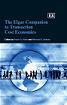
1. I’ve been at the SMS conference, and traveling, and haven’t had a chance to read the vast blogospheric commentary on Williamson (and Ostrom). Those looking for an introduction to Williamson’s work will find good stuff in the forthcoming Elgar Companion to Transaction Cost Economics, including an introduction by Williamson himself, and chapters on core subjects by eminent Williamsoninans.
Briefly, my own (admittedly biased) take is that Williamson is second only to Coase as the key figure in modern organizational economics. Moreover, his work has revolutionized the way economists (and some antitrust lawyers) understand markets. The perfectly competitive general-equilibrium model, Williamson’s work shows, is unrealistic, irrelevant, and a distraction. The task of economists studying firms and markets is to understand the marvelous variety of organizational forms that emerge in competitive markets, virtually none resembling the “firm” of microeconomics textbooks (what Williamson calls the production-function picture of the firm). “Nonstandard” phenomena like vertical integration, vertical contractual restrictions, alliances and joint ventures, long-term supply or distribution agreements, and the like should be celebrated, not condemned. (Williamson is more circumspect, arguing that each form of organization should be evaluated on the merits, case by case — a refreshing contrast to the standard approach in antitrust law, which is to assume that every deviation from perfect competition is “anticompetitive.”)
2. The Nobel Committee’s scientific statement cites one of my papers. How cool is that? Coauthor Howard Shelanski tells me that law professors note on their CVs if one of their articles is cited in a Supreme Court decision. You can be sure I’ll find a way to list this on mine. (more…)
Wiliamson Linking with Guile
| Lasse Lien |
Now that Williamson got what he deserved, the race is on to associate oneself as closely as possible with the great man (Williamson linking with guile). Some try to link him to their research field, saying that he is really in sociology, strategy, organization theory, IO, or whatever is their own field. Some go for the personal link: “I know him like the inside of my pocket,” or “he is like a father/son to me.” My version will be the institutional link (which seems appropriate for Williamson). My own institution gave Williamson his first honorary doctorate, at the initiative of my own department. Apparently we recognized greatness quite early. Unfortunately this was back in 1986, well before my time.
Williamsoniana
| Peter Klein |
My, we live in a fast-paced world: the Nobel announcement is just a few hours old, and we’re already being taken to task for not blogging enough about Williamson. For the high-time-preference folks, please see previous posts on Williamson and transaction cost economics, and the preview chapters of the Elgar TCE Handbook, while we work on our usual careful, thoughtful, and well-researched blog posts.
Ripped from the Headlines
| Dick Langlois |
In my European Economic History class this morning, I was talking about the medieval open-field system. As I always do, I made Ostrom’s point that the medieval open fields were not an example of the tragedy of the commons and were not over grazed. And, in talking about Carl Dahlman’s “hold-up” theory of scattering in the open fields, I got to work in Williamson. I told my students: I bet you didn’t expect that a lecture in medieval economic history would be ripped from the headlines.
So I add my congratulations to Olly and Elinor. I don’t know Olly as well as Peter does, but I have known him since the early 80s, when he participated in the conferences that led to my 1986 book, in which he has a chapter. I have met Elinor a couple of times, most recently at a small gathering at the Max Planck Institute in Jena.
It’s Williamson, at Last!
 | Peter Klein |
A hearty congratulations to Oliver Williamson, co-recipient (along with Elinor Ostrom) of this year’s Nobel Prize in economics. As Williamson’s former PhD student, I’m thrilled beyond belief. The O&M crew have all been heavily influenced by Williamson (and, to a some degree, Ostrom too) and will have much more to say about this in the coming days. But, for now, just enjoy!
Ashley Judd and Bob Lucas
| Peter Klein |
The lovely and talented Ashley Judd was the celebrity guest this morning on NPR’s “Wait, Wait, Don’t Tell Me!” (Ashley and I have a close personal connection, she being a junior-high-school classmate of my wife’s younger brother. Can’t get closer than that.) She answered trivia questions about the Nobel prize, one of which centered on Bob Lucas. What unfortunate thing happened to Lucas, she was asked? (a) He died from eating bad fish at the awards dinner, (b) his ex-wife got half the Nobel money from a previous divorce settlement, or (c) [I forgot (c)]. The correct answer, I’m sure you know, is (b). Ashley and the other participants thought it hilarious that someone would include a Nobel-prize provision in a divorce agreement, but even in 1987, when Lucas was divorced, it was a foregone conclusion that he would eventually win (he got the prize in 1995). Next time I see dear Ashley I’ll point this out. Personally, I’ve already pledged half my future Nobel winnings to charity.
The Fate of Famous Economists
| Peter Klein |
 Even very famous ones. The Dundee Courier (what, you don’t read it?) reports that Adam Smith’s gravestone, in the courtyard of Canongate Kirk in Edinburgh, is in bad shape: “Smith’s gravestone could be in danger of deterioration after years of exposure to the elements, vandalism and neglect” (HT: MGK). According to a spokesperson for the World Monument Fund, cemeteries in the central parts of cities like Edinburgh have become “unsafe environment[s] home to illicit activities.” Apparently David Hume’s grave, elsewhere in Edinburgh, is also threatened. How ironic that we put dead politicians in great cathedrals and mausoleums (and, while living, give them Nobel Prizes), while actual heroes are abandoned and forgotten.
Need Examples of Subversive Behavior in M&A
| Russ Coff |
I just finished teaching a simulation exercise to BBA students on the politics of post-acquisition integration. I was surprised that students had a great deal of trouble believing that managers would be subversive even in that kind of setting. If there are specific examples of such subversive behavior that you know about, I’d appreciate it if you would post here or email them to me.
Here are some details about the exercise (and a Dilbert cartoon) in case anyone is interested. (more…)
Nobel Stuff
| Peter Klein |
Because O&M is an econ-themed blog, I guess we’re obligated to post something about next week’s Nobel prize announcement. I confess I don’t follow the buzz that closely; the committee’s picks often make little sense to me and there are better things to do with one’s time. But, along the lines of this 2007 post, I note that several folks on Mankiw’s list of favorites work in the general area of organizational economics: Tirole, Milgrom, Hart, Holmström, Ostrom, Williamson, and Wilson.
Update: After today’s peace prize announcement, there is an obvious frontrunner: Ben S. Bernanke. Clearly actions and accomplishments don’t matter, only image and self-promoting rhetoric. (See also Mankiw’s take.)
Update II: Nolan McCarty (via Joshua Tucker) has an even more audacious prediction:
- Whereas Tirole, Nordhaus, Milgrom, and others have made important and fundamental scholarly contributions to economic theory and policy analysis, only Obama has the audacity to hope for better economic policy in the future. Can he design a health care system that covers everyone and saves money? Yes, he can! Can he reengineer the financial system to eliminate systemic risk, protect consumers while maintaining the benefits of modern finance? Yes, he can! Can he reduce greenhouse emissions without reducing jobs and economic growth? Yes, he can! What actual economist would dare say those things? For his vision alone, he deserves the prize.
- Obama has never been associated rational expectations theory or the efficient markets hypothesis. In fact, he’s turned his administration into one big Behavioral Economics Seminar.
- I’ve heard rumors that Obama still plans to broker a peace treaty between Paul Krugman and Bob Lucas. Unfortunately, the track 2 negotiations seem to have broken down.
- The Scandinavians could really stick it to George Bush by giving Obama two Nobel Prizes.
- He taught at the University of Chicago.
Masters of Finance
| Peter Klein |
The American Finance Association has assembled a terrific set of video interviews and lectures with eminent financial economists including Markowitz, Sharpe, Samuelson, Merton, Scholes, Arrow, Fama, and Myers. (HT: Fama/French.)
The First Secretary of Agriculture
| Peter Klein |
 Mises.org has posted Frank Chodorov’s 1952 classic, “Joseph, Secretary of Agriculture”:
The dream plan worked wonders — for Pharaoh and his secretary of agriculture. . . . On the other hand, it is told how a delegation of Egyptians came to Joseph and declared: “Thou hast saved our lives: let us find favor in the sight of my lord, and we will be Pharaoh’s servants.” Showing that the proletariat had come to terms with collectivism (since that was the only way to get by in this world) and were content with whatever security the secretary would provide.
Joseph, however, had to make some concession to private property, perhaps to encourage more taxable production; he restored to some of the Egyptians the land he had taken from them in their adversity, on a rental basis. The rent? One-fifth of all the annual output. By this well-timed act of policy, informs historian Flavius Josephus, “Joseph established his own authority in Egypt and increased the standing revenue of all its succeeding monarchs.”
Though the succeeding monarchs and the succeeding commissars did well under the plan introduced by Joseph, it seems (according to later historians) that it put upon the proletarians a moral blight, so that when conquerors from other lands came to Egypt they met with little resistance; those who had nothing to lose had nothing to fight for, so that even the monarchs had to beg the invaders for administrative jobs. And lots of dust fell on the civilization of Pharaoh.
Chodorov goes on to describe the obvious analogy to twentieth-century agriculture policy. Of course, without farm programs, how would we have food?
Bentham and Hume in the West Wing
| Dick Langlois |
From a perhaps uncharacteristic source — David Brooks at the New York Times — comes a funny and spot-on column about Bentham and Hume as present-day DC policy advisors.
The people on Mr. Bentham’s side believe that government can get actively involved in organizing innovation. . . . The people on Mr. Hume’s side believe government should actively tilt the playing field to promote social goods and set off decentralized networks of reform, but they don’t think government knows enough to intimately organize dynamic innovation.
So let’s have the debate. But before we do, let’s understand that Mr. Bentham is going to win. The lobbyists love Bentham’s intricacies and his stacks of spending proposals, which they need in order to advance their agendas. If you want to pass anything through Congress, Bentham’s your man.
Management Miscellany
| Peter Klein |
1. We are not big on Jim Collins here at O&M but Toyota president Akio Toyoda is a fan, explaining his company’s woes in terms of Collins’s five stages of business decline. (Is “be headquartered in a country with an overvalued currency” one of the stages?)
2. Karen Ho’s Liquidated: An Ethnography of Wall Street (Duke, 2008) is reviewed by fellow anthropologist Gillian Tett in the FT. The key to understanding the financial crisis, we learn, is Bourdieu (why haven’t I read about this book on orgtheory.net?). “Massive corporate restructurings are not caused so much by abstract financial models as by the local, cultural habitus of investment bankers, the mission-driven narratives of shareholder value and the institutional culture of Wall Street.” Why didn’t I think of that?
3. I’ve been reading Yevgeny Zamyatin’s We, the first of great dystopian novels (in Natasha Randall’s new translation). I had head that Taylorism figures prominently in the novel, but didn’t know Taylor would be mentioned by name. “Yes, that Taylor was, without doubt, the most brilliant of the Ancients. True, he didn’t think everything through, didn’t extend his method throughout life, to each step, around the clock. He wasn’t able to integrate his system from an hour to all twenty-four. But all the same: how they could have written whole libraries about the likes of Kant — and not take notice of Taylor, a prophet, with the ability to see ten centuries ahead?” Of course, as we’ve noted before, there’s more to Taylor than meets the eye.
Tweets of the Great Economists
| Peter Klein |
Cliff sent me Andrew Pessin’s “Twitter Tour of Western Philosophy.” Samples: “Socrates: Drinking hemlock; toes tingling; legs getting numb. Maybe unexamined life worth living? Guard!” “Plato: Symposium 2nite 7pm, @ The Cave. Open mike, open bar. Under 21 admitted free.” “Schopenhauer: All is empty, pointless. Deep, dark despair. Could use snack.” So, what would the great economists and management scholars have said in 140 characters or less?
Hayek: @maynard: Demand 4 commodities not demand 4 labor. Come on, dude!
Porter: Got 4 forces now; need ideas for 5th.
Williamson: Anybody out there want to transact? No hazards pls.
Help me out here.
Stewart Macaulay
| Peter Klein |
Here’s a lecture I wish I could have attended: Stewart Macaulay gave today’s Annual Distinguished Lecture at BYU Law School. Macaulay, as noted in BYU’s blurb, is “an internationally recognized scholar and a leader of the law-in-action approach to contracts. He pioneered the study of business practices and legal work regarding contract law. He is also one of the founders of the law and society movement.” More important for our purposes, Macaulay’s emphasis on what Williamson calls “private ordering” — the governance of contractual relations by convention, private arbitration, and firms’ own “internal courts” — has been extremely influential for transaction cost economics.
Here’s the abstract of Macaulay’s lecture:
A Contract Crisis? “It Ain’t Necessarily So.”
There are several proposals for a new contract law. On one hand, our economic crisis suggests that many see the need to rewrite or rescind contracts to reflect the drastically changed conditions of the past few years. On the other hand, there are proposals for a far more formal law of contracts than are found in the Uniform Commercial Code and the Restatement (2d) Contracts. Drawing on calls for “a new legal realism,” Professor Macaulay suggests that there is much that we don’t know about the need for and the consequences of such major revisions. He stresses, however, that a key word in Ira Gershwin’s lyrics from “Porgy and Bess” is “necessarily.” The first step must be a better picture of contract law in action. Such a picture might support some but not other changes.
I hope the lecture will appear soon on Macaulay’s website, and that Gordon Smith will post reactions at the Glom.
Elgar Companion to Transaction Cost Economics
| Peter Klein |
Mike Sykuta and I are editing a volume for the Elgar Companion series, The Elgar Companion to Transaction Cost Economics. The volume is currently in production with an expected publication date in mid-2010. We’ve created a page here on O&M with more information, including a table of contents and some sample chapter drafts. Enjoy!
The Most Interesting Scholar in the World
| Peter Klein |
With apologies to Dos Equis:
His work would pass peer review . . . if he had peers.
Students take his classes, just because they find them interesting.
His main intellectual predecessor . . . is himself.
His Erdős number is negative.
He once rejected one of his own articles, just to see how it felt.
He reads Sanskrit . . . in mathematics.
A man came out of a coma after touching one of his books.
Football players at his university have season tickets to his lectures.
Stay thirsty for knowledge, my friends.
Alchian and Demsetz (1972), Dallas Cowboys Edition
| Peter Klein |
In Alchian and Demsetz’s (1972) nexus-of-contracts approach to the firm, bosses don’t necessarily hire workers; workers may just as easily hire bosses. Recall Cheung’s (1983, p. 8) famous illustration: “My own favorite example is riverboat pulling in China before the communist regime, when a large group of workers marched along the shore towing a good-sized wooden boat. The unique interest of this example is that the collaborators actually agreed to the hiring of a monitor to whip them.” In Alchian and Demsetz’s example, the employee can “fire” his employer by quitting, just as I can “fire” my grocer by shopping at a different store.
Here’s the Onion applying this logic to the NFL’s Dallas Cowboys:
IRVING, TEXAS — In an attempt to cut the franchise’s losses and “move forward in a positive direction,” the Dallas Cowboys severed ties with controversial owner Jerry Jones Monday, ending their tumultuous 20-year relationship with the divisive figure.
According to sources within the Cowboys organization, the decision to release Jones was influenced by the lack of any playoff victories in more than 12 years, the owner’s distracting sideline antics, and his selfish, “me first” attitude, which many said was having a cancerous effect on the clubhouse.
“We value Jerry’s contributions to the Cowboys over the past two decades, but it has become painfully clear that we just don’t share the same priorities,” Cowboys public relations director Richard Dalrymple said. “This wasn’t an easy choice to make, but we’re confident it is a decision that can only make our team better.”
I can see it now: “An NFL owner has no power of fiat, no authority, no disciplinary action any different in the slightest degree from ordinary market contracting between any two football players. . . .”
Nerd Rap
| Peter Klein|
Weird Al’s version — already deconstructed by our friends at orgtheory.net — has style, but the CERN Rap has substance. As do these econ vids.
QWERTY in the Long Run
| Dick Langlois |
The new issue of Industrial and Corporate Change has an article by Andreas Reinstaller and Werner Hölzl called “Big Causes and Small Events: QWERTY and the Mechanization of Office Work.” Although it’s an interesting paper in many respects, I think it fails in its avowed aim to defend Paul David against the attack of Liebowitz and Margolis. Mostly, they don’t get L&M right (and explicitly get them wrong in footnote 1). The issue is whether the QWERTY keyboard is an example of what L&M call “third-degree” path dependency, that, is path dependency leading to an outcome that is both regrettable ex post and would somehow have been remediable ex ante. The criterion of “remediable” to R&H seems to be whether contemporaries “knew about” superior alternatives. That’s not quite right, of course: the real issue is whether any alternative institutional structure could have done a better job of choosing a standard under the conditions of knowledge at the time. Their only example is the existence of a French “Ideal” keyboard layout (which some people “knew about”) that was swept aside by the tidal wave of the American QWERTY standard (and became AZERTY in France). But they have no evidence about how much better this keyboard was — or if it was better at all. In footnote 1 they cite Donald Norman’s interesting book on design to the effect that the Dvorak keyboard is 10 per cent faster than QWERTY. But (A) Norman’s point in the book is how insignificant this difference is and (B) that doesn’t demonstrate third-degree path dependency, since no one “knew about” the Dvorak keyboard until Dvorak invented it (an extremely laborious process, according to Norman).
Again, I don’t want to be too hard on R&H: I think there’s a lot that’s interesting in the paper, especially the discussion of the mechanization of office work. What really struck me in this context, however, is how irrelevant, or at least dated, the QWERTY saga is. And I say this not for the usual reason: that computers now allow us to have any keyboard layout we like. Rather, what struck me is that the production of documents has long since become demechanized, making even more-than-nominal differences in typing speed irrelevant. Since we now all (or almost all) compose right on the computer, and never send our documents out to the typing pool, manuscript production has become a craft again. What is slowing us down is how quickly we think of something to say, not how fast we can type. And I doubt that, fifties nostalgia notwithstanding, we are unlikely to see the return of the typing pool anytime soon. So, from a historical perspective, QWERTY will have been technically inefficient (though not therefore economically inefficient) only for that brief historical period between the invention of Dvorak and the coming of the personal computer.
The same issue of ICC also has a paper by Ashish Arora and coauthors that’s worth a look.




 Organizations and Markets
Recent Comments